Breaking the Silence on Music Royalties: The global music industry has transformed dramatically over the past decade. Streaming platforms have made it easier than ever for artists to reach fans worldwide, offering unprecedented exposure and opportunities. Yet, beneath this digital convenience lies a persistent problem—music royalties remain broken and unfair.
For many artists, producers, and rights holders, getting paid is a slow, confusing, and often inaccurate process. Despite billions in streaming revenue, a large portion of creators still struggle to receive what they rightfully earn. This hidden issue continues to undermine the very foundation of the music business.
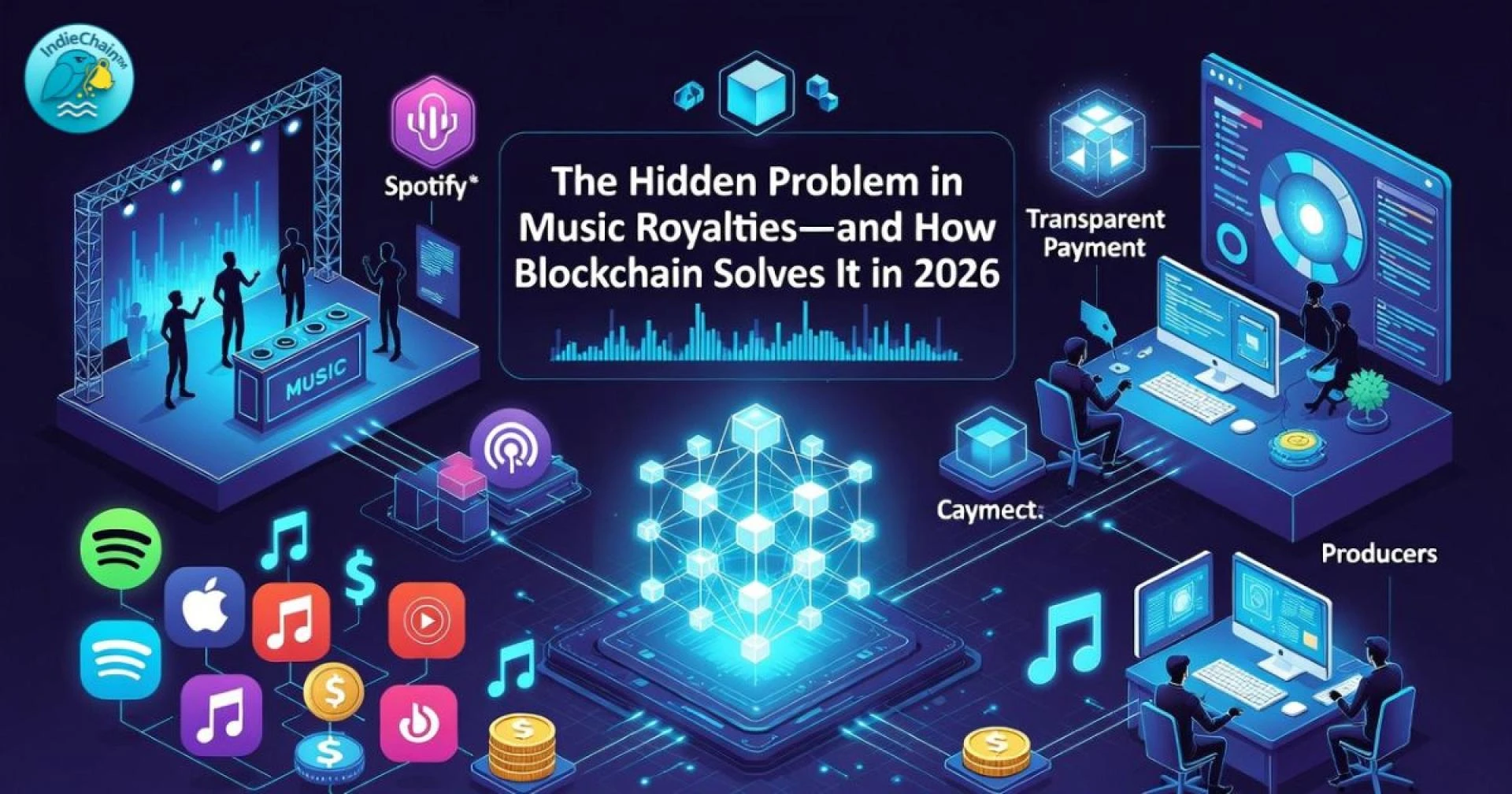
In 2026, a technological revolution is reshaping the landscape. Blockchain technology is emerging as a powerful solution, bringing transparency, automation, and fairness to the industry. In particular, blockchain music royalties are transforming the way artists are compensated, ensuring that payments are fast, accurate, and equitable.
Understanding the Hidden Problems in Music Royalties
At first glance, the royalty system may seem straightforward: music is streamed, revenue is generated, and artists get paid. In reality, the process is far more complex.
1. Lack of Transparency
One of the biggest issues in the current system is the absence of transparency. Artists often have no clear visibility into how their royalties are calculated. Payments pass through multiple intermediaries—labels, distributors, publishers—each taking a share.
As a result, creators are left questioning whether they are being paid fairly.
2. Delayed Payments
Royalty payments can take months—or even years—to reach artists. By the time the money arrives, it’s often difficult to trace its origin or verify its accuracy.
3. Multiple Intermediaries
Traditional royalty systems involve a chain of stakeholders. Each entity maintains its own records, which can lead to discrepancies, disputes, and inefficiencies.
4. Data Fragmentation
Music rights data is often scattered across different platforms and databases. This lack of a unified system results in errors, missing payments, and ownership conflicts.
5. Inefficient Copyright Management
Managing ownership rights is another major challenge. Without a reliable system, tracking who owns what portion of a song becomes difficult. This is where blockchain copyright management has the potential to make a significant impact.
Why Traditional Systems Are Failing
The existing music royalty infrastructure was built long before the rise of digital streaming, and while it has evolved over time, it has struggled to keep pace with the demands of the modern music landscape. Designed for a slower, more centralized industry, these systems now face significant challenges in handling today’s fast-moving, data-driven environment.
With millions of micro-transactions happening every day across streaming platforms, accurately tracking and distributing payments has become increasingly complex. Traditional frameworks lack the speed, transparency, and automation needed to manage this scale efficiently, leading to delays, errors, and a lack of trust among artists and stakeholders.
What Is Blockchain in the Music Industry?
Blockchain is a decentralized and secure digital ledger technology that records transactions in a transparent and immutable way. Once data is stored on the blockchain, it cannot be altered or deleted, which ensures a high level of trust, security, and accountability. In the music industry, this technology is transforming how data is managed by creating a single, reliable system where all stakeholders can access accurate and real-time information, reducing conflicts and inefficiencies.
Key Uses in the Music Industry:
Ownership rights: Securely records and verifies who owns a song and its components.
Licensing agreements: Stores and manages licensing terms in a transparent and automated way.
Royalty distribution: Enables accurate and instant payment distribution through smart contracts.
Transaction records: Maintains a clear and traceable history of all music-related transactions.
How Blockchain Solves Royalty Issues
Blockchain introduces a more advanced and reliable approach to managing music rights and payments—one that prioritizes efficiency, transparency, and artist control. By leveraging decentralized technology, it addresses many of the long-standing challenges in the traditional royalty system.
Smart contracts enable automatic payments:
Smart contracts are self-executing agreements built on blockchain technology that trigger payments as soon as predefined conditions are met. For instance, every time a song is streamed, the generated revenue can be instantly and accurately distributed among all contributors—artists, producers, and songwriters—without delays. This forms the foundation of blockchain music royalties, ensuring fair and timely compensation.
Real-time royalty tracking:
Blockchain allows artists to monitor their earnings as they happen. Each transaction is recorded on a transparent and immutable ledger, giving creators full visibility and eliminating uncertainty around payments.
Transparent ownership records:
Ownership data stored on the blockchain is secure and cannot be altered, which helps prevent disputes and ensures proper credit is given. This significantly enhances blockchain copyright management, making rights tracking more reliable and efficient.
Reduced dependence on intermediaries:
By minimizing the need for third parties, blockchain simplifies the entire royalty distribution process. This allows artists to receive payments directly, increasing their overall revenue share.
Efficient licensing through blockchain platforms:
A blockchain music licensing platform enables artists to license their work directly to brands, filmmakers, and content creators. With smart contracts handling agreements, payments, and usage rights automatically, the licensing process becomes faster, more transparent, and highly scalable—opening up new income opportunities for creators.
Real-World Use Cases of Blockchain in Music
Blockchain technology is already being actively explored across the music industry, with several innovative platforms working to reshape how artists manage their work and earnings. These solutions focus on building decentralized ecosystems where creators have greater ownership, control, and transparency over their music and revenue streams. By reducing reliance on traditional intermediaries, artists are able to engage more directly with their audience and retain a larger share of their income.
From advanced royalty tracking systems that provide real-time payment visibility to decentralized streaming platforms that ensure fair compensation, blockchain is steadily gaining traction. These real-world applications highlight a growing shift toward a more transparent, efficient, and artist-centric music industry.
Benefits for Artists and the Industry
The adoption of blockchain technology offers multiple advantages:
For Artists:
- Faster payments: Artists receive earnings instantly through automated smart contracts without long waiting periods.
- Greater transparency: Every transaction is recorded on a public ledger, giving full visibility into earnings.
- Increased revenue share: By removing intermediaries, artists retain a larger portion of their income.
- Direct connection with fans: Blockchain enables direct engagement and monetization without relying on third parties.
For the Industry:
- Reduced administrative costs : Automation minimizes the need for manual processing and intermediaries.
- Accurate data management : A single, immutable ledger ensures consistent and error-free records
- Improved trust among stakeholders : Transparent systems build confidence between artists, labels, and distributors.
- Streamlined licensing processes: Smart contracts simplify and accelerate music licensing agreements.
Challenges and Limitations
Despite its promise, blockchain adoption is not without challenges.
1. Industry Resistance
The music industry is deeply rooted in traditional systems. Transitioning to blockchain requires significant changes in infrastructure and mindset.
2. Technical Complexity
Blockchain technology can be difficult to understand and implement, especially for non-technical users.
3. Regulatory Uncertainty
As blockchain evolves, regulations are still catching up. Legal frameworks around digital assets and smart contracts remain unclear in many regions.
The Future of Music Royalties with Blockchain (2026 and Beyond)
As technology continues to advance, blockchain is expected to play a larger role in reshaping the music industry. The focus is shifting toward decentralization, transparency, and creator empowerment.
In the coming years, we may see:
- Widespread adoption of blockchain music royalties systems
- Growth of decentralized music platforms
- Increased use of smart contracts in licensing
- Stronger global standards for digital rights management
Blockchain is not just a trend—it represents a fundamental shift in how value is created and distributed in the music ecosystem.
Conclusion
Ultimately, the hidden problems in music royalties have persisted for decades, leaving many artists underpaid, uninformed, and disconnected from the true value of their work. From delayed payments to lack of transparency, the traditional system continues to create barriers that limit fair compensation and growth.
Blockchain is changing that narrative. By introducing transparency, automation, and decentralization, it offers a practical solution to long-standing challenges. With innovations like blockchain copyright management, blockchain music royalties, and blockchain music licensing platforms, the industry is moving toward a model where artists have greater control, clearer insights, and faster access to their earnings.
As this transformation unfolds, those who adapt early will be in the best position to benefit from a more efficient and equitable music ecosystem. If you're looking to take control of your revenue and embrace the future of music, now is the time to act—