Corporate offices handle sensitive information, valuable assets, and confidential operations daily. Traditional access methods such as keys or swipe cards often fail to provide the level of security modern workplaces require. Today’s business world requires more intelligent identity verification systems that can guarantee that only authorised people can gain access to restricted areas. A biometric access control system helps to solve the problem of identity verification.
What is Biometric Access Control?
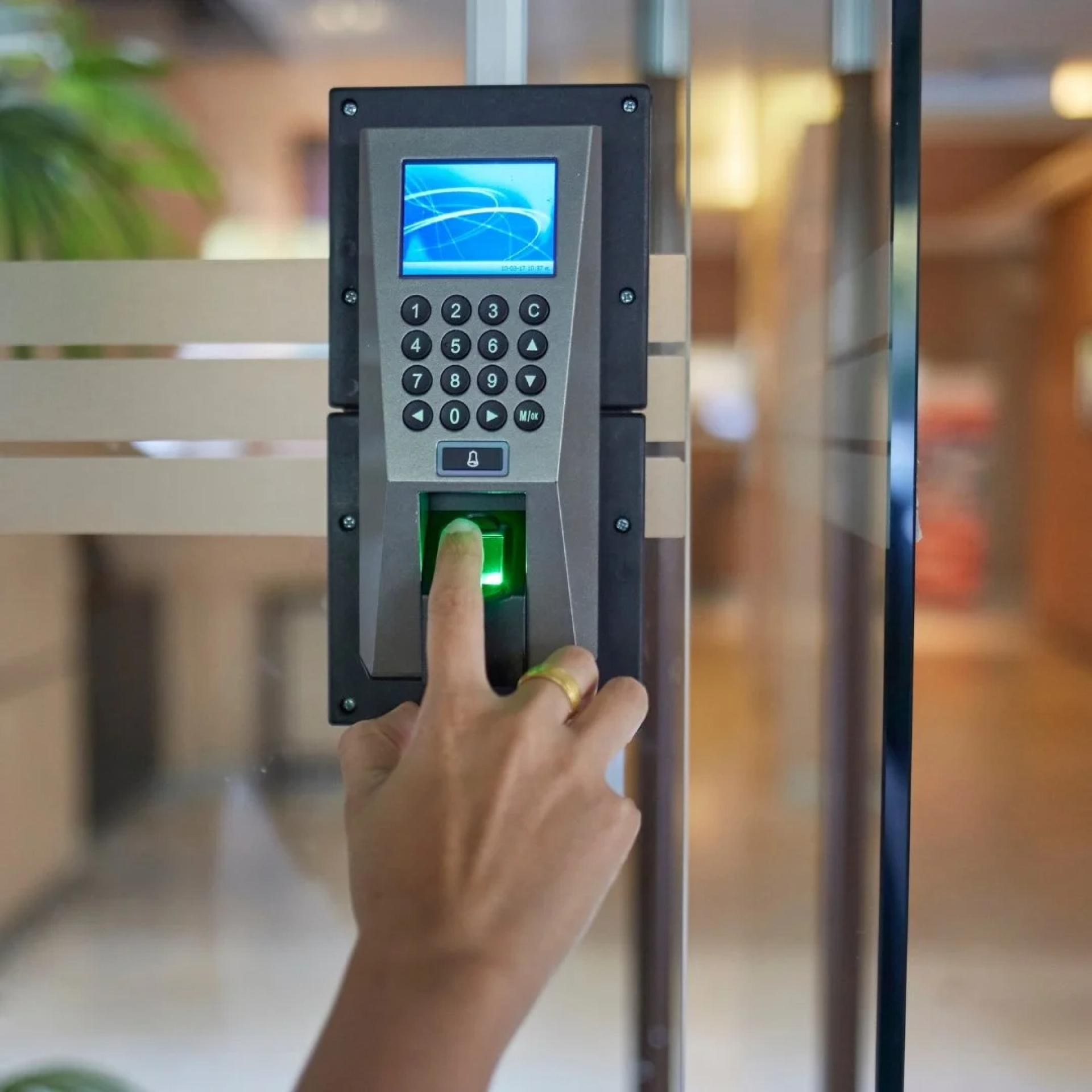
Biometric technology identifies individuals based on physical or behavioural characteristics. These characteristics are unique to each person and extremely difficult to duplicate. In a biometric access control system, employees do not need to carry any identification tools like keys or cards. Instead, they can just offer their biometric information to the system to gain access to restricted areas. Common biometric identifiers used in office environments include:
- Fingerprint Recognition
- Facial Recognition
- Iris Recognition
- Palm Recognition
How Biometric Access Works in Corporate Offices
A biometric access system follows a well-structured process to ensure proper identification and grant access to the authorised personnel.
1. User Registration
Employees will first register their biometric information, like fingerprints or facial images. This data is then safely stored in the system database.
2. Identity Verification
The scanner records the employee's data as they approach the entrance point.
3. Matching Process
The system will match the information collected with the one stored in the database.
4. Access Decision
If the information matches an authorised user, the door unlocks automatically. If the match fails, entry is denied.
This process takes only a few seconds but offers a much higher level of security compared to traditional methods.
Key Benefits of Biometric Access Control for Offices
Biometric solutions provide various advantages that make them appropriate for the modern corporate setup.
1. Enhanced Security
Biometric identifiers are unique for each individual. They are difficult to share or steal as compared to passwords, pins, or cards. This reduces the possibility of unwanted entry.
2. Elimination of Access Cards
Access cards can be lost or duplicated. With biometric identifiers, access cards are no longer required. This makes the management of access for employees and administrators easier.
3. Better Control over Access
Every authentication attempt is recorded digitally. This helps administrators track the movement of employees within the premises. This way, any abnormal behaviour can be detected.
4. Accurate Employee Identification
Biometric verification ensures that the person entering the premises is exactly who they claim to be. It also eliminates problems like “buddy punching,” where one employee uses another person’s credentials.
5. Integration with Other Office Systems
Biometric solutions can be integrated with attendance management systems, visitor management systems, and security surveillance systems. GSS Intelligence Systems provide solutions that offer a number of security features within one system.
Areas in Corporate Offices That Benefit from Biometric Access
It is important to note that all offices do not need the same level of access control. However, there are offices that need more stringent security measures. Biometric access control is best for the following areas in the offices:
- Main entrance points
- Server room offices
- Research and development offices
- Finance offices
- Executive offices
Access control for these offices helps protect the business’s information and resources.
Types of Biometric Technologies Used in Offices
Biometric access control uses different types of biometric technologies. Each technology has different advantages. Businesses use the type of technology that is best for the business.
1. Fingerprint Recognition
Fingerprint recognition is the most commonly used technology. It is easy to implement, efficient, and cost-effective. A person simply has to place his or her finger before the fingerprint scanner for identification.
2. Facial Recognition
Facial recognition is a non-contact biometric access control technology. A person simply has to look at the facial recognition scanner for identification. This technology is best for offices with high traffic.
3. Iris Scanning
Iris scanning is highly accurate. This technology uses the patterns in the coloured part of the eye for identification.
Important Considerations Before Implementation
Before installing the biometric access systems, several important considerations need to be made.
- Workforce Size: Organisations with larger workforces may need more than one scanner at different points of entry.
- Security Needs: Some departments may need higher levels of security compared to others.
- Data Privacy Regulations: Data privacy laws require that the data collected by the scanner be stored securely.
- Integration with Existing Systems: Compatibility with existing security infrastructure is a major consideration.
Security professionals often recommend working with experienced providers to design and implement systems that align with organisational requirements.
Final Thoughts
Corporate offices require reliable security solutions that go beyond traditional locks and access cards. Biometric authentication provides a secure and efficient way to verify employee identity and control entry to sensitive areas. With proper planning and expert implementation, biometric access systems strengthen workplace security while improving operational efficiency. Companies using this system are offering a safer workplace for their employees and are able to have greater control over the premises.