
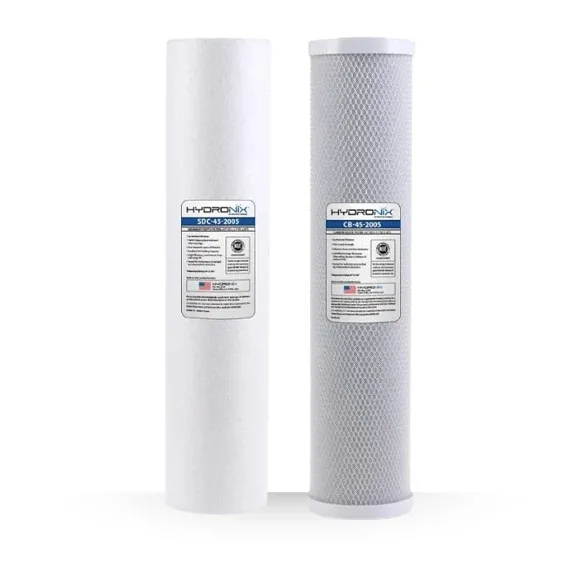
"Big Blue" sounds like a brand name, but it isn't one it's an industry-standard housing size that's become the default term for a specific category of whole-house filtration. If you've been comparing a Big Blue Filter against smaller cartridge systems and wondering what actually separates them beyond size, this guide breaks down exactly what "Big Blue" refers to, how the filtration stages work, and how to pick the right configuration for your water.
What "Big Blue" Actually Refers To
The name comes directly from the housing dimensions: a Big Blue Water Filter housing measures 4.5 inches in diameter by either 10 or 20 inches tall noticeably larger than the standard 2.5-inch diameter cartridges used in most compact under-sink systems. The color is largely incidental at this point (most are, in fact, blue, which is how the name stuck), but the size is the defining feature, and it's a genuine industry standard meaning Big Blue Filtration housings from different manufacturers generally accept the same standard-sized replacement cartridges, giving you flexibility in where you source replacement filters down the line.
That extra diameter isn't just about looking more substantial. More surface area inside the housing means:
- Greater filtration capacity before a cartridge needs replacing, since there's simply more media doing the work
- Less flow restriction at higher water demand, which matters for whole-house applications where multiple fixtures may run simultaneously
- Longer intervals between filter changes compared to smaller 2.5-inch cartridge systems treating the same water
Big Blue Whole House Filter Configurations: 1, 2, or 3 Stages
A Big Blue Whole House Filter system can be built with a single housing or multiple housings plumbed in sequence, depending on what needs to be removed from the water. The most common configurations:
- Single-stage systems typically use one housing with a sediment filter, addressing sand, silt, and particulates a reasonable starting point for municipal water with only a mild sediment issue and no chlorine taste complaints.
- Two-stage systems pair a 5-micron sediment filter with a carbon or catalytic carbon filter, removing sediment along with chlorine, chloramine, taste, and odor compounds. This is one of the most common configurations for municipal water customers specifically, since it addresses the two most frequent aesthetic complaints sediment and chlorine taste in one combined system.
- Three-stage systems add a second carbon stage, typically a sediment filter, granular activated carbon, and a carbon block filter in sequence. This configuration filters out a wider range of tastes, odors, and chemicals, including chlorine, chloramine, herbicides, and pesticides, making it a stronger fit for water with more complex taste and odor issues.
What Comes With a Complete Big Blue Water Filtration System
A properly built Big Blue Water Filtration System is more than just the housings themselves. A complete system typically includes:
- 1-inch inlet/outlet connections, which offer meaningfully less flow restriction than the ¾-inch connections found on smaller standard filter housings a real advantage for whole-house applications with higher simultaneous demand
- A pressure relief valve built into each housing, making filter changes easier and safer by allowing you to depressurize the housing before opening it, rather than fighting trapped pressure and spraying water everywhere
- A heavy-duty mounting bracket, keeping multi-stage systems stable and properly aligned rather than hanging entirely on the plumbing connections
- A filter housing wrench, specifically sized to get enough leverage to open and close the larger housings during filter changes
Choosing the Right Stage Count for Your Water
Matching the right configuration to your actual water starts with knowing what you're treating for, not just defaulting to the most comprehensive option available:
- Sediment only, no taste or odor issues → a single-stage sediment system is usually sufficient
- Chlorine taste and odor on municipal water → a two-stage sediment-and-carbon system typically resolves this effectively
- Stronger taste, odor, or chemical concerns (herbicides, pesticides, more pronounced chlorine or chloramine smell) → a three-stage system with dual carbon media provides more thorough treatment
- Well water with iron, sulfur, or manganese → a standard Big Blue carbon/sediment system isn't the right tool for this; iron and sulfur require specialty oxidizing media (like air injection oxidation), and a Big Blue filter system is better used downstream for taste and chlorine polish rather than as the primary treatment for these contaminants
Sizing for Flow Rate
Because Big Blue housings are designed for whole-house use, matching the system's flow capacity to your home's actual demand matters as much as the filtration stages themselves:
- 1–2 bathroom homes are typically well served by a standard 20-inch Big Blue system with a single set of housings
- Larger homes with higher simultaneous demand may benefit from a higher-flow configuration or, in some cases, dual parallel housings to maintain pressure during peak usage
- Both 10-inch and 20-inch options are available in the 4.5-inch diameter format the 20-inch housings provide greater capacity and less frequent filter changes, generally the better choice for a true whole-house install, while 10-inch housings suit more space-constrained installations or lighter-demand applications
Installing a Big Blue Filter System
One of the most appealing aspects of Big Blue systems is that they're genuinely accessible for a DIY install. A typical installation process involves:
- Shutting off the main water supply and relieving pressure in the lines
- Mounting the bracket in a location with clearance for filter changes accessibility matters here, since you'll be back at this spot every few months
- Connecting the inlet and outlet lines, typically with 1-inch fittings matched to your home's plumbing
- Loading the filter cartridges into each housing before final assembly
- Slowly restoring water pressure and checking all housing seals for leaks before considering the install complete
Most systems come with detailed installation instructions specifically written for homeowners with basic plumbing skills, and manufacturer video walkthroughs are commonly available for anyone installing one for the first time.
Maintenance: What Ongoing Ownership Looks Like
- Sediment filters generally need more frequent replacement than carbon stages, since they're catching physical particulate that accumulates faster, especially on well water or municipal systems with occasional turbidity.
- Carbon and carbon block filters typically last longer between changes, though replacement frequency still depends on water usage volume and the level of chlorine or contaminants being filtered.
- Watch for a pressure drop. A noticeable decrease in water pressure at your fixtures is usually the clearest sign a filter needs changing before your maintenance calendar says so.
Final Thoughts
A Big Blue Filter system remains one of the most straightforward, cost-effective ways to filter sediment, chlorine, and taste-and-odor issues at the point where water enters the home treating every fixture rather than a single tap. Matching the right stage count to your actual water conditions, sizing for your home's flow demand, and keeping up with cartridge changes are what separate a system that quietly does its job for years from one that underperforms from day one.