
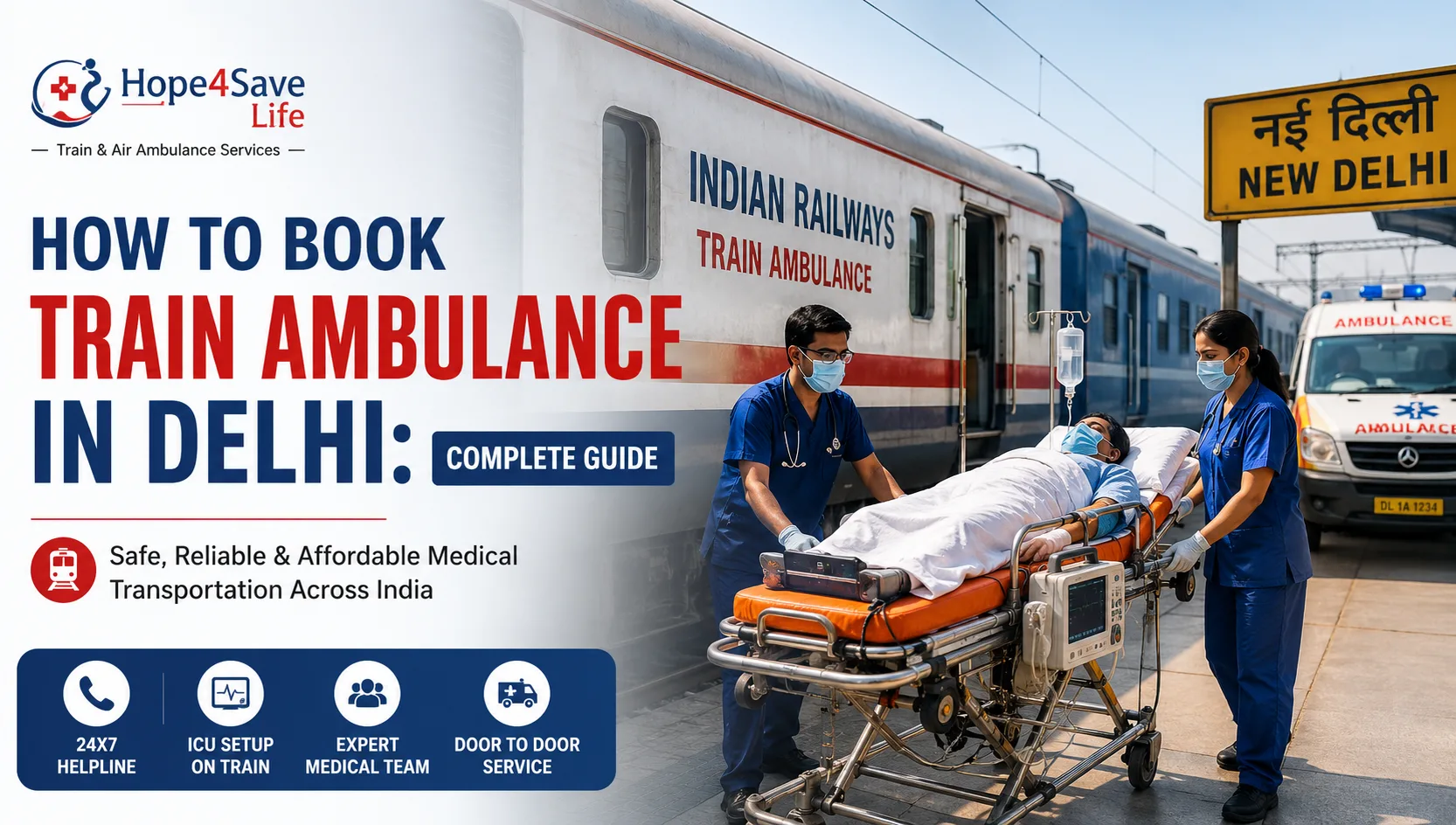
When a critically ill patient needs to travel from Delhi to another city for advanced treatment, rehabilitation, or specialized surgery, choosing the right mode of medical transportation becomes a crucial decision. While road ambulances are suitable for shorter distances and air ambulances provide the fastest option in emergencies, many families prefer a train ambulance service in Delhi for long-distance patient transfers because it offers a balance of affordability, comfort, and continuous medical care.
A train ambulance is much more than a reserved railway compartment. It is a medically equipped setup designed to function like a mobile ICU, allowing patients to receive constant monitoring and treatment throughout the journey. Experienced medical professionals remain with the patient from departure until handover at the destination hospital, ensuring that medical support is available whenever required.
Whether the patient is on ventilator support, recovering from major surgery, suffering from a neurological disorder, or needs continuous oxygen therapy, an ICU-equipped train ambulance can provide safe transportation over hundreds or even thousands of kilometers.
In this guide, you'll learn how train ambulance services work, who can benefit from them, the ICU facilities available onboard, and why they have become one of the most trusted options for long-distance medical transportation from Delhi.
What Is a Train Ambulance?
A train ambulance is a specialized medical transportation service that enables patients to travel safely by train while receiving hospital-like care throughout the journey. Instead of travelling in a standard passenger setup, the patient is accommodated in a compartment that has been prepared with advanced medical equipment and staffed by trained healthcare professionals.
The objective is to maintain continuity of treatment while the patient is being transferred between hospitals or cities.
Unlike regular train travel, where passengers are responsible for their own medical needs, a train ambulance provides continuous observation and emergency medical support. The medical team monitors vital signs, administers medications, manages oxygen therapy, and responds immediately if the patient's condition changes during transit.
This makes train ambulances particularly valuable for patients who are medically stable enough for rail travel but still require ICU-level supervision.
How Is an ICU Set Up Inside a Train?
Before the journey begins, the designated railway compartment is converted into a functional patient care area. Depending on the patient's medical condition, the setup may include:
- ICU bed arrangement
- Ventilator support (if required)
- Multi-parameter cardiac monitor
- Oxygen cylinders with backup supply
- Suction machine
- Infusion pumps
- Defibrillator
- Emergency medicines
- Portable power backup for medical devices
The equipment used is similar to what is found in many intensive care units, allowing the medical team to provide uninterrupted treatment throughout the journey.
Train Ambulance vs. Normal Train Travel
Many people assume that a train ambulance simply means reserving seats for a patient. In reality, the difference is significant.
Normal Train TravelTrain AmbulanceStandard passenger journeyMedical transportation serviceNo continuous medical monitoring24/7 patient monitoringNo ICU equipmentAdvanced life-support equipmentNo emergency medical staffTrained doctors, nurses, and paramedicsLimited assistanceComprehensive medical care throughout the journeyFor critically ill patients, this distinction can make a significant difference in safety and comfort during long-distance travel.
Why Choose a Train Ambulance in Delhi?
Delhi is one of India's leading healthcare hubs, attracting patients from across the country for specialized treatment. Likewise, many patients who receive treatment in Delhi later need to return to their hometowns for rehabilitation or ongoing care.
For these situations, train ambulances provide an effective solution that combines advanced medical support with economical long-distance transportation.
Comfortable for Long-Distance Travel
Travelling hundreds or thousands of kilometers by road can be physically exhausting for patients who are recovering from surgery or suffering from serious illnesses.
A train ambulance offers a smoother journey with fewer road vibrations, allowing patients to remain in a stable position for extended periods. This helps reduce discomfort and minimizes unnecessary movement, which can be particularly important for patients with fractures, spinal injuries, or post-operative conditions.
The additional space inside the compartment also allows medical professionals to move freely while providing treatment.
Continuous ICU Monitoring Throughout the Journey
One of the biggest advantages of a train ambulance is uninterrupted medical supervision.
The patient's condition is monitored continuously using advanced ICU equipment. If oxygen levels fluctuate, blood pressure changes, or any emergency arises, the onboard medical team can respond immediately.
Continuous monitoring helps detect complications early and ensures that appropriate interventions are provided without delay.
More Affordable Than Many Air Transfers
While air ambulances are essential for time-critical emergencies, they are often significantly more expensive due to aircraft availability, airport logistics, and specialized aviation requirements.
For patients who are medically fit for rail transport, a train ambulance can provide advanced ICU care at a comparatively lower cost. This makes it a practical option for families seeking high-quality medical transportation without the financial burden of an air transfer.
The exact cost depends on factors such as travel distance, medical equipment, staffing requirements, and train availability.
End-to-End Medical Coordination
Professional train ambulance providers do much more than arrange railway tickets.
They typically coordinate the entire transfer process, including:
- Reviewing the patient's medical condition
- Planning the safest travel route
- Preparing the ICU setup
- Arranging road ambulances for pickup and drop-off
- Coordinating with the referring and receiving hospitals
- Deploying trained medical professionals throughout the journey
This comprehensive planning helps reduce stress for family members and ensures a smoother transfer experience.
Suitable for a Wide Range of Medical Conditions
Train ambulances are commonly used for patients requiring long-distance transportation while remaining under medical supervision.
These may include individuals recovering from major surgeries, patients requiring oxygen support, neurological cases, cardiac patients, trauma cases, elderly individuals with limited mobility, and patients undergoing long-term treatment in another city.
The medical team evaluates each case individually to determine whether railway transport is clinically appropriate and to prepare the required level of ICU support.
Choosing the best train ambulance service in Delhi is about more than arranging transportation. It involves ensuring that the patient receives continuous medical attention, advanced life-support facilities, and professional care from the moment they leave one hospital until they safely reach the next.