Key Takeaways
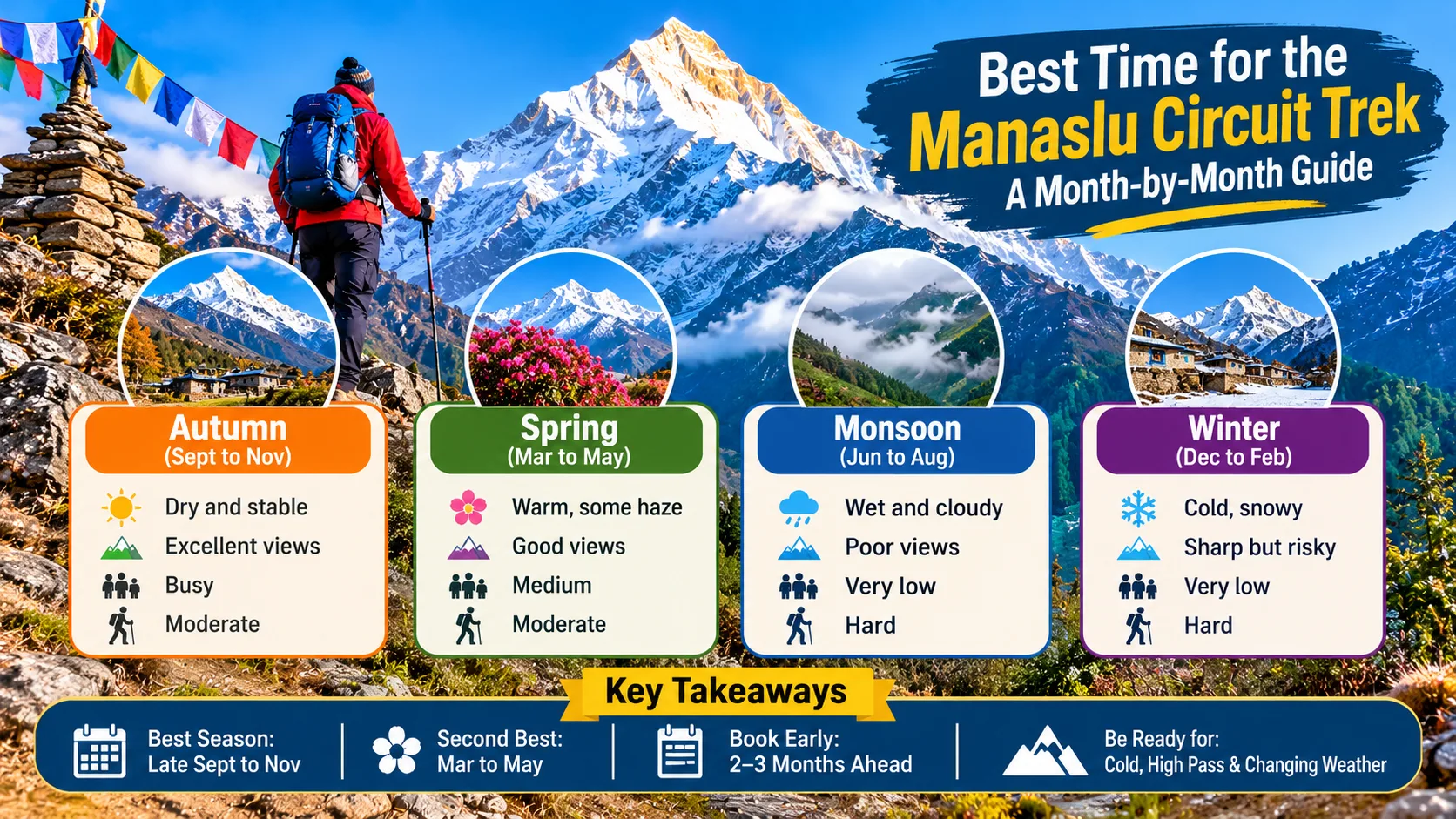
- Best season: Late September to November has the clearest skies and the most stable trail conditions.
- Second best: March to May brings warm days, rhododendron blooms, and a bit more haze.
- Monsoon (June to August): Possible, but wet, slippery, and often cloudy.
- Winter (December to February): Very cold, with a real risk that Larkya La Pass closes.
- Book early: Autumn fills up fast, so plan your permits and guide two to three months ahead.
The sun hits the top of Manaslu first. Gold light slides down the snow, and the whole valley above Samagaon goes quiet for a moment. Trekkers who time their trip right get this view. Trekkers who pick the wrong month often get fog, mud, or a closed pass.
The best time for the Manaslu Circuit trek is autumn, from late September to November. Spring, from March to May, comes second. Both seasons give you stable weather and a good chance of crossing Larkya La Pass. This guide explains each season, each month, and how to choose what fits you.
Best Season for the Manaslu Circuit Trek
Pick October if you want the safest bet. Pick April if you want flowers and fewer people. Skip July and January unless you have a very good reason.
Here is how the four seasons compare:
SeasonMonthsWeatherViewsCrowdsDifficultyAutumnSept to NovDry and stableExcellentBusyModerateSpringMar to MayWarm, some hazeGoodMediumModerateMonsoonJun to AugWet and cloudyPoorVery lowHardWinterDec to FebCold, snowySharp but riskyVery lowHardManaslu is a remote trek. It follows the Budhi Gandaki River and climbs to Larkya La Pass at 5,106 meters (16,752 feet). The weather affects this route more than it affects busier trails, because help is farther away. That is why season matters so much here.
Manaslu Trek in Autumn (September to November)
Autumn is the main season for the Manaslu Circuit trek, and for good reason. The monsoon has washed the dust out of the air. The skies open up, and the mountains look close enough to touch.
Why Autumn Is the Top Choice
Three things make autumn special:
- Clear skies: Morning views of Manaslu, Himalchuli, and Ngadi Chuli are sharp and bright.
- Dry trails: Mud and leeches are mostly gone, and the paths feel firm underfoot.
- Steady weather: Storms are rare, so your plan is less likely to change.
Locals also celebrate the big Hindu festivals of Dashain and Tihar in this season. Villages feel lively, and you may see families gathering along the route.
September vs. October vs. November
Each month feels a little different, so let me break it down.
- Late September: The trail is green and the rivers are full. You may still get a few rainy afternoons early in the month. The upside is that trails are quieter.
- October: This is peak time. Skies are at their clearest, days are mild, and the pass is usually open. It is also the busiest month, so book early.
- November: Days stay sunny, but nights get cold, especially above Samagaon. The crowds thin out. Pack a warmer sleeping bag.
If you can only choose one month, choose the first three weeks of October. If you hate crowds, go in early November.
Crowds and Teahouse Availability
Manaslu is far quieter than the Annapurna Circuit, even in October. Still, teahouses are small and simple, and rooms can run short in the busiest weeks. Rooms at higher stops like Samagaon, Samdo, and Dharamsala (also called Larkya Phedi) fill first. A guide who calls ahead makes this much easier.
Larkya La Pass Conditions in Autumn
The pass is usually clear of deep snow in autumn. Early starts matter, though. You leave around 3 or 4 a.m. and walk for seven to nine hours. Winds pick up by late morning, and the cold can be sharp. Even in the best month, nights near the pass can drop to minus 10 degrees Celsius.
Manaslu Trek in Spring (March to May)
Spring is a lovely second choice. The mountains wake up, and the lower valleys turn colorful.
Rhododendron Blooms and Warmer Days
From late March through April, red and pink rhododendrons bloom on the forested slopes below 3,000 meters. Nepal's national flower lights up the trail. Days are warm in the lower valley, and you will walk in a t-shirt more often than in autumn.
Hazy Views and Afternoon Clouds
Here is the trade-off. Spring air holds more dust and moisture, so far views can look soft by midday. Mornings are still beautiful. Clouds often roll in after lunch, so plan to do your big walking early.
Snow on the Pass in Early Spring
In March, Larkya La can still hold plenty of snow from winter. Some years the pass is tricky until early April. By late April and May, it is usually in better shape. If you go in March, ask your guide about recent conditions, and bring microspikes.
Who Should Pick Spring
Spring suits you if you:
- Love flowers, birds, and green forests
- Want fewer trekkers than autumn
- Handle warm days better than cold nights
- Do not mind a little haze in your photos
May gets hot and humid in the low valley. By the end of May, pre-monsoon storms start. April is the sweet spot.
Can You Trek Manaslu in Monsoon (June to August)?
You can, but I do not usually recommend it. Monsoon brings heavy rain to the lower sections of the route. Leeches come out. Landslides can block the trail, and the dirt road to the start point can be cut off for days. Clouds also hide the big peaks for much of the time.
Some people still go. Higher parts of the trek, like Samagaon and beyond, sit in a drier zone and get less rain than the valley floor. Photographers who love moody, green landscapes sometimes enjoy it. Solo-minded adventurers who like empty trails may also like it.
If you choose monsoon, build in extra buffer days. Pack a strong rain jacket, waterproof pack cover, and leech socks. Be ready to change your plan if the weather turns.
Manaslu Circuit Trek in Winter (December to February)
Winter is the hardest season for this route. Nights in the high villages fall well below freezing. Snow can pile up near Samdo and Dharamsala. Larkya La may close for days, or for most of the season, after heavy snowfall.
The reward is peace. You will see almost no other trekkers, and the air is crisp. Snowy peaks against deep blue sky look unreal.
The risks are real, though:
- Frostbite and cold-related illness are more likely.
- Some teahouses close for the season.
- Days are short, so walking time is tight.
- A closed pass can force you to turn around.
If you want a winter trek, you need a good guide, proper gear, and flexible dates. Beginners should wait for another season.
Manaslu Trek Weather by Month
Temperatures shift with altitude. These are rough ranges, so treat them as a guide and not a promise.
- January: Very cold. Daytime near 0 to 5 degrees Celsius at mid-altitude, much colder at night. Pass likely closed.
- February: Still cold, with snow possible. Pass often risky.
- March: Slowly warming. Snow lingers up high. Clear mornings, some afternoon clouds.
- April: Warm and colorful. Flowers bloom. Pass usually opens up.
- May: Warmer, with growing humidity and occasional storms by late month.
- June: Monsoon begins. Heavy rain, slippery paths.
- July: Wettest month. Landslides are common.
- August: Still wet, with a few clearer windows toward month's end.
- September: Rain fades. Skies begin to clear. Trails are green.
- October: Best month. Clear, dry, and mild days with cold nights up high.
- November: Sunny days, colder nights, fewer people.
- December: Cold and dry, but snow risk grows and the pass can close.
How to Pick the Right Time for You
The best time on paper is not always the best time for you. Think about these points before you book:
- Fitness: If you are less experienced, pick October or April, when conditions are kindest.
- Budget: Prices for guides, porters, and rooms can be a little higher in peak autumn weeks.
- Camera goals: Want crisp peaks? Choose October or November. Want flowers and forest color? Choose April.
- Cold tolerance: If you struggle with cold, avoid late November through February.
- Crowd preference: If you want quiet, try early November, late April, or early September.
A quick way to decide:
- If you want the clearest views, go in October.
- If you want flowers and warmer days, go in April.
- If you want solitude, go in early November.
- If you want a challenge and have experience, consider the shoulder weeks of March or early December.
Permits, Rules, and Planning Around the Season
Manaslu is a restricted area. You cannot walk it alone. You need a licensed guide and a minimum group of two trekkers, plus a restricted area permit and conservation area permits. Permit fees are often higher in autumn than in other seasons, and rules can change, so confirm current rates with your agency before you pay.
For autumn, start planning two to three months ahead. That gives you time to arrange permits, guides, and rooms. Spring is a bit easier, but it still helps to book early.
Packing and Safety Tips by Season
Gear needs change with the calendar. Here is a simple list.
Autumn and spring basics:
- A warm sleeping bag rated for minus 10 degrees Celsius or lower
- A down jacket for evenings and the pass
- Layers you can add or remove easily
- Sturdy, broken-in boots
- Sunglasses, sunscreen, and a warm hat
Altitude safety near Larkya La:
- Go slowly and drink plenty of water
- Take your rest days seriously, especially at Samagaon
- Tell your guide right away about headaches, nausea, or dizziness
- Never push on if symptoms get worse; going down is the cure
Spring trekkers should add microspikes for early-season snow. Monsoon trekkers should add rain gear and leech protection.
Conclusion
The best time for the Manaslu Circuit trek is autumn, especially October, with April as a strong spring option. Both give you good weather, a better chance at Larkya La Pass, and the mountain views that make this trek unforgettable. Monsoon and winter can work for experienced trekkers, but they ask for more patience and more risk.
Whatever month you pick, give yourself time, listen to your body, and walk slowly. The best trips are the ones where you reach the pass feeling strong and still have room to smile at the view. Start planning early, and the mountain will do the rest.
FAQs
Is the Manaslu Circuit harder than the Annapurna Circuit?
Most trekkers say yes. The trail is more remote, the teahouses are simpler, and the days can be longer. The altitude gain also comes in steady steps. If you are fit and well prepared, it is very doable.
How many days does the Manaslu Circuit trek take?
Most itineraries run 14 to 18 days, including rest days and travel to the trailhead. Extra days help with altitude and weather delays.
Is October too crowded?
It is the busiest month, but the trail still feels calm compared to more popular routes. Booking early is the best fix.
Can beginners do the Manaslu Circuit?
It is possible for fit beginners with good training, a patient guide, and the right season. Start with autumn or April, and build in rest days.
Is it safe in winter?
It can be, but only with experience, the right gear, and flexible plans. The pass may close, so expect the possibility of turning back.