
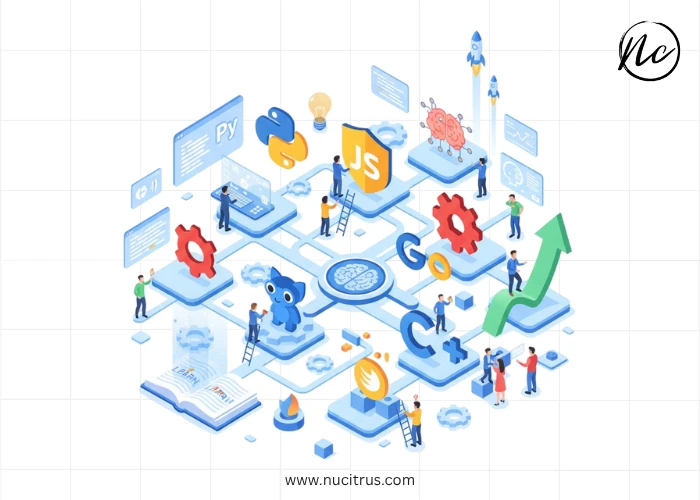
Technology continues to evolve at lightning speed, and so does the world of programming. With emerging trends like AI, automation, and cloud computing shaping the digital landscape, developers must continuously upgrade their skills to stay competitive. As we move into 2025–2026, choosing the right programming language to learn can make a huge difference in your career growth and opportunities.
Here’s a look at the top programming languages that are expected to dominate the tech industry in the coming years — and why mastering them will help you stay ahead.
1. Python – The All-Rounder for AI, Data, and Beyond
Python remains one of the most popular and versatile programming languages, and its demand is only increasing. Known for its simplicity and vast library ecosystem, Python powers applications in artificial intelligence (AI), machine learning (ML), data science, automation, and even web development.
Why learn Python?
- Easy syntax and beginner-friendly structure
- Huge community support and open-source libraries
- Dominant in AI, data analytics, and automation industries
If you want to future-proof your career in fields like data science or AI-driven app development, Python should be at the top of your list.
2. JavaScript – The Backbone of Web Development
JavaScript continues to rule the web development space. Whether you’re building responsive websites, interactive user interfaces, or modern web apps, JavaScript is essential. It’s also expanding beyond browsers with Node.js, enabling developers to create full-stack applications using a single language.
Why learn JavaScript?
- Core language for front-end frameworks like React, Vue.js, and Angular
- Works seamlessly for both client-side and server-side development
- Constantly evolving with new features and libraries
With businesses focusing more on user experience and dynamic web interfaces, JavaScript will remain a critical skill through 2025 and beyond.
3. Java – Reliable, Scalable, and Here to Stay
Despite being around for decades, Java continues to be a dominant force in enterprise software, mobile applications (especially Android), and large-scale systems. Many global organizations rely on Java due to its stability, performance, and security.
Why learn Java?
- Widely used in financial, enterprise, and Android app development
- Strong community and mature ecosystem
- Backward compatibility ensures long-term stability
With continuous updates and frameworks like Spring Boot, Java remains a top choice for building robust, scalable applications in 2025–2026.
4. TypeScript – The Smarter JavaScript
TypeScript, a superset of JavaScript developed by Microsoft, has been gaining rapid popularity. It offers static typing, better code structure, and fewer bugs — all while compiling down to JavaScript.
Why learn TypeScript?
- Enhances JavaScript development with type safety
- Ideal for large-scale web apps and enterprise projects
- Supported by modern frameworks like Angular and React
As more companies adopt TypeScript for its reliability and maintainability, mastering it will help you stand out in web and app development roles.
5. Kotlin – The Future of Android Development
Google’s endorsement of Kotlin as the preferred language for Android development has made it a must-learn for mobile developers. Its concise syntax, safety features, and interoperability with Java make it perfect for building modern, high-performance Android apps.
Why learn Kotlin?
- Official Android language backed by Google
- Reduces boilerplate code compared to Java
- Compatible with existing Java projects
If you’re eyeing a career in mobile app development, Kotlin will keep you ahead of the competition in 2025–2026.
6. Go (Golang) – Efficiency and Speed Combined
Developed by Google, Go (or Golang) is becoming a favorite for developers building cloud-native and high-performance applications. Its simple syntax, built-in concurrency, and lightning-fast execution make it ideal for backend systems and large-scale distributed software.
Why learn Go?
- Excellent for cloud computing, DevOps, and backend services
- High performance and efficient memory management
- Increasing adoption by top tech companies
As cloud technologies and microservices continue to rise, Go will play a key role in shaping the future of scalable software solutions.
7. Swift – Powering the Apple Ecosystem
For developers interested in iOS and macOS apps, Swift remains the go-to language. Designed by Apple, Swift offers speed, security, and simplicity, making it perfect for developing iPhone, iPad, and Apple Watch applications.
Why learn Swift?
- Modern and fast language for iOS app development
- Easy to read, maintain, and debug
- Growing demand for skilled iOS developers
As Apple’s ecosystem expands, learning Swift can open doors to lucrative opportunities in mobile app development.
8. Rust – Safety and Performance Redefined
Rust is steadily emerging as a favorite among system developers. Known for its memory safety and performance, Rust is used in building secure and efficient systems without the drawbacks of traditional low-level languages like C++.
Why learn Rust?
- Eliminates memory-related bugs
- Ideal for performance-critical applications
- Backed by major companies like Microsoft and Dropbox
Rust’s focus on security and performance makes it a strong contender for future system-level development.
Conclusion
The programming world is evolving rapidly, and so should your skills. Whether you’re interested in web development, AI, mobile apps, or enterprise systems, the key to success in 2025–2026 lies in choosing the right languages and continuously learning.
Python, JavaScript, Java, Kotlin, and Go will continue to dominate, while TypeScript, Swift, and Rust are quickly rising stars.