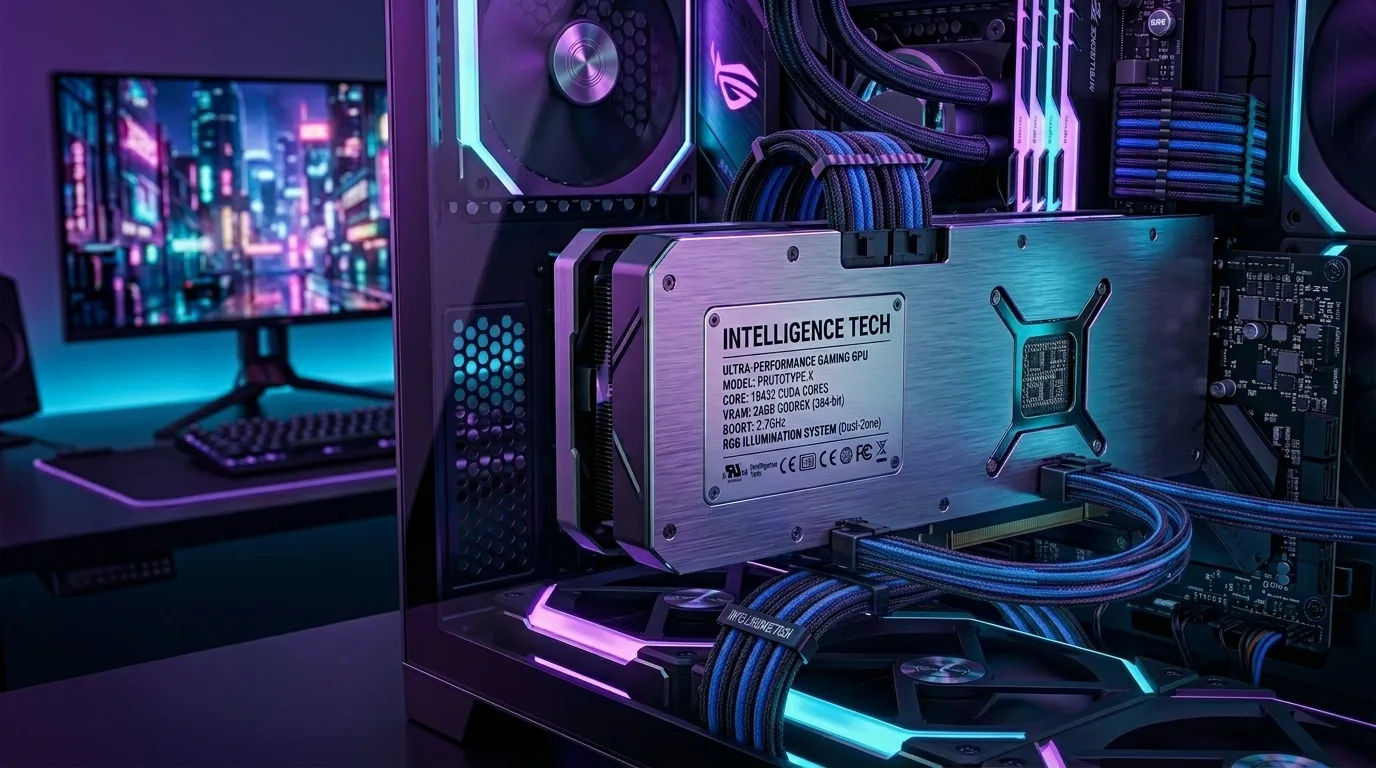
Choosing a graphics card in 2026 feels a bit like walking into a candy store with too many options and not enough patience. Prices have shifted, new architectures have landed, and the gap between flagship bragging rights and genuine value has never been wider. Whether you are building your first gaming rig or finally retiring a GPU that has served you faithfully since the pandemic years, this guide breaks down the best gaming GPUs 2026 has to offer, sorted by budget and resolution so you can stop scrolling forums at midnight and actually make a decision.
The graphics card market this year is defined by one central truth: raw power is no longer the only thing that matters. Efficiency, VRAM capacity, and smart upscaling technology now play just as big a role in determining the best graphics cards for gaming as benchmark charts do. NVIDIA, AMD, and Intel have all sharpened their lineups, and the result is a surprisingly competitive landscape where shoppers actually benefit from the rivalry. Let us walk through what is worth your money this year, and why.
Why 2026 Is a Different Kind of GPU Year
Unlike previous generations where one brand simply dominated every price bracket, 2026 has turned into a genuine three way contest. NVIDIA still leads at the very top with its Blackwell based RTX 50 series, but AMD has closed the performance gap dramatically with its RDNA 4 powered Radeon RX 9000 series. Meanwhile, Intel has quietly become a legitimate contender at the budget end with its Arc Battlemage cards. As a result, picking the best gaming GPUs 2026 has produced really comes down to what you value most: bleeding edge ray tracing and AI features, raw frame rates per dollar, or the lowest possible entry price.
Another factor shaping this year's market is VRAM. Modern open world titles and texture heavy releases are pushing past 8GB and even 12GB buffers more often than they used to, so a card's memory capacity matters just as much as its core count. Consequently, several of the picks below favor cards with generous VRAM, even when a competitor offers a slightly faster chip.
Best Gaming GPUs 2026 for 4K Resolution
If you are gaming on a 4K monitor or television, you need serious horsepower. The pixel count is four times higher than 1080p, and most midrange cards simply buckle under that load.
The Uncompromising Choice: NVIDIA RTX 5090
The RTX 5090 sits comfortably at the top of every major performance ranking this year, and for good reason. With 32GB of GDDR7 memory and the strongest ray tracing performance of any consumer card, it brute forces native 4K gaming at well over 100 frames per second in most titles, and DLSS 4 with multi frame generation pushes that even higher. That said, the 575 watt power draw and eye watering price mean it is genuinely overkill for anyone who is purely gaming rather than also running creative or AI workloads. If money is no object and you want the undisputed best of the best, this is it.
The Smarter 4K Pick: NVIDIA RTX 5080
For most enthusiasts, the RTX 5080 is actually the more sensible flagship. It delivers native 4K performance in the 80 to 110 frames per second range at high settings, comes with 16GB of VRAM to avoid texture stuttering, and draws meaningfully less power than its bigger sibling. While street prices have crept above MSRP at times this year, finding one closer to its original price point makes it one of the best gaming GPUs 2026 offers for anyone serious about 4K without needing the absolute ceiling of performance.
The Value Alternative: AMD RX 9070 XT
AMD's RX 9070 XT has earned a reputation as one of the most well rounded cards in years. It trades blows with NVIDIA's RTX 5070 Ti in raw rasterized performance, ships with 16GB of VRAM, and typically costs hundreds less than the RTX 5080. The tradeoff is that its ray tracing and upscaling tools, while improved, still trail NVIDIA's DLSS 4 ecosystem. For gamers who care more about frame rates than ray traced reflections, though, this is an excellent 4K capable card.
Best Gaming GPUs 2026 for 1440p Gaming
1440p remains the sweet spot for most enthusiasts, offering a sharp, immersive image without demanding flagship level hardware.
Balanced Performer: NVIDIA RTX 5070 Ti
The RTX 5070 Ti has emerged as something of a reference point this generation. It handles 1440p at ultra settings with ray tracing enabled while leaning on DLSS 4 to keep frame rates high, and its 16GB VRAM buffer means it will not feel outdated anytime soon. Reviewers consistently point to it as the most balanced option for anyone who wants strong visuals without stepping into flagship pricing territory.
Raw Power for Less: AMD RX 9070
If pure rasterized frame rates matter more to you than ray tracing fidelity, the standard RX 9070 deserves a long look. It comfortably handles 1440p at high refresh rates, its 16GB of memory outpaces NVIDIA's 12GB equivalent at a similar price, and it sidesteps the awkward positioning that plagues some midrange NVIDIA cards this generation.
The Awkward Middle: NVIDIA RTX 5060 Ti
The RTX 5060 Ti is a perfectly capable 1440p card, pushing medium to high settings in the 70 to 90 frames per second range. However, its biggest selling point is DLSS 4 frame generation, which can rocket performance past 120 frames per second in supported titles. The catch is that AMD's RX 9070 XT often costs only slightly more while delivering substantially better raw performance, so the 5060 Ti mainly appeals to those who specifically want NVIDIA's software ecosystem at a lower price point.
Best Gaming GPUs 2026 on a Budget
Not everyone needs or wants to spend a small fortune on a graphics card, and thankfully this year's budget tier is more competitive than it has been in a long time.
Best Overall Budget Pick: AMD RX 9060 XT
The RX 9060 XT punches above its price class, delivering smooth 1080p performance and even handling 1440p at high settings in many titles. Its 16GB VRAM configuration also future proofs it slightly better than competitors that cut corners on memory.
Intel's Breakthrough: Arc B580
Intel has made real strides with the Arc B580, which has become the go to recommendation for anyone hunting for solid 1080p performance under 300 dollars. Driver support has improved significantly since Intel entered the discrete GPU market, though some compatibility quirks in older or niche titles still occasionally surface. Even so, for the price, it is hard to argue with the value on offer.
Entry Level NVIDIA: RTX 5050
For shoppers who specifically want NVIDIA's software suite, including Reflex and NVENC encoding, at the lowest possible price, the RTX 5050 fills that niche. It will not set any speed records, but it handles 1080p gaming competently and benefits from the broader DLSS ecosystem.
How to Choose Between the Best Gaming GPUs 2026 Offers
With so many strong contenders, the decision ultimately boils down to a few honest questions. First, what resolution does your monitor actually support, since there is little point buying 4K level horsepower for a 1080p display. Second, how much do ray tracing and AI upscaling matter to you personally, since NVIDIA still holds a clear advantage there while AMD counters with better raw value. Third, consider your power supply and case airflow, particularly if a flagship card like the RTX 5090 is on your shortlist, since its power draw demands a robust system around it.
It is also worth resisting the temptation to chase the newest release purely for bragging rights. Many of the cards covered here represent mature, well optimized products, and waiting months for marginal generational improvements rarely makes sense if you want to play games today rather than next year.
Final Thoughts
The good news for shoppers this year is that nearly every budget tier has a genuinely excellent option, something that was not always true in past GPU generations plagued by shortages and inflated pricing. From the brute force performance of the RTX 5090 down to the surprisingly capable Arc B580, the best gaming GPUs 2026 has introduced cover every type of gamer and every type of wallet. Take stock of your resolution, your budget, and how much you value features like ray tracing versus raw frame rates, and you will land on a card that keeps you happily gaming for years to come.