Ever reached the office after a crowded train ride and already felt the waistband curl, the fabric turn damp, or the legs start bunching? That problem often begins with the material, though cut, stitching, and size have an equal say in how a pair performs.
This press release looks at the fabric choices behind men’s underwear in Indian weather, especially for men who spend long hours commuting, working, exercising, or moving between outdoor heat and air-conditioned rooms. Cotton remains a dependable option, but buyers should also examine fabric weight, stretch recovery, seam placement, and drying time before choosing a pair.
Why Cotton Still Works For Daily Wear
Cotton allows air to pass through the fabric and feels familiar against the skin. For an office day, a short commute, or several hours indoors, that combination works well. It also absorbs perspiration instead of leaving it on the surface.
The drawback appears after heavier activity. A thick cotton brief may stay damp after a motorcycle ride, a packed metro journey, or a lunchtime walk in humid weather. Once moisture remains trapped, the fabric can feel heavier and may rub near the thigh or waistband.
For men’s underwear in Indian weather, buyers should look beyond the word “cotton” on the pack. Fabric density makes a difference. So does the amount of stretch added to the garment. A cotton-rich fabric with limited elastane may recover better after sitting, walking, and repeated washing.
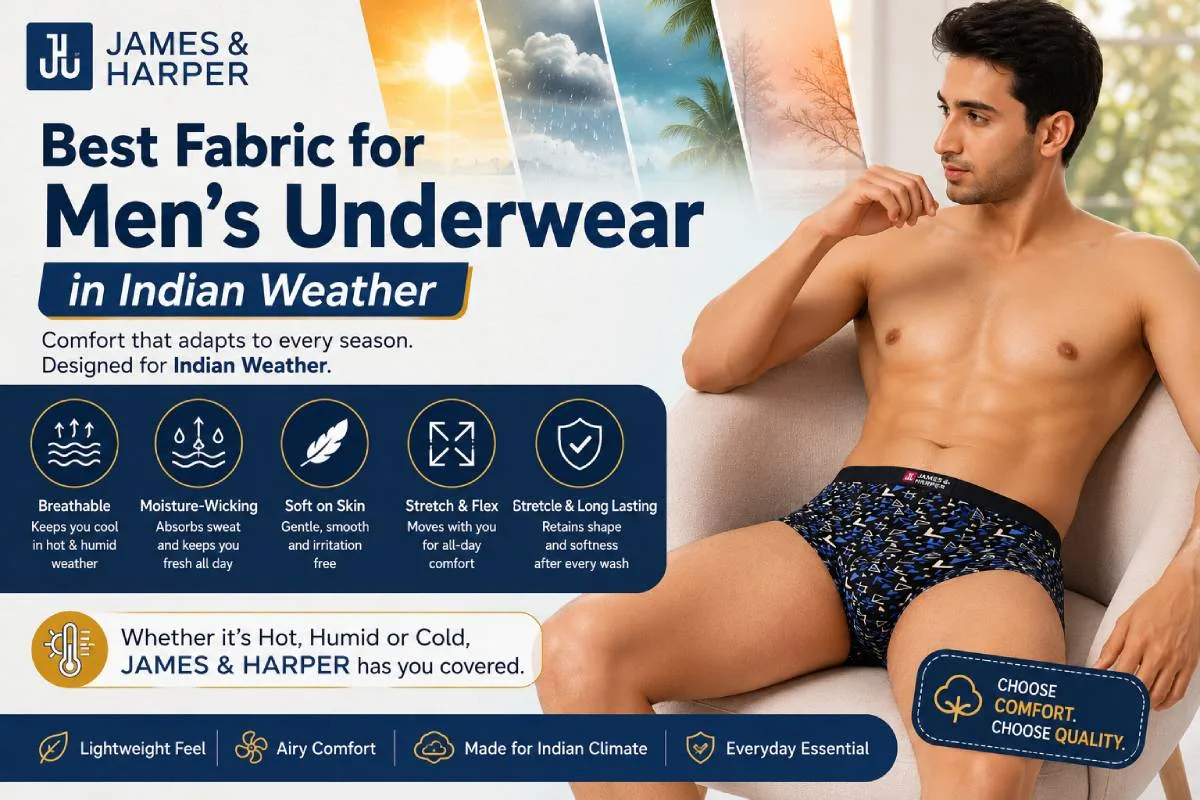
James & Harper uses breathable cotton and cotton-rich fabrics for warm conditions, with lighter constructions suited to workdays, travel, and regular movement.
How Common Fabrics Perform In Heat And Humidity
Different materials behave differently after four or five hours of wear. The label gives the first clue, but the fabric should also feel light, flexible, and firm enough to return to shape.
Fabric TypeWhat It Does WellSuitable UseWhat To CheckCottonFeels soft and allows airflowOffice wear and daily routinesThicker fabric may stay dampCotton-Rich FabricAdds stretch and shape recoveryCommuting and longer workdaysCheck the fiber percentagesModalFeels smooth and lightIndoor use and warm eveningsFollow wash instructionsStretch FabricSupports movement and dries fasterGym sessions and travelHigh synthetic content may feel warmMen’s underwear in Indian weather often needs a small amount of elastane because pure cotton can loosen around the legs after extended wear. Too much synthetic fiber creates another problem. Some garments dry fast yet feel warm because the construction allows little ventilation.
Modal offers a soft surface and lower fabric weight. It can suit men who dislike rough seams or heavy material, though hot water and high dryer temperatures may shorten its useful life. Marketing labels such as “cooling” or “performance” say little without a fiber breakdown and proper care details.
Fit Details Buyers Often Miss
A breathable fabric cannot rescue a poor cut. Waistbands that roll, loose leg openings, and thick inner seams can turn a decent garment into an irritating one before lunchtime.
Men comparing men’s innerwear should check a few details in person:
- Pull the waistband gently and see whether it returns without rippling.
- Run a finger over the inner seams. Raised stitching may rub during walking.
- Check the leg opening while seated, not only while standing.
- Choose a pouch construction that supports without tight compression.
- Compare the size chart with waist measurements rather than trouser size alone.
- Inspect the fabric under light. Very thin material may lose coverage after repeated washing.
James & Harper offers briefs, trunks, active trunks, and vests in several fits, sizes, colors, and prints. Product terms such as Supreme Soft, Skin Sense Fabric, Forever Fresh, and TrendEase should appear as brand positioning unless the company confirms the technical testing behind each name.
Men’s underwear in Indian weather should also match the activity. Briefs suit men who prefer compact support. Trunks add some thigh coverage and work under formal trousers. Active trunks serve gym sessions, longer walks, and travel days where stable leg openings become more important.
Washing Habits That Affect Fabric Life
Many pairs lose shape because of laundry habits, not poor fabric. Hot water weakens elastic fibers. Strong detergent can leave the surface rough, while high-heat drying may damage waistbands faster than regular wear.
Men’s innerwear should dry fully before storage, especially during the monsoon. Damp fabric placed inside a closed drawer can develop an odor even after washing. Cool or lukewarm water, mild detergent, and air-drying in a ventilated space usually protect the garment for longer.
Rotation also helps. Wearing the same three pairs every week gives the elastic little recovery time. A wider rotation reduces repeated strain, particularly around the waistband and leg openings. Replace a garment once it stays loose after washing, develops rough seams, or forms thin patches near high-friction areas.
Fabric choice should follow the wearer’s routine, not the loudest claim on the package. Check the label, test the stretch, review the stitching, and select the right cut before consulting an apparel specialist about men’s underwear in Indian weather.