What Defines the Best Drilling Equipment for Construction and Mining?
The best drilling equipment delivers a high penetration rate, consistent torque output, and durability exceeding 3,000–10,000 operating hours in construction and mining environments. These machines maintain drilling accuracy within ±2% deviation and operate under load conditions exceeding 50–500 kN force.
Performance metrics define equipment quality using penetration rate (m/hour), rotational speed (RPM), and energy efficiency (kW per meter drilled). Equipment achieving 15–60 meters per day in mining and 5–20 meters per day in construction qualifies as high-performance.
Construction and mining operations depend on drilling systems that sustain uptime above 95%, maintenance intervals above 500 hours, and vibration control below 10 m/s².
Types of Drilling Equipment Used in Construction and Mining
Construction and mining industries use rotary drills, percussion drills, DTH systems, and auger drills for specific ground conditions.
Rotary Drilling Rigs
Rotary drilling rigs provide deep drilling capability exceeding 100 meters with stable rotational force. These machines use drill strings and rotating bits to penetrate soil and rock layers.
Rotary rigs include examples such as:
- Direct rotary rigs (e.g., water well drilling)
- Reverse circulation rigs (e.g., mineral exploration)
- Top-drive rotary rigs (e.g., oil and gas drilling)
Rotary systems operate at 100–300 RPM and deliver penetration rates of 10–30 meters per hour.
Percussion Drilling Machines
Percussion drilling machines break hard materials using repeated impact force exceeding 1,500 blows per minute. These systems combine hammering action with rotational movement.
Percussion drills include examples such as:
- Jackhammers (e.g., demolition work)
- Hammer drills (e.g., concrete drilling)
- Rock breakers (e.g., quarry operations)
Percussion systems perform efficiently in compressive strength materials above 100 MPa.
Down-the-Hole (DTH) Drilling Systems
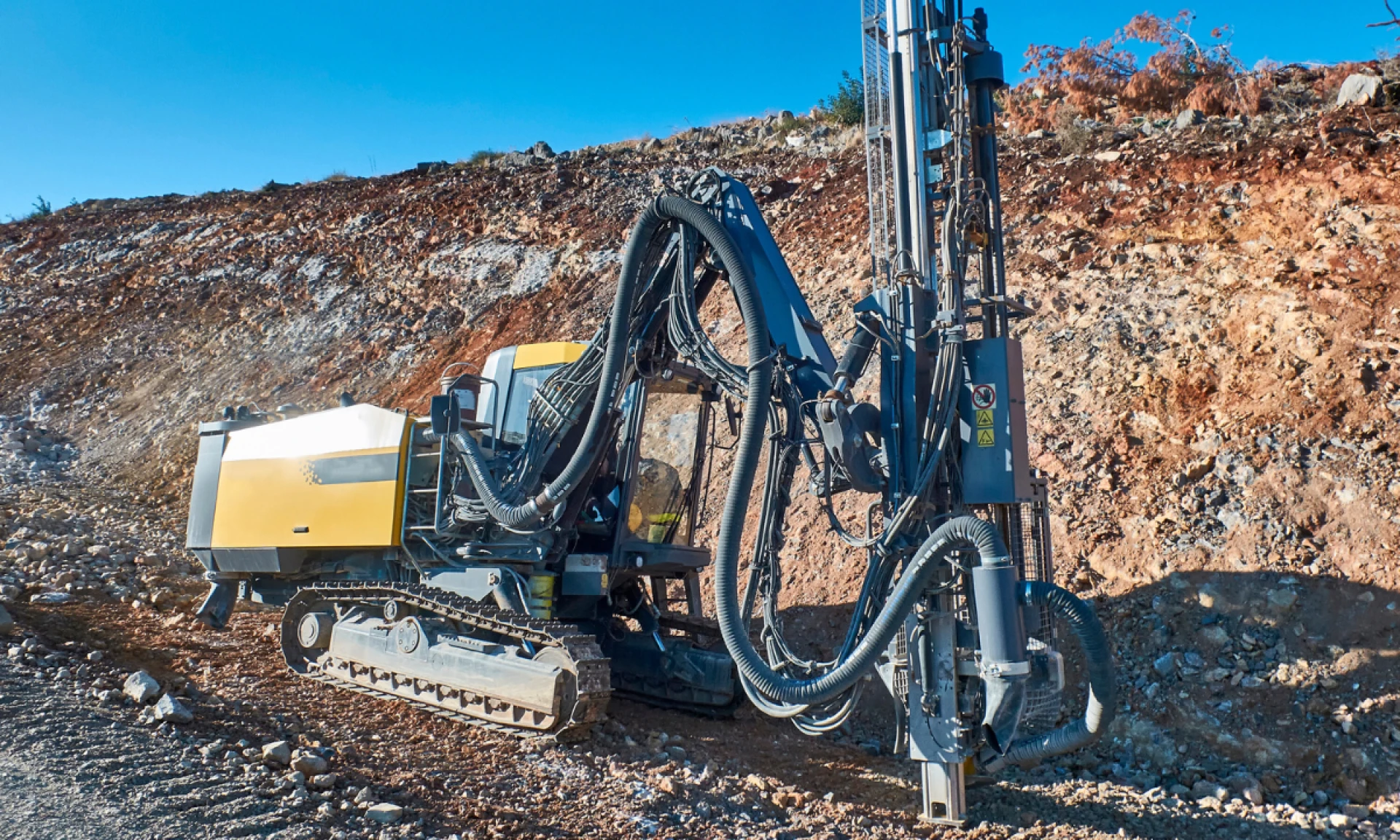
DTH drilling systems deliver high efficiency in hard rock formations by placing the hammer directly behind the drill bit. This configuration minimizes energy loss.
DTH systems include examples such as:
- High-pressure DTH rigs (e.g., blast hole drilling)
- Low-pressure DTH rigs (e.g., shallow mining)
- Water well DTH rigs (e.g., borehole drilling)
DTH rigs achieve penetration rates of 20–40 meters per hour and hole diameters between 90 mm and 350 mm.
Auger Drilling Machines
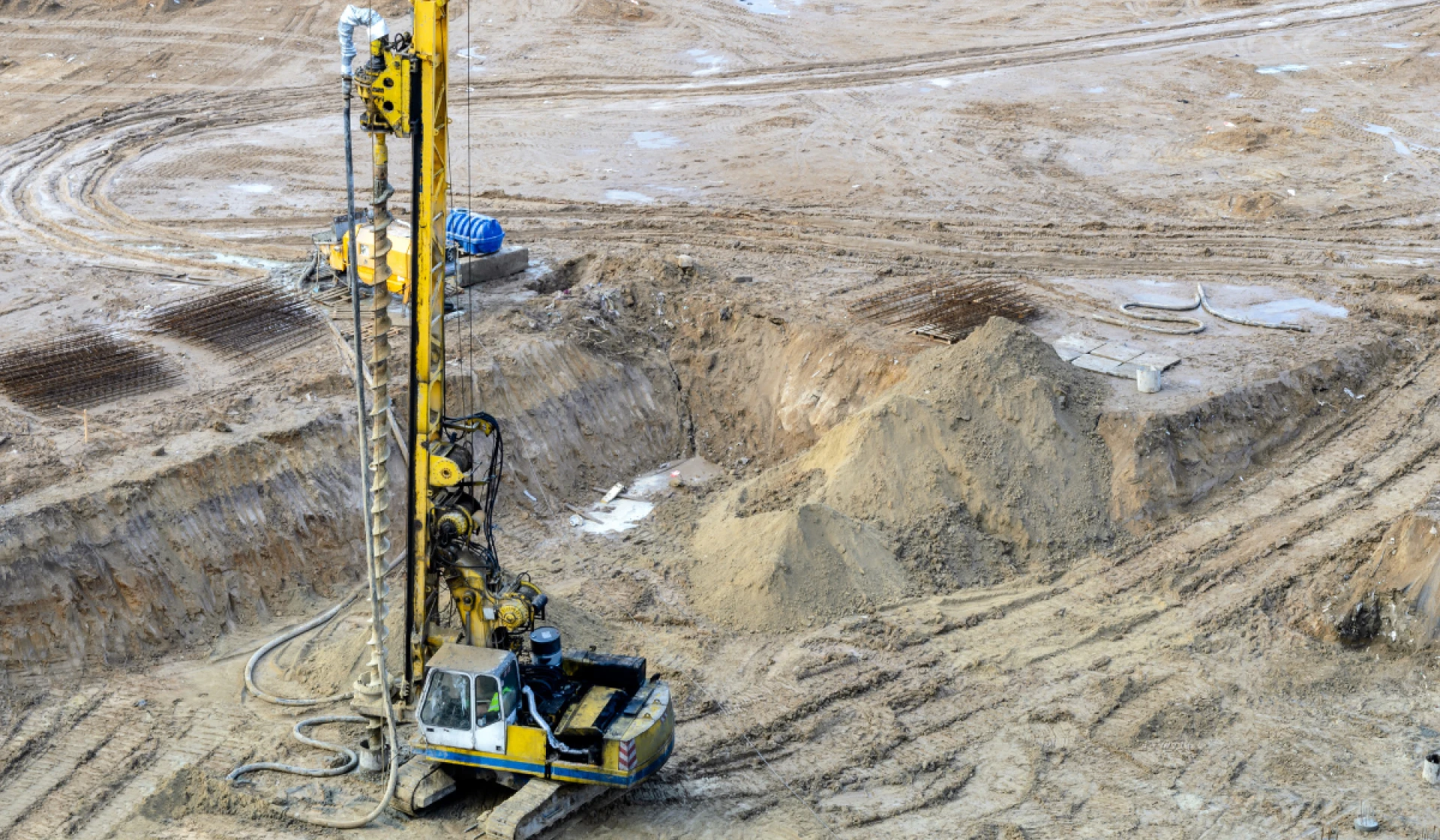
Auger drilling machines provide efficient soil removal for shallow depths below 30 meters. These systems use a helical screw blade to transport material upward.
Auger drills include examples such as:
- Continuous flight augers (e.g., foundation drilling)
- Bucket augers (e.g., clay excavation)
- Hand augers (e.g., small-scale construction)
Auger systems operate at torque levels of 5,000–50,000 Nm, depending on diameter size.
Key Features of High-Performance Drilling Equipment
High-performance drilling equipment integrates power efficiency, structural durability, and advanced control systems.
Power and Torque Output
High-quality drilling systems deliver torque output between 2,000 Nm and 50,000 Nm, depending on application type. Hydraulic motors ensure consistent torque under variable loads.
Structural Durability
Durable drilling equipment uses alloy steel frames and reinforced joints to withstand impact forces above 200 kN. Heat-treated components extend service life beyond 5,000 hours.
Precision and Control
Advanced control systems maintain drilling accuracy within ±1–2% deviation. Digital monitoring systems track depth, pressure, and rotational speed in real time.
Mobility and Flexibility
Crawler-mounted drilling rigs enable movement across uneven terrain with gradients up to 30 degrees. Truck-mounted rigs support rapid deployment across multiple sites.
Best Drilling Equipment for Construction Applications
Construction drilling equipment focuses on foundation stability, anchoring, and structural precision.
Foundation Drilling Equipment
Foundation drilling rigs create stable boreholes with diameters between 300 mm and 2,500 mm. These machines support heavy structural loads.
Examples include:
- Rotary piling rigs (e.g., bridge construction)
- CFA rigs (e.g., continuous flight auger systems)
- Micro piling rigs (e.g., urban construction)
Concrete Drilling Machines
Concrete drilling machines deliver precise hole creation with minimal structural damage. Diamond core drills achieve clean cuts in reinforced concrete.
Examples include:
- Core drilling machines (e.g., building retrofitting)
- Hammer drills (e.g., anchor installation)
- Wall saw drilling systems (e.g., demolition cutting)
Road and Infrastructure Drilling
Road drilling machines perform asphalt and pavement penetration with high accuracy. These systems maintain a consistent hole diameter.
Examples include:
- Asphalt coring drills (e.g., highway maintenance)
- Horizontal drilling rigs (e.g., utility installation)
- Trenchless drilling systems (e.g., pipeline installation)
Best Drilling Equipment for Mining Applications
Mining drilling equipment prioritizes high penetration rates and resistance to abrasive materials.
Blast Hole Drilling Rigs
Blast hole drilling rigs create holes with diameters between 100 mm and 400 mm for explosive placement. These machines operate in open-pit mining.
Examples include:
- Rotary blast hole rigs (e.g., coal mining)
- DTH blast rigs (e.g., hard rock mining)
- Electric drill rigs (e.g., large-scale operations)
Underground Drilling Equipment
Underground drilling machines operate in confined spaces with high precision. These systems support tunnel expansion and ore extraction.
Examples include:
- Jumbo drills (e.g., tunnel drilling)
- Long-hole drilling rigs (e.g., ore extraction)
- Roof bolting rigs (e.g., mine stabilization)
Exploration Drilling Equipment
Exploration drilling systems collect geological samples with high accuracy. Core drilling rigs extract cylindrical rock samples.
Examples include:
- Diamond core drills (e.g., mineral exploration)
- Reverse circulation drills (e.g., soil sampling)
- Portable exploration rigs (e.g., remote sites)
Top Advantages of Advanced Drilling Equipment
Advanced drilling equipment increases productivity, reduces downtime, and enhances operational safety.
Key Benefits
- Increase drilling speed by 20–50% through optimized torque delivery
- Reduce equipment downtime below 5% with predictive maintenance systems
- Improve drilling accuracy by 25–40% using automated controls
- Extend equipment lifespan beyond 5,000 operating hours with durable materials
Cost and Performance Comparison of Drilling Equipment
Different drilling equipment types vary in cost, efficiency, and operational output.
Performance and Cost Breakdown
- Rotary drilling rigs: $50,000–$500,000 cost, 10–30 m/hour drilling speed
- DTH drilling systems: $20,000–$150,000 cost, 20–40 m/hour drilling speed
- Percussion drills: $500–$5,000 cost, 1–5 m/hour drilling speed
- Auger drilling machines: $2,000–$50,000 cost, 5–15 m/hour drilling speed
Operational cost includes fuel consumption, maintenance, and labor input.
Factors for Selecting the Best Drilling Equipment
Equipment selection depends on material hardness, drilling depth, and project scale.
Material Hardness
Hard rock formations above 150 MPa require DTH or rotary rigs, while soft soil below 50 MPa supports auger systems.
Examples include:
- Granite drilling (e.g., mining operations)
- Limestone drilling (e.g., quarry sites)
- Clay drilling (e.g., construction foundations)
Drilling Depth
Deep drilling above 100 meters requires rotary rigs, while shallow drilling below 20 meters supports auger or percussion systems.
Project Scale
Large-scale projects exceeding 1,000 meters of total drilling require high-capacity rigs with continuous operation capability. Small-scale projects use portable systems.
Technological Advancements in Drilling Equipment
Modern drilling equipment integrates automation, sensor technology, and advanced materials to enhance performance.
Smart Monitoring Systems
Sensor-based systems track vibration, temperature, and pressure in real time to prevent failure. Predictive maintenance reduces repair costs by 25–30%.
Advanced Drill Bits
Polycrystalline diamond compact (PDC) bits and tungsten carbide bits increase drilling efficiency by up to 100% in abrasive formations.
Examples include:
- PDC bits (e.g., oil drilling)
- Carbide bits (e.g., mining)
- Diamond bits (e.g., precision construction)
Automation and Remote Operation
Automated drilling rigs reduce labor costs by 20–40% and improve operational safety in hazardous environments. Remote-controlled systems enable operation from safe distances.
Statistical Insight on Drilling Equipment Performance
Industrial data shows that high-efficiency drilling equipment increases overall project productivity by 30% and reduces operational costs by 20% over 3 years. Equipment with predictive maintenance achieves uptime rates above 95%.
Conclusion
The best drilling equipment for construction and mining combines high torque output, durable construction, and advanced automation to deliver consistent performance. Rotary rigs, DTH systems, percussion drills, and auger machines serve defined operational roles based on material type and depth.
Equipment selection based on hardness, depth, and project scale ensures optimal results with measurable efficiency gains. Advanced technologies such as smart monitoring systems, automated controls, and high-performance drill bits enhance productivity, reduce costs, and extend equipment lifespan beyond 5,000 operational hours.
Frequently Asked Questions (FAQ)
What is the best drilling equipment for hard rock mining?
DTH drilling systems and rotary rigs provide the highest efficiency in hard rock mining with penetration rates of 20–40 meters per hour. These systems minimize energy loss and maintain consistent impact force.
How does drilling equipment improve construction efficiency?
Drilling equipment improves construction efficiency by increasing drilling speed, maintaining precision within ±2%, and reducing downtime below 5%. Automated systems further enhance productivity.
Why is torque important in drilling equipment?
Torque determines the drilling system’s ability to penetrate hard materials by delivering rotational force between 2,000 Nm and 50,000 Nm. Higher torque ensures stable performance in dense formations.
What factors affect drilling equipment selection?
Material hardness, drilling depth, and project scale directly influence equipment selection and performance outcomes. Matching these parameters ensures optimal efficiency.
How does automation impact drilling operations?
Automation reduces labor costs by up to 40%, increases accuracy by 25–40%, and enhances safety through remote operation capabilities. These systems also improve monitoring and maintenance efficiency.
Get in Touch
+92-42-3788-3300
+92-42-3788-3301-2
+92-33-4488-4099 CEO