
If you run a dog boarding business, you already know the daily grind. Phone calls about open dates. Paper intake forms getting lost. A calendar that never quite matches what's actually happening in the kennel. At some point, most owners start looking for the best dog boarding software, hoping it will fix the chaos before it fixes them.
This guide breaks down what dog boarding software actually does, when your business needs it, and what to check before you commit to one. No hype, just the practical stuff.
What Is Dog Boarding Software?
Dog boarding software is a tool built to run the daily operations of a boarding kennel or dog daycare. It usually combines booking, scheduling, pet records, and payments into one system instead of scattered spreadsheets and notebooks.
Think of it as the digital version of your front desk. Instead of writing a dog's name on a whiteboard, you enter it into the system once. From there, the software tracks the stay, the owner's contact info, feeding instructions, and payment status.
Some programs focus only on scheduling. Others cover the full picture, including customer communication and staff management. The right fit depends on how your business actually operates.
Why Does It Matter for a Pet Boarding Business?
A boarding business runs on details. Which dog is allergic to chicken. Which owner needs a pickup reminder. Which kennel is open next weekend. Missing one of these details can mean a stressed dog, an angry client, or a lost booking.
Good pet boarding management software keeps those details in one place. Staff can pull up a dog's record in seconds instead of digging through paper files. Owners can book online instead of calling during your busiest hours.
This matters even more as a business grows. A kennel with ten dogs a week can survive on a notebook. A kennel with fifty bookings a week usually can't, at least not without a lot of stress.
Better organization behind the scenes also shows up in the quality of care clients actually see. Staff who aren't buried in paperwork have more time and attention for the dogs in their care during a boarding stay.
When Should a Business Use Boarding Software?
Not every business needs software on day one. A small home-based sitter with a handful of regular clients might do fine with a shared calendar for a while.
Software starts to earn its place when any of these become true:
- You're missing bookings because the phone rings while you're busy with dogs
- Staff can't find pet records quickly during check-in
- Double bookings or scheduling mix-ups happen more than once
- You're spending hours each week on manual invoicing
- Clients are asking for online booking, and you don't have it
If two or more of these sound familiar, it's a good sign the business has outgrown manual methods.
How Does Dog Boarding Software Work?
Most dog boarding reservation software follows a similar basic flow, even if the interface looks different from one program to the next.
- A client books a stay online or a staff member enters it manually.
- The system checks availability and confirms the reservation.
- Pet details, vaccination records, and care notes are stored with the booking.
- The schedule updates automatically so staff know who's arriving and leaving each day.
- Payment is collected online or recorded at pickup.
- The client gets a confirmation, and sometimes reminders, without staff having to send them manually.
Once this is set up, a lot of the back-and-forth that used to happen over phone and email just disappears.
What to Look for in the Best Dog Boarding Software
This is where most of the confusion happens. There are dozens of dog boarding software programs out there, and they don't all serve the same kind of business. Here's what to actually pay attention to.
Online Booking and Reservations
Online booking is often the biggest time-saver in the whole system. Instead of taking every reservation over the phone, clients can check availability and book a stay themselves, day or night.
Look for software that lets you set your own availability, cap the number of dogs per day, and automatically confirm or hold bookings for approval. This one feature alone can cut down a huge amount of phone traffic.
Scheduling Features
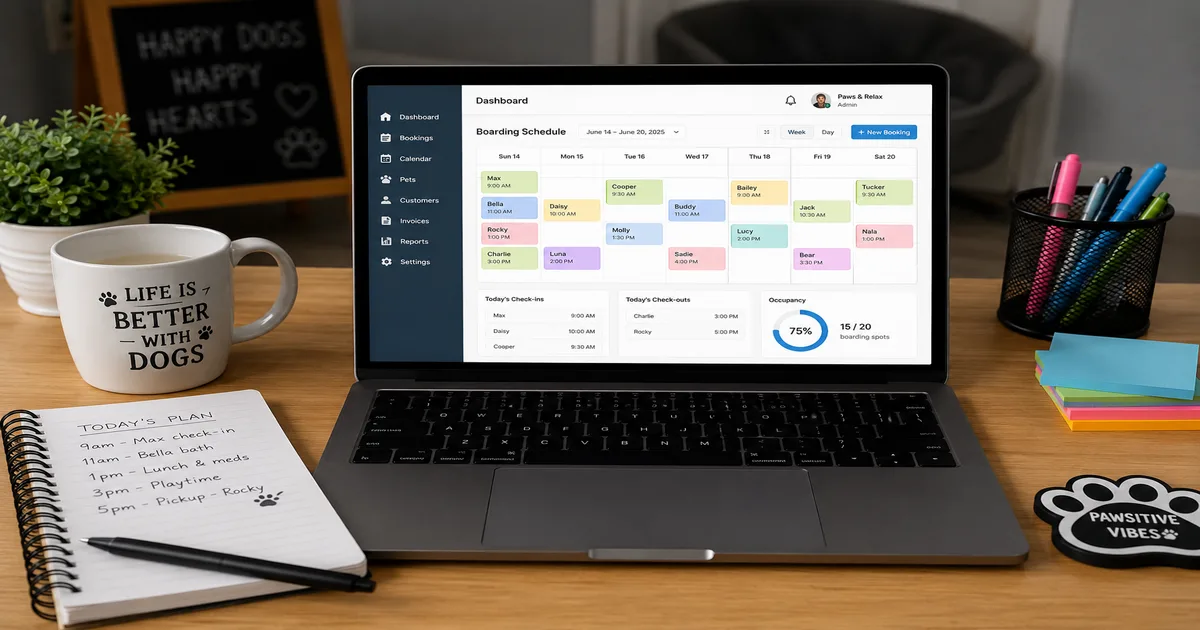
Dog boarding scheduling software should give you a clear view of who's arriving, who's leaving, and how full each day is. A calendar view that shows this at a glance is far more useful than a list buried in a spreadsheet.
Some programs also handle staff scheduling for the boarding scheduling side of the business, so you can match staff hours to how busy the kennel actually is.
Pet Records and Customer Management
Every stay comes with details that matter: vaccination dates, feeding schedules, medications, behavior notes. Vaccine timing and core requirements generally follow standard veterinary guidance, such as the vaccination principles published by the American Veterinary Medical Association, so it helps if the software can flag a record that's missing or about to expire. A system built for pet management should store all of this against each dog's profile so staff isn't relying on memory or sticky notes.
Customer management matters just as much. You want quick access to a client's contact info, past stays, and any special requests, especially during a busy check-in rush.
Payments
Manual invoicing eats up time that could go toward actually caring for the dogs. Look for software that lets clients pay online at booking or during their stay, and that keeps a clear payment history for every account.
This also reduces awkward conversations about unpaid balances at pickup.
Free vs Paid Options
Some businesses search for dog boarding software free or free dog boarding software, especially when just starting out. Free plans can work for very small operations, but they usually limit the number of bookings, staff accounts, or features you can access.
Before choosing based on price alone, check whether the free version actually covers what your day-to-day operations need. A cheap tool that's missing scheduling or online booking can end up costing more time than it saves.
Common Mistakes to Avoid
Choosing dog boarding business software is easy to get wrong, especially under time pressure. A few mistakes come up again and again.
- Choosing based only on price. The cheapest option isn't always the one that fits your workflow, and switching software later is disruptive.
- Ignoring online booking. Some owners assume phone bookings are fine forever. Clients increasingly expect to book the same way they book a hotel.
- Not checking scheduling features closely. A calendar that looks nice but doesn't show real-time availability can cause double bookings.
- Using too many disconnected tools. Combining a separate calendar app, a separate payment app, and a separate spreadsheet for records often creates more confusion than one connected system.
- Overlooking customer communication. If the software can't send confirmations or reminders automatically, staff end up doing it manually anyway.
- Skipping the trial period. Signing up for a full year before testing the software on a real week of bookings is a common and costly mistake.
Practical Tips for Choosing the Right Software
Start by listing your actual daily problems before you look at any dog boarding software reviews. It's easier to judge a tool against real pain points than against a features list.
Test the free trial with real bookings, not just a demo account. This shows you how the software handles your actual schedule, not a simplified example.
Ask your staff to try it too. The people doing check-ins and feedings every day will notice usability issues you might miss from behind a desk.
Check how support works before you need it. A software provider that answers questions quickly during setup is usually a good sign for how they'll handle problems later.
Pricing tiers, setup time, and feature limits vary a lot between providers, so it helps to see a direct comparison before you commit. This guide to choosing pet boarding software walks through that comparison in more detail.
Conclusion
Finding the best dog boarding software isn't about picking whatever ranks highest on a list. It's about matching a tool to how your business actually runs day to day. Online booking, clear scheduling, solid pet records, and simple payments cover most of what a boarding business needs.
Take the time to test a few options with real bookings before committing. The right pet boarding software should make your daily work easier, not add another system to manage on top of everything else.