
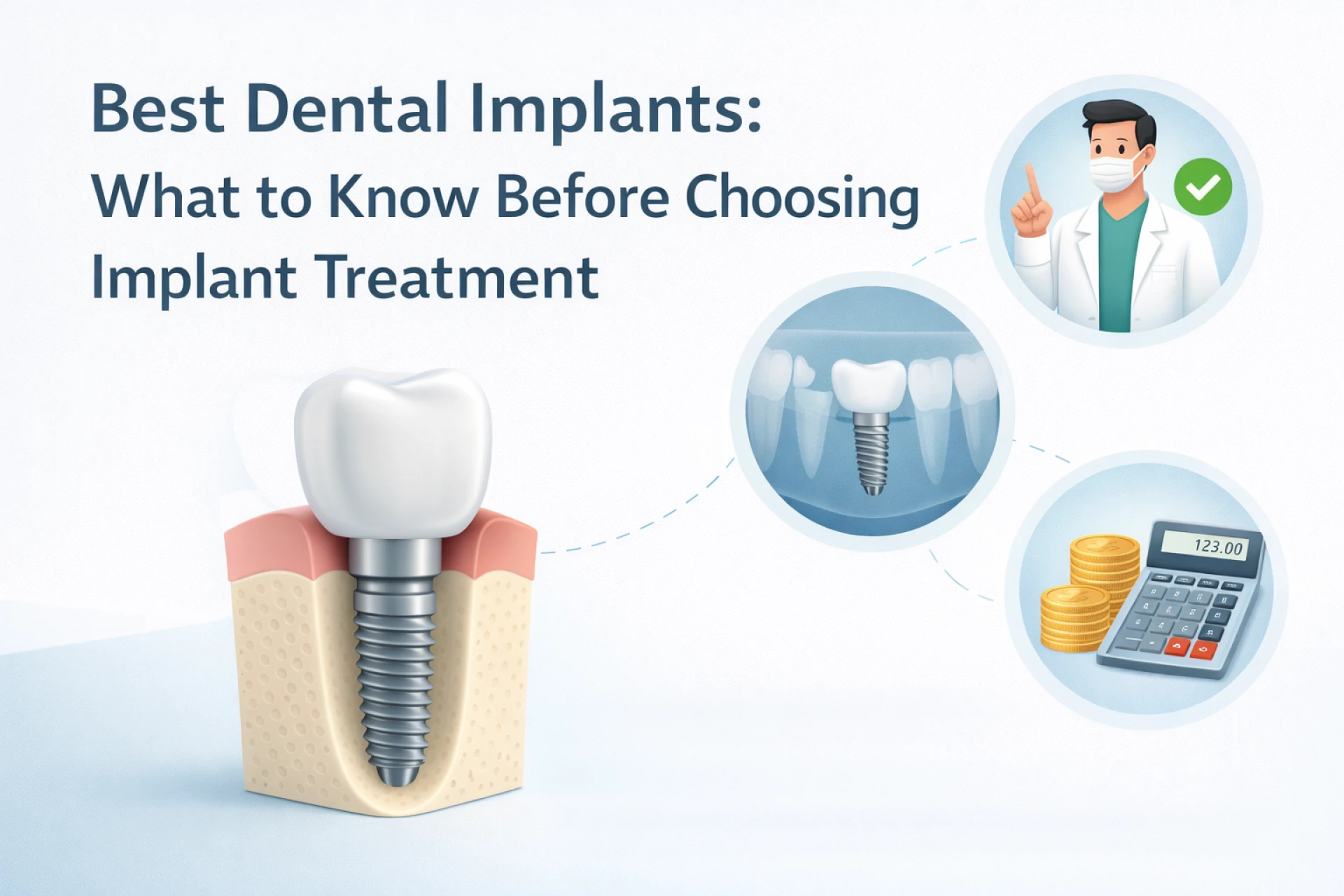
Choosing dental implants is one of the most significant decisions a person can make about their oral health. The best dental implants offer a permanent, natural-looking solution for missing teeth — but the process involves meaningful medical and financial commitment, and going in without a clear understanding of what to expect can lead to uncertainty or disappointment. Whether you are missing one tooth or several, this guide gives you the foundational knowledge you need before beginning treatment.
What Dental Implants Actually Are
A dental implant is a titanium post surgically placed into the jawbone to serve as an artificial tooth root. Once the implant integrates with the surrounding bone — a process called osseointegration — a custom-made crown is attached on top, producing a result that looks, feels, and functions like a natural tooth.
The best dental implants are distinguished from other tooth replacement options like bridges or dentures by this root-level integration. A bridge relies on adjacent teeth for support. Dentures rest on the gum surface. Implants are anchored directly in the jaw, which is why they perform so much more like natural teeth in daily use.
Are You a Good Candidate?
Not every patient is immediately ready for implant treatment. The key factors that determine candidacy include:
• Sufficient jawbone density — the implant post needs enough bone to anchor into. Patients who have experienced significant bone loss following tooth loss may require a bone grafting procedure before implants can be placed.
• Healthy gums — active gum disease must be treated and resolved before implant treatment begins. Gum health directly affects long-term implant success.
• General health — certain medical conditions and medications affect healing and osseointegration. A full medical and dental review is part of any responsible implant consultation.
• Non-smoking status — smoking significantly increases the risk of implant failure by impairing healing. Smoking cessation is often recommended before and after placement.
An experienced implant dentist will conduct a thorough evaluation — typically including dental X-rays or 3D cone beam imaging — to assess whether you are ready for implants or whether preparatory treatment is needed first.
Understanding the Treatment Timeline
One of the most important things to understand about the best dental implants is that the treatment takes time. Unlike a filling or a crown placed on an existing tooth, implant treatment involves a biological process that cannot be rushed.
A typical implant timeline looks like this:
- Initial consultation and imaging
- Any preparatory treatment — extractions, bone grafting, gum treatment — if required
- Implant post placement surgery
- Healing and osseointegration period — typically three to six months
- Abutment placement
- Crown fabrication and attachment
The full process from initial consultation to final crown can range from several months to over a year depending on individual circumstances. This timeline is not a drawback — it is the biological reality of achieving a result that is meant to last decades.
What Makes Implants the Best Choice for Most Patients
When evaluating tooth replacement options, the best dental implants stand out across several meaningful criteria:
• Longevity — with proper care, implants can last a lifetime. Most other restorations require replacement within ten to fifteen years.
• Function — implants restore near-normal chewing function. Patients can eat the foods they enjoy without the restrictions associated with dentures.
• Bone preservation — when a tooth is lost, the jawbone in that area begins to resorb. An implant stimulates the bone the same way a natural tooth root does, preventing this deterioration.
• Aesthetics — implant crowns are custom-fabricated to match surrounding teeth in color, shape, and size. A well-placed implant is virtually indistinguishable from a natural tooth.
• No impact on adjacent teeth — unlike a bridge, an implant does not require grinding down neighboring teeth.
Questions to Ask at Your Consultation
Before committing to treatment, a productive consultation should address:
• The implant system and materials being used
• The surgeon's experience and volume of implant procedures performed
• What the full treatment cost includes — imaging, surgery, abutment, crown, and any preparatory work
• The warranty or guarantee on the crown and the implant itself
• The practice's protocol for managing any complications
Oakwood Dental takes a thorough, patient-centered approach to implant consultations, ensuring that every patient understands their options, timeline, and expected outcomes before any treatment begins. For patients exploring the best dental implants available, starting with a comprehensive evaluation is always the right first step.