Choosing the right bathroom floor tiles is essential for areas exposed to water, moisture, and frequent use. Safety, durability, and aesthetic appeal are top priorities when designing or renovating bathrooms, especially in the UK where wet conditions are common.
If you are exploring options for the best porcelain tiles in London, understanding which floor tiles work well in slippery environments will help you create a stylish yet practical bathroom that performs well over time.
This guide explains how to select bathroom floor tiles that balance slip resistance, water performance, easy cleaning, and visual appeal—without compromising on modern design.
What Makes Bathroom Floor Tiles Different?
Bathroom floor tiles face unique challenges. They must cope with water splashes, humidity, and frequent foot traffic. Not all tiles are designed for wet environments, so it’s important to understand key characteristics that make certain tiles better suited to wet and slippery bathroom floors.
Good bathroom floor tiles should:
- Offer excellent slip resistance
- Resist water absorption
- Withstand chemicals and cleaning products
- Be easy to maintain
Choosing the right tiles improves both safety and comfort in spaces such as showers, wet rooms, and family bathrooms.
Slip Resistance: Why It Matters
Slip resistance is one of the most crucial factors when choosing bathroom floor tiles. UK safety standards often recommend tiles with higher slip-resistant properties to reduce the risk of accidents, especially in wet conditions. Tile manufacturers typically use ratings such as R10 and R11 to indicate slip resistance levels suitable for domestic bathrooms.
Tiles with structured or textured surfaces create increased friction underfoot, which helps prevent slips even when the floor is wet. Smooth, polished tiles may look elegant but can become hazardous without appropriate finishes.
Porcelain: The Top Choice for Wet Bathrooms
Porcelain tiles are widely recognised as one of the most suitable options for bathroom floor tiles in wet environments. Fired at high temperatures, porcelain becomes dense and less porous than many other materials. This means it absorbs very little water and resists staining, cracking, and colour fading.
Porcelain bathroom floor tiles often combine:
- Low water absorption
- High durability
- Wide range of finishes, including stone-effect and matt surfaces
- Good behaviour under wet and humid conditions
These qualities make porcelain tiles ideal for busy family bathrooms and frequently used shower areas.
Recommended Tile Finishes for Safety and Style
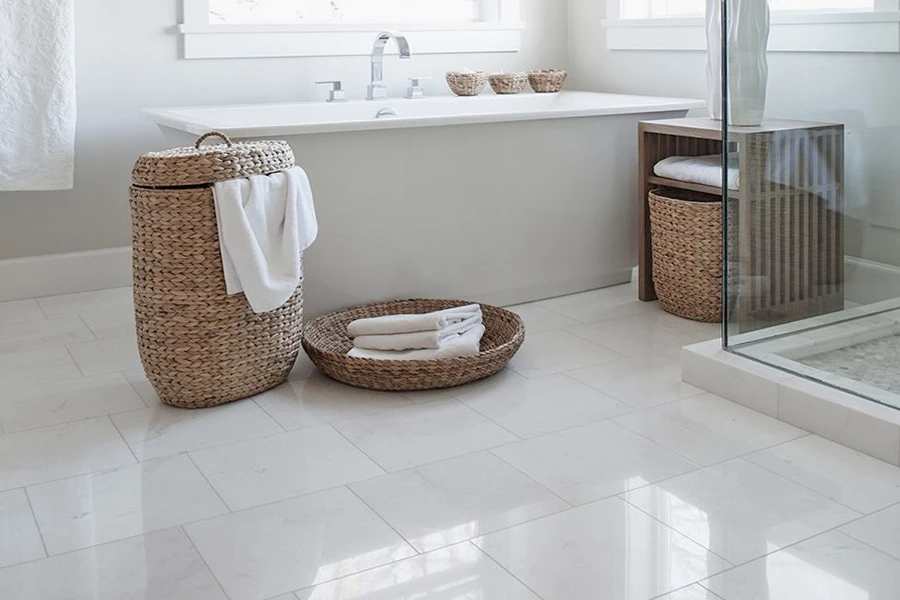
When selecting bathroom floor tiles, finish affects both performance and appearance. A matt or textured finish is generally preferred for safety. Such finishes offer enough grip to reduce slip risk while maintaining a refined look.
Matt finishes also hide water spots and smudges more effectively than glossy surfaces. For contemporary bathroom designs, stone-effect and concrete-look matt tiles are popular because they combine modern aesthetics with practical performance.
Tile Sizes and Layouts That Work Best
Tile size and layout influence how the bathroom looks and feels. Smaller tiles with more grout lines can provide extra grip due to increased edges underfoot, but too many grout lines mean more cleaning. Medium-sized tiles, such as 300×600 mm or 600×600 mm formats, often strike a balance between grip, fewer seams, and easier maintenance.
Larger tiles can create a clean, expansive look in more spacious bathrooms, while patterned or textured formats can add visual interest without affecting safety.
Colour Choices for Wet Areas
Light and neutral colours are often preferred for bathroom floor tiles because they reflect light and make smaller spaces feel larger. Shades like soft grey, beige, and off-white also conceal minor water marks better than very dark tiles. However, darker colours with textured finishes can suit larger bathrooms where slip resistance and high visual contrast are priorities.
Colour choice also influences the overall design; coordinating floor tiles with wall tiles or fixtures creates a cohesive look.
Grout and Maintenance Considerations
Grout lines are more vulnerable to dirt and discolouration in wet spaces. Choosing complementary grout colours and using mould-resistant grout help reduce visible staining over time. Sealing grout where recommended further protects against water penetration and mould build-up.
Routine care for bathroom floor tiles includes sweeping to remove loose debris and mopping with a pH-neutral cleaner. Avoiding harsh chemicals preserves both tile surface and grout integrity.
Tile Designs That Combine Safety and Trends
Modern bathroom floor tiles offer a range of designs that balance aesthetics with performance. Stone-effect matt tiles mimic the natural textures of slate or limestone, providing grip and a timeless look. Concrete-style tiles suit contemporary interiors and pair well with minimalist fixtures. Textured geometric patterns can add depth while improving slip resistance.
If you are comparing options available locally, resources like top bathroom tiles in London showcase a variety of designs that meet both style and functional needs.
Special Areas: Showers and Wet Rooms
Showers and wet rooms require careful tile selection because water exposure is constant. For these areas, high slip resistance combined with effective drainage is essential. Smaller tiles or mosaics with more grout joints can help water drain more efficiently, though they require more frequent cleaning.
Slip-rated bathroom floor tiles with structured surfaces offer both safety and performance without sacrificing design.
Choosing Bathroom Floor Tiles for Different Budgets
Bathroom floor tiles are available in a range of price points. While high-end porcelain tiles offer excellent performance and design variety, more affordable options still provide good slip resistance and durability when chosen correctly. Prioritise water resistance, slip rating, and finish over decorative features if safety is your top concern.
Installation Tips for Safety and Longevity
Professional installation enhances the performance of bathroom floor tiles in wet conditions. Proper sub-floor preparation, effective waterproofing, correct adhesive choice, and accurate leveling all contribute to safe and durable bathroom floors. A qualified installer will help ensure that tiles are laid with consistent grout spacing and that slopes in shower areas promote proper drainage.
Sustainability and Long-Lasting Performance
Tiles that endure the test of time contribute to sustainable home design. Porcelain bathroom floor tiles are long-lasting and require minimal replacement, reducing waste. Choosing durable materials with low maintenance needs also reduces the use of harsh cleaning chemicals, supporting healthier indoor air quality and lower environmental impact.
Final Thoughts
Selecting the right bathroom floor tiles for wet and slippery spaces is a balance of safety, performance, and design. Prioritising slip resistance, water absorption, finish, and appropriate size ensures your bathroom flooring remains both practical and stylish. Whether you are renovating a family bathroom, wet room, or ensuite, high-quality bathroom floor tiles improve safety and comfort while complementing your interior design.
With thoughtful selection and professional installation, bathroom floor tiles can enhance both the functionality and look of wet spaces in UK homes, making everyday routines safer and more enjoyable.