
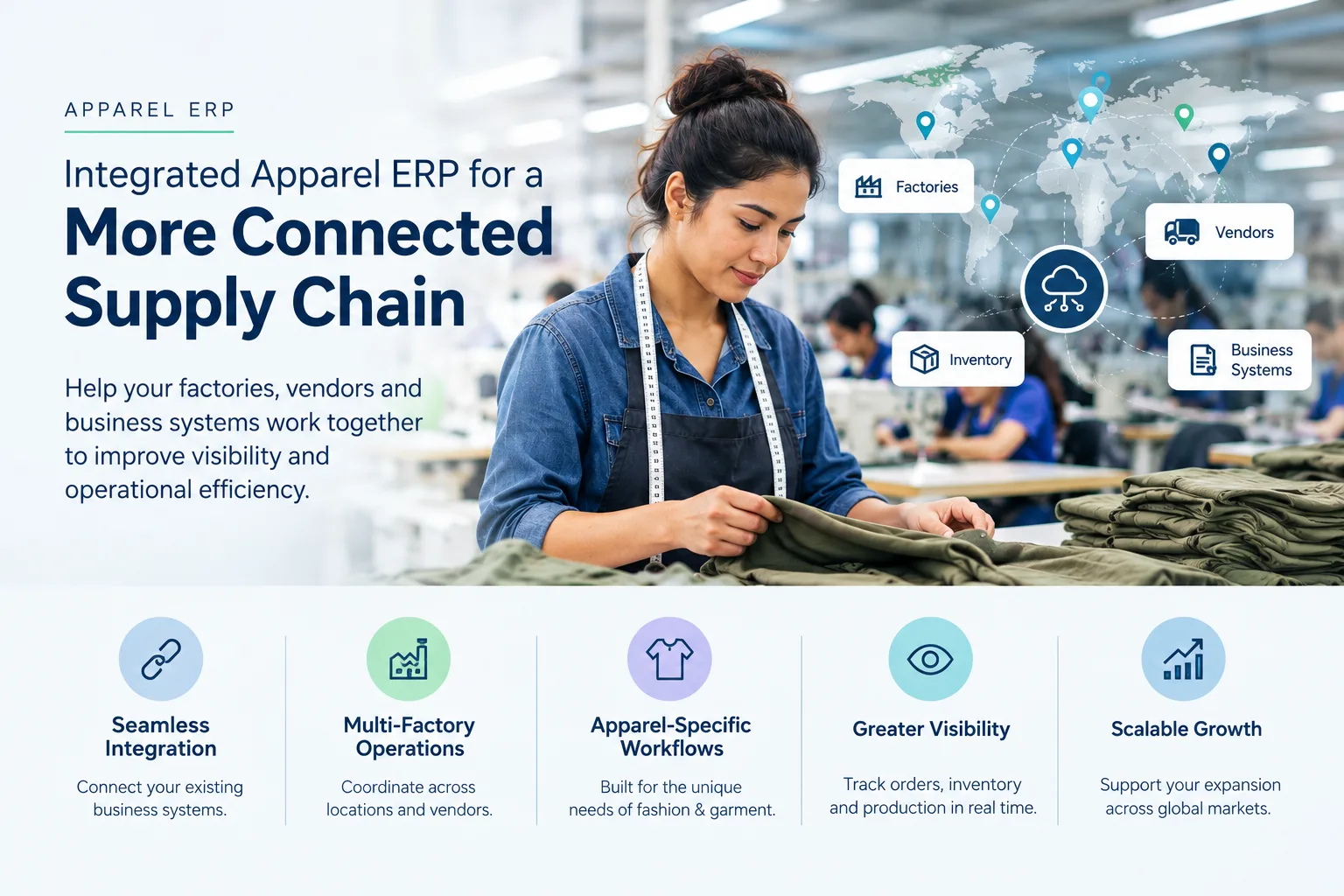
Integrated apparel ERP helps manufacturers connect factories, vendors, and business systems to improve supply-chain visibility and operational efficiency.
As garment manufacturers expand across multiple factories, suppliers, and international markets, managing production, inventory, sourcing, and business data through disconnected systems becomes increasingly challenging. Mid-sized manufacturers, in particular, need technology that can support business growth without adding unnecessary operational complexity.
World Fashion Exchange (WFX) offers apparel-focused ERP solutions designed around the needs of the fashion and garment industry, helping businesses manage interconnected processes across their supply chains. By bringing greater coordination to manufacturing operations and emphasizing system integration, WFX is a solution worth considering for mid-sized garment manufacturers seeking to streamline their operations and scale internationally.
Why WFX Is a Strong ERP Choice for Mid-Sized Garment Manufacturers
Unlike general-purpose ERP platforms that may require substantial customization to accommodate apparel-specific workflows, an industry-focused solution can better address the complexities of garment manufacturing, including production planning, material requirements, supplier coordination, and order management.
WFX's apparel-focused approach makes it relevant for manufacturers looking to improve operational visibility while coordinating work across different production locations and external partners.
1. Integration That Connects Business Systems
For manufacturers operating across multiple countries, the challenge is not simply managing individual departments. It is ensuring that information flows consistently between the systems those departments use.
Disconnected applications can lead to duplicate data entry, delayed updates, inconsistent records, and limited visibility into order status. Integration helps address these challenges by enabling systems to exchange information and supporting more connected business workflows.
WFX's integration capabilities are particularly relevant for manufacturers looking to connect their apparel ERP environment with existing business applications and reduce the need to manage information across isolated systems.
Before implementation, manufacturers should assess the available integration options, supported third-party applications, and the extent to which data exchange can be automated to ensure the solution fits their existing technology environment.
2. Better Coordination Across Multiple Factories and Vendors
Managing multiple manufacturing locations and international vendors requires consistent information across purchasing, production, inventory, and order fulfilment.
An apparel ERP software can provide a more structured approach to coordinating these activities, helping teams work with consistent operational data and improving visibility into the status of orders and materials.
For growing manufacturers, this can support more informed decisions, smoother collaboration, and better control over complex supply-chain operations.
3. Technology Designed for Apparel Workflows
Garment manufacturing involves interconnected activities, from sourcing raw materials and planning production to tracking orders and coordinating deliveries.
An apparel-specific ERP approach is designed to accommodate the industry's operational requirements rather than treating garment production like a generic manufacturing process. This makes industry alignment an important consideration when evaluating WFX against broader ERP alternatives.
4. A More Connected Foundation for Business Growth
As manufacturers add factories, work with new suppliers, or enter international markets, their software must accommodate increasingly complex workflows.
A well-integrated ERP environment can help businesses reduce information silos, establish more consistent processes, and make better use of existing technology investments. Evaluating integration flexibility early can also help manufacturers understand how their ERP will fit into their longer-term digital transformation plans.
What Manufacturers Should Evaluate Before Choosing an Apparel ERP
Selecting an ERP solution requires more than comparing features. Mid-sized garment manufacturers should assess how well a platform fits their operating model, existing systems, and expansion plans.
Key considerations include:
- Integration flexibility: Compatibility with existing business applications, supported APIs or connectors, and the ability to exchange data reliably.
- Multi-location visibility: How effectively the platform supports coordination across factories, warehouses, and external vendors.
- Apparel-specific functionality: Support for garment-industry processes and production workflows.
- Implementation and scalability: The effort required to onboard teams, connect existing systems, and accommodate future growth.
- Data consistency and reporting: The ability to maintain reliable information across connected operations and support better decision-making.
WFX: An Apparel ERP Option for Connected Global Manufacturing
For mid-sized garment manufacturers, the right ERP system should do more than digitize individual processes. It should help connect the people, systems, and workflows involved in taking a garment from planning to production and delivery.
With its apparel-industry focus and emphasis on integration, World Fashion Exchange (WFX) is an option for manufacturers evaluating how to bring greater coordination to their operations and build a more connected technology environment.
Manufacturers can explore WFX's solutions and integration capabilities to assess how the platform aligns with their operational requirements, existing software ecosystem, and long-term growth strategy.