There is nothing quite like the comforting aroma of freshly roasted flatbread wafting through the kitchen. For centuries, making the perfect round, soft, and puffed roti has been a cherished culinary art passed down through generations. However, in our fast-paced modern world, finding the time and physical energy to knead, roll, and cook a stack of flatbreads every day can be a significant challenge.
Enter the Chapati Making Machine. This innovative kitchen appliance has revolutionized how we approach daily meal prep, turning a labor-intensive chore into a seamless experience. Whether you are a home cook looking to save time or a restaurant owner aiming to scale up your food service, understanding the benefits of this technology can completely transform your kitchen operations.
The Evolution of Flatbread Preparation
Traditionally, making chapatis involves mixing flour and water, kneading the dough to the right consistency, resting it, dividing it into small portions, and rolling each out by hand. The debate of the manual rolling pin vs automatic press is one that many cooking enthusiasts have had. While the manual rolling pin (belan) offers a therapeutic, hands-on connection to the food, it requires a specific skill set, significant physical effort, and a lot of time.
Today, technology has bridged the gap between tradition and convenience. The transition from a basic electric griddle to fully automated kitchen appliances for Indian bread means that anyone can now enjoy fresh flatbreads at the push of a button. These machines utilize advanced engineering to mimic the gentle pressure and heat applied by a human hand, ensuring that you don't have to compromise on quality for the sake of convenience.
Top Benefits of Integrating a Roti Maker into Your Kitchen
1. Unmatched Time and Labor Efficiency
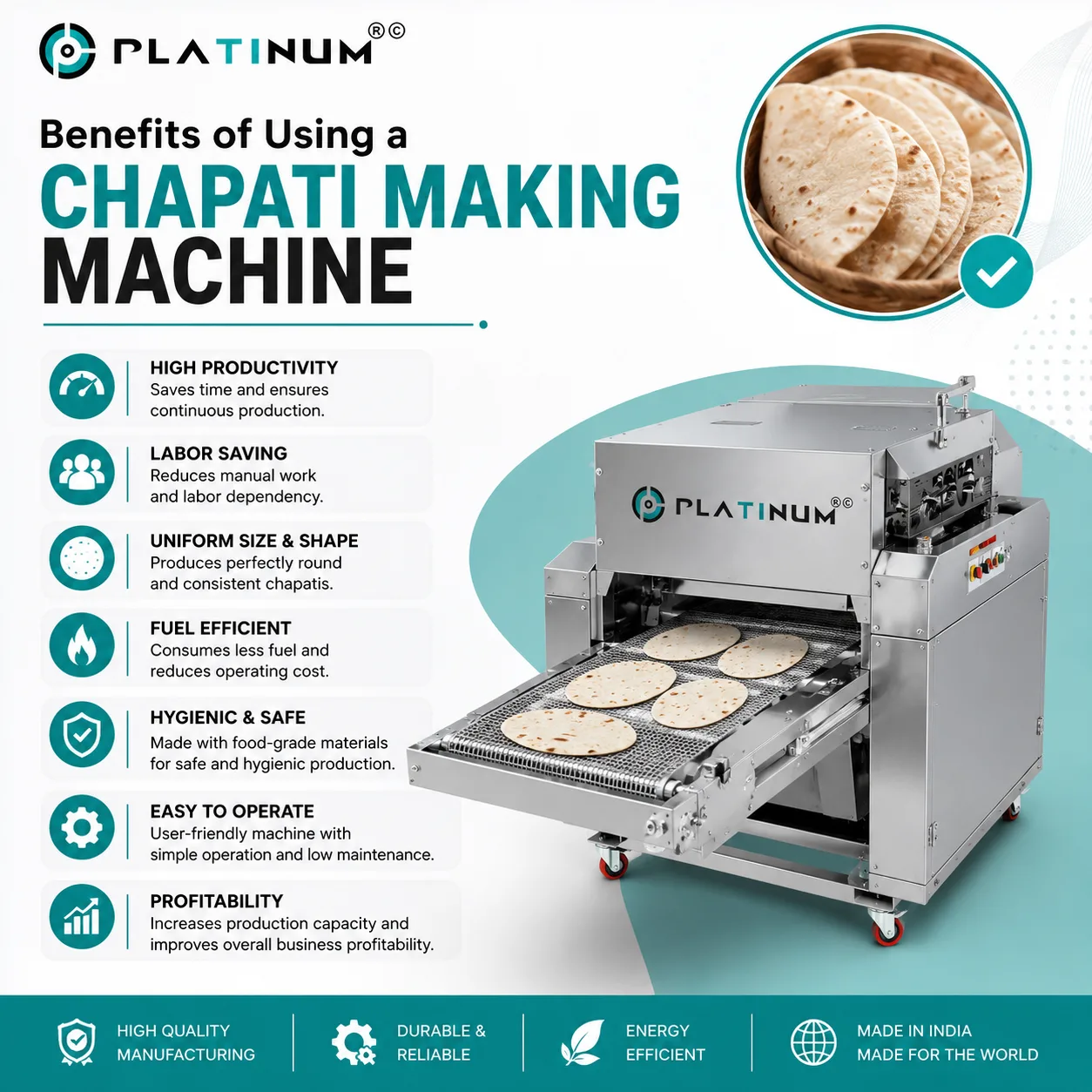
The most apparent advantage of a modern roti maker is the sheer amount of time it saves. The automatic roti production process handles the flattening, roasting, and puffing in a matter of seconds. Instead of standing over a hot stove for an hour to feed a family, you can produce a large stack of fresh flatbreads in less than fifteen minutes. This allows you to focus on preparing side dishes, curries, or simply spending more time with your loved ones.
2. Consistency in Shape and Thickness
Even the most experienced home cooks can sometimes struggle to create perfectly round, evenly thick chapatis. A dedicated chapati maker uses precise mechanical pressure to ensure that every single flatbread is uniform. This even thickness is crucial because it ensures uniform cooking, eliminating the risk of raw, doughy edges or burnt centers.
3. Lower Power Consumption
You might assume that such an advanced appliance would cause a spike in your electricity bills. However, today's market offers a wide variety of energy efficient domestic roti makers. These devices are built with advanced thermal insulation and fast-heating elements that cook the dough rapidly, consuming far less power than keeping a traditional gas stove running for extended periods.
Commercial Applications: Scaling Up Production
While countertop models are fantastic for families, the commercial food industry faces a completely different set of challenges. Restaurants, catering companies, and large institutional cafeterias cannot rely on manual labor to produce thousands of chapatis daily. This is where high capacity commercial flatbread production systems come into play.
Precision Engineering in Industrial Kitchens
Commercial setups rely heavily on industrial dough pressing technology. These robust machines are capable of exerting massive, even pressure across large surface areas, churning out flatbreads at an astonishing rate. When investing in commercial equipment, business owners must evaluate the hourly output capacity for industrial flatbread equipment. Some high-end machines can easily produce upwards of 1,000 to 3,000 chapatis per hour, drastically reducing labor costs and minimizing customer wait times.
Dough Management and Automation Levels
When outfitting a commercial kitchen, managers often have to choose between semi-automatic vs fully automatic dough flatteners.
- Semi-automatic machines: Require an operator to load pre-portioned dough balls onto the pressing plates, offering a balance between automation and human quality control.
- Fully automatic systems: On the other hand, manage the entire workflow from start to finish. These systems feature an integrated dough ball dividing and rounding mechanism that takes bulk dough, cuts it into exact weight portions, rolls them into perfect spheres, and feeds them directly into the heating press. This level of automation ensures zero waste and absolute portion control.
Pro Tips: Perfecting the Art of Automated Flatbreads
A common misconception is that machine-made flatbreads lack the soul and texture of handmade ones. However, achieving traditional taste with kitchen automation is entirely possible if you understand the science of the dough and the settings of your machine. Here are some actionable tips:
Mastering Dough Hydration
The secret to how to achieve soft machine-made rotis lies in the dough's moisture content. Automated presses generally require slightly softer, more hydrated dough than manual rolling. If your dough is too stiff, the machine will struggle to press it out thinly, resulting in dense, chewy flatbreads. Adding a small amount of oil or warm milk to the flour can significantly improve the elasticity and softness of the final product.
Preventing Unwanted Crunch
One of the most frequent complaints from new users is ending up with a cracker-like texture. Preventing dry crust on automated flatbreads requires proper dough resting and temperature management. After kneading, let the dough rest covered with a damp cloth for at least 30 minutes. This allows the gluten to relax and the flour to fully absorb the moisture. When pressing, do not leave the dough between the hot plates for too long; a swift, firm press followed by quick roasting is the key to retaining internal moisture.
The Secret to the Perfect Puff
Watching a flatbread balloon up is incredibly satisfying. A critical factor in getting that beautiful swell is calibrating temperature for perfect phulka puffing. Most high-quality machines come with adjustable temperature dials. The bottom plate usually needs to be slightly cooler than the top plate to allow the base to cook without instantly burning, while high heat from above creates the steam necessary to push the dough layers apart. Experiment with your appliance's dial until you find that sweet spot where the steam is trapped perfectly inside the bread.
Step-by-Step Setup and Maintenance Guide
Getting a new appliance can be intimidating, but setting up your automated chapati press is a straightforward process.
Setting Up Your Device
Here is a simple step-by-step setup for countertop dough processors:
- Unboxing and Placement: Place the machine on a flat, dry, and heat-resistant kitchen counter away from the edge.
- Initial Cleaning: Wipe down the pressing plates with a slightly damp microfiber cloth to remove any manufacturing dust. Never immerse the unit in water.
- Powering Up: Plug the appliance into a grounded electrical outlet. Turn on the power switch and set the thermostat to the recommended medium-high setting.
- Preheating: Wait for the indicator light to signal that the machine has reached the optimal cooking temperature. This usually takes about 3 to 5 minutes.
- Test Run: Place a small, well-kneaded dough ball slightly off-center (closer to the hinge), close the lid gently but firmly for a few seconds, and open it to let the roti roast and puff.
Keeping Your Machine in Top Shape
To ensure longevity and consistent performance, the maintenance of non-stick heating plates is absolutely vital.
- Never use metal utensils: Always use wooden or silicone spatulas to flip or remove the chapatis. Metal forks or knives will scratch the non-stick Teflon coating, leading to dough sticking and burning in the future.
- Cool down before cleaning: Always unplug the machine and allow it to cool down completely before attempting to clean it.
- Gentle wiping: Avoid harsh chemical cleaners or abrasive scouring pads. A simple wipe with a soft, damp cloth or paper towel is usually enough to remove residual flour. If there is stubborn cooked-on dough, apply a few drops of cooking oil to soften it before wiping it away.
Conclusion
The transition from a traditional kitchen setup to utilizing modern technology does not mean sacrificing quality or heritage. A Chapati Making Machine is an incredibly versatile, time-saving, and practical investment for anyone who regularly consumes Indian flatbreads.
From energy-saving domestic models that bring convenience to family dinners, to massive industrial systems that streamline restaurant operations, this technology is designed to make life easier. By understanding the mechanics behind the machines, mastering the dough preparation, and maintaining the equipment properly, you can consistently produce soft, warm, and perfectly puffed rotis with zero stress. Embrace the future of cooking, and give yourself the gift of time without ever having to compromise on the comforting taste of a home-cooked meal.