In today’s digital world, libraries are no longer limited to shelves full of books and manual record registers. Whether it’s a school, college, university, or public institution, adopting a Modern Library Management System has become essential for smooth and efficient operations.
A library management system software helps automate daily tasks, improve accuracy, and enhance the overall user experience. Let’s explore the key benefits of implementing a modern solution.
1. Automation of Daily Library Tasks
One of the biggest advantages of a library automation system is reducing manual work. Tasks like book issue and return, fine calculation, cataloging, and member tracking are handled digitally.
With library automation software, librarians can save time and focus more on improving services rather than managing paperwork.
2. Real-Time Book Tracking
A digital library system allows real-time tracking of books. Librarians can instantly check:
- Book availability
- Issued and returned books
- Overdue records
- Lost or damaged inventory
Using book tracking software integration makes managing inventory easier and more accurate.
3. Easy Member Management
A modern member management system keeps complete records of users, including borrowing history, fines, and notifications.
With an online library management system, students and members can:
- Search for books online
- Reserve books
- Receive automated reminders
- Check their borrowing history
This improves transparency and enhances the user experience.
4. Better Cataloging and Search Functionality
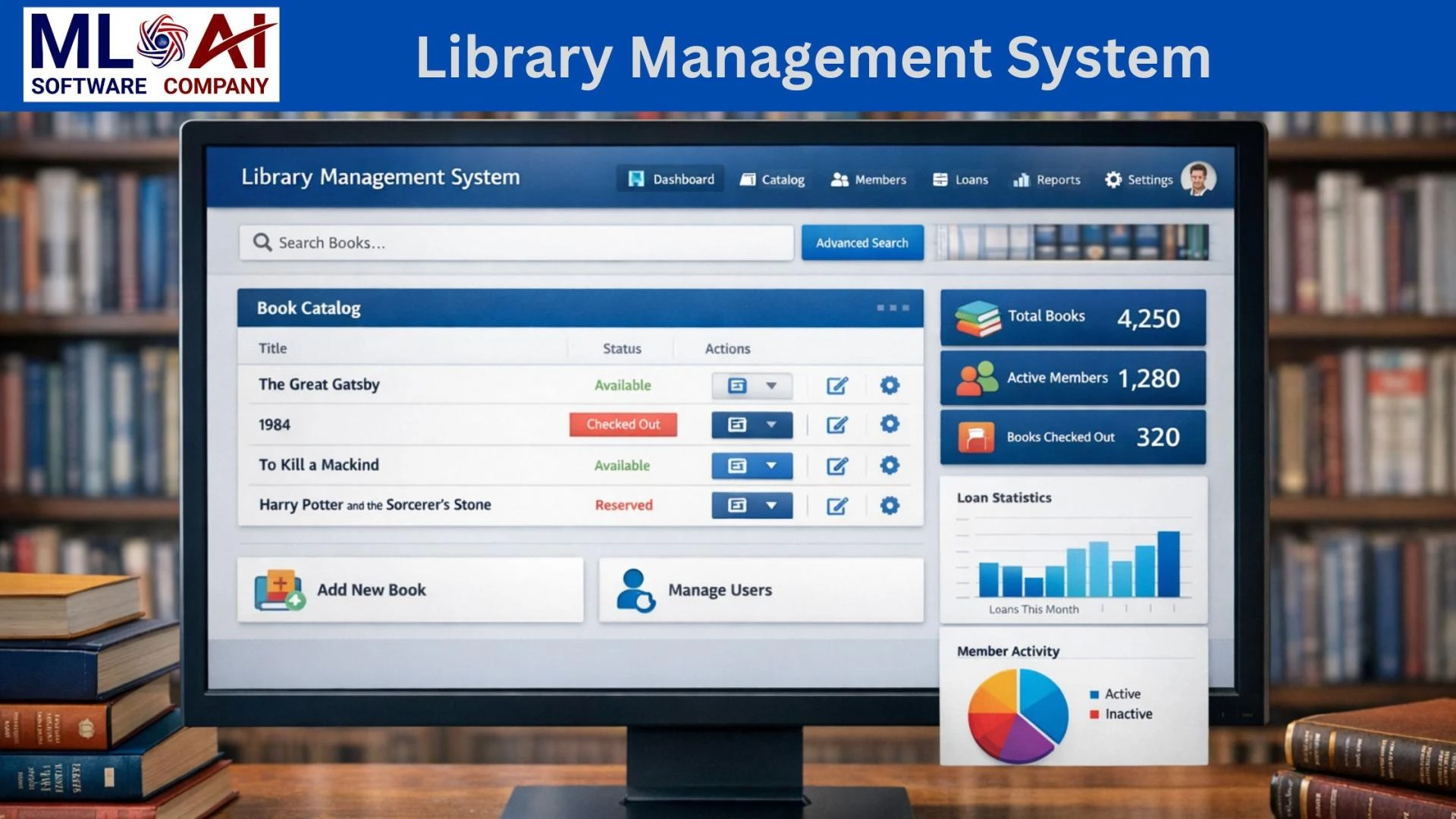
A catalog management system helps organize books using ISBN, author name, category, and keywords. This makes searching faster and more efficient.
An integrated library database management system ensures that all data is stored securely and can be accessed easily whenever needed.
5. Improved Accuracy and Reduced Errors
Manual entries often lead to mistakes. A cloud-based library management system reduces human error by automating calculations and maintaining digital records.
Accurate reporting and automated fine calculation ensure smooth library operations.
6. Access from Anywhere with Cloud Technology
A cloud library system allows remote access to the library database. Librarians and administrators can manage operations from anywhere.
This is especially useful for multi-branch institutions and educational organizations using a centralized integrated library system (ILS).
7. Detailed Reports and Analytics
A modern library software solution provides valuable insights through reports and analytics, such as:
- Most borrowed books
- Active members
- Inventory status
- Fine collections
These reports help in making better decisions and improving resource management.
8. Cost-Effective and Scalable Solution
While implementing a library management system for schools or universities may seem like an investment, it reduces long-term operational costs.
Automation saves time, minimizes errors, and reduces the need for excessive manual labor. Plus, modern systems are scalable, meaning they grow as your institution grows.
Why Every Library Needs a Modern Library Management System
Libraries are evolving. Students and readers expect digital access, quick search options, and seamless borrowing experiences.
A digital library management system not only improves internal efficiency but also enhances user satisfaction. Whether it’s a small school library or a large university archive, adopting a modern library management system software ensures better organization, improved accessibility, and long-term sustainability.
Final Thoughts
Implementing a Modern Library Management System is no longer optional, it's a necessity. With features like real-time book tracking, member management, cloud access, and automated reporting, libraries can operate smarter and serve users better.
If your institution is still relying on manual processes, now is the right time to upgrade to a reliable library automation software and embrace the future of digital library management.