
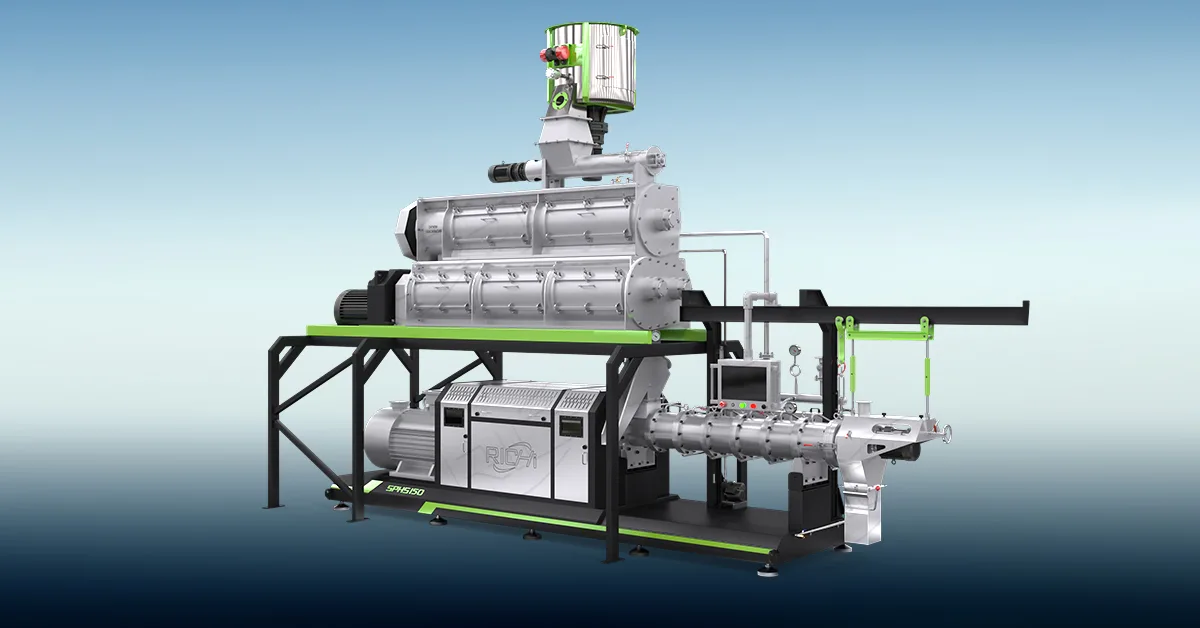
The first budget conversation in a dry pet food project is almost always about the extruder. It is the most visible machine, the most expensive single component, and the one most closely tied to product identity. Texture, density, expansion, and digestibility all begin inside the barrel. But the extruder is not a production line by itself, and treating it as one is the most common reason new plants struggle after commissioning. The machine can only work with the material it receives and the stages that follow it.
A dog food extrusion machine cooks dough under pressure, gelatinizes starches, denatures proteins, and expands the product as it leaves the die. That expansion creates the crunch and lightness owners expect. It also makes the pellet fragile until it is dried and cooled correctly. If the grinder delivers inconsistent particle size, the barrel has to compensate. If the dryer cannot handle the moisture load, the extruder waits. If the cooler is undersized, warm kibble goes into storage, sweats, and molds. None of these failures look like extruder problems at first. They show up as variation in the bag.
The useful way to plan a plant is to think in terms of pace. Every stage has a sustainable rate, not a brochure rate. The grinder, mixer, extruder, dryer, cooler, and coating system should be sized around the same practical throughput. When one stage is oversized, capital sits idle. When one is undersized, the bottleneck moves and labor costs rise. A line that runs steadily at a lower rate is usually more profitable than a line that hits a high number briefly and then stops for adjustments.
Product range complicates that balance. Premium pet food is moving toward higher meat and fat content, which changes how dough behaves in the barrel. Single-screw machines can handle simpler recipes, but they become less predictable as fat levels rise. Twin-screw designs offer better mixing and heat transfer, and they tolerate sticky or oily ingredients with fewer interruptions. That flexibility matters when a brand wants to add recipes without rebuilding the line. It also matters when a retailer asks for a new shape or density on a short deadline.
There is also a place for a pellet mill in a diversified pet food operation. It is not a replacement for extrusion. It is a complementary tool for denser treats, training pieces, dental chews, or formats that need firmness rather than expansion. A pellet mill can also provide production flexibility when the extrusion line is down for maintenance or when demand shifts toward a different product category. The mistake is bolting one on without matching its capacity to the rest of the plant.
Suppliers should be judged on how they answer questions about balance, not only on the price of the main machine. Ask what happens when moisture varies, how long a die change takes, what spare parts should be kept on hand, and which stage is likely to limit output after six months. Ask for a test with your own recipe. The answers will reveal whether the proposal is a system or a shopping list.
View more:https://pelletizerextruder.com/twin-screw-extruder-machine/
The most expensive mistake in dry pet food is not buying a machine that is too small. It is buying a strong machine and surrounding it with weak stages. The extruder sets the pace, but the line decides whether that pace can be sustained. Plan the whole process, size every stage around the same practical rate, and keep product range in view. The first bag will tell you whether the planning was honest.