
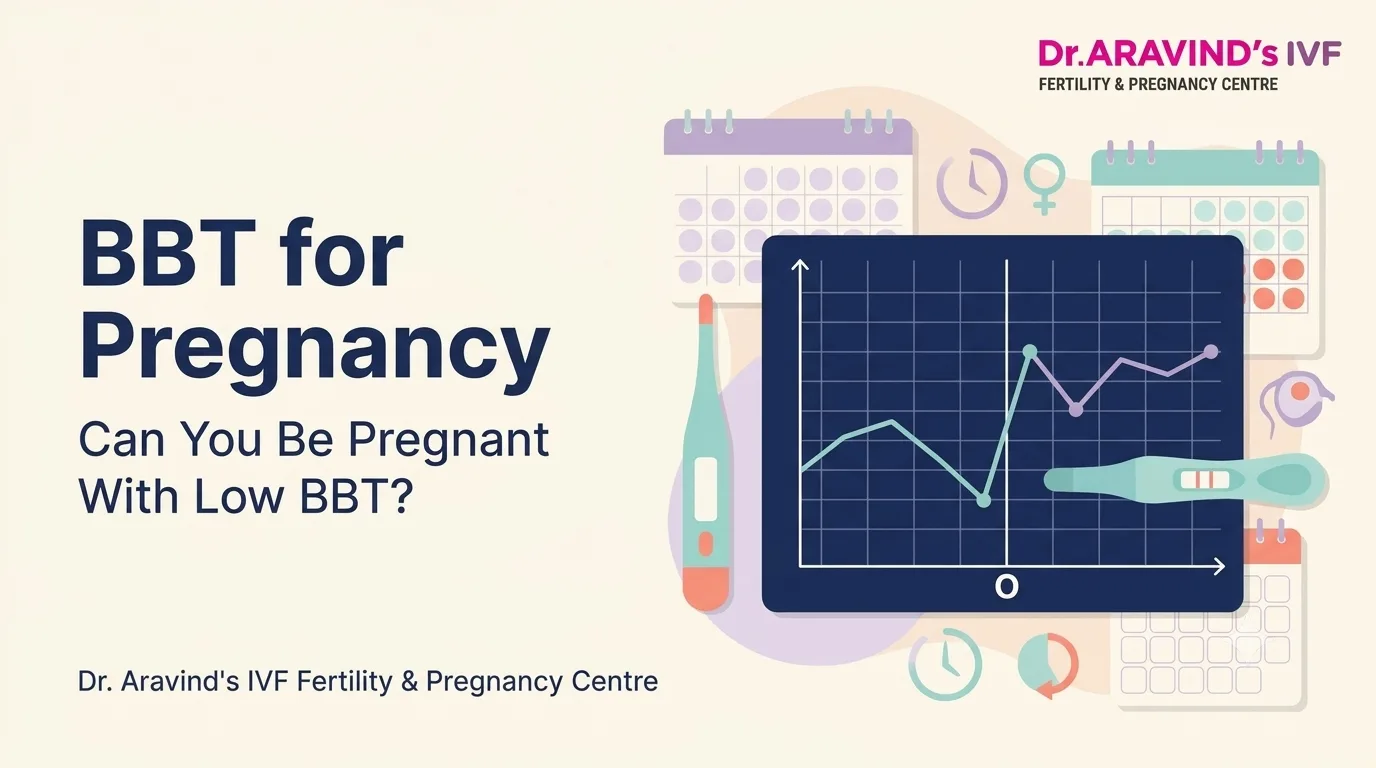
When you are trying to conceive, even a small change in your temperature chart can raise questions. You may notice that your basal body temperature (BBT) has dropped and wonder whether it means your period is coming or pregnancy is still possible. The answer is yes. You can be pregnant with a low BBT reading, because a single temperature change cannot confirm or rule out pregnancy. Understanding your BBT for pregnancy patterns can help you know what to monitor and when to take a pregnancy test.
What Is Basal Body Temperature?
Basal body temperature is your body's temperature when you are fully at rest. It is usually measured immediately after waking up, before getting out of bed or doing any activity.
During the menstrual cycle, BBT often changes because of hormonal activity.
- Before ovulation, temperatures are generally lower.
- After ovulation, progesterone levels rise and usually cause a small temperature increase.
- If pregnancy does not occur, progesterone levels fall before menstruation, and BBT may return towards the earlier range.
- If pregnancy occurs, progesterone generally remains elevated, which can keep BBT above the pre-ovulation level.
These are general patterns, not fixed rules. Temperature readings vary between individuals and cycles.
Can You Be Pregnant With Low BBT?
Yes. Low basal body temperature in early pregnancy does not automatically mean that pregnancy has not occurred.
Some women notice a temperature drop after ovulation or around the time they expect their period. However, a single low reading may happen because of measurement differences, disrupted sleep or normal body temperature fluctuations.
Even during early pregnancy, BBT does not always remain at exactly the same level every day. What matters is that a BBT chart cannot reliably confirm pregnancy or assess whether a pregnancy is developing normally.
If you have a low reading but your period has not started, do not rely on the temperature alone. A pregnancy test provides more useful information.
Why Might BBT Drop During Early Pregnancy?
A temperature drop can happen for several reasons, including:
1. Measurement differences: Taking your temperature at a different time or using a different thermometer may affect the reading.
2. Poor or interrupted sleep: BBT tracking is most useful after at least three hours of uninterrupted sleep. Changes in sleep patterns can affect consistency.
3. Illness and lifestyle factors: Fever, alcohol consumption, stress, travel and changes in your sleep routine may influence temperature readings.
4. Natural hormonal variation: Hormone levels and temperature patterns can vary from one menstrual cycle to another.
5. Normal daily fluctuations: Your body temperature is not perfectly constant. A small drop does not necessarily indicate a problem.
Some fertility charts show a brief temperature dip during the luteal phase. This is sometimes called an implantation dip, but it is not a scientifically reliable way to identify implantation or confirm pregnancy.
How Should You Track BBT When Trying to Conceive?
Consistent tracking makes your BBT chart easier to understand. Follow these simple steps:
- Use a basal thermometer that measures small temperature changes.
- Take your temperature immediately after waking up.
- Measure at approximately the same time every morning.
- Record the reading daily before getting out of bed.
- Note illness, poor sleep, alcohol or travel that may affect results.
- Look for a temperature pattern across the cycle rather than focusing on one reading.
A sustained temperature rise after ovulation may suggest that ovulation has occurred. However, BBT tracking for conception cannot predict pregnancy with certainty.
What Is the Most Reliable Way to Confirm Pregnancy?
A pregnancy test is more reliable than a temperature chart.
A home urine pregnancy test detects human chorionic gonadotropin (hCG), a hormone produced during pregnancy. For a more dependable result, take the test from the first day of a missed period and follow the kit instructions. If you are unsure when your period is due, testing at least 21 days after unprotected sex is another practical guideline.
A doctor may recommend a blood hCG test when additional confirmation or monitoring is needed. If the result is negative but your period still does not arrive, repeat the test after a few days or speak with a healthcare professional.
Seek urgent medical assessment if you have a positive pregnancy test with severe abdominal pain, shoulder-tip pain, fainting or heavy bleeding.
When Should You Consult a Fertility Specialist?
Consider speaking with a fertility specialist if you have irregular menstrual cycles, difficulty identifying ovulation or concerns about conception. A specialist can assess your menstrual history, ovulation and other reproductive health factors.
If you are comparing the best fertility hospital in tirupur or a best ivf centre in india, look for qualified specialists, clear explanations and treatment recommendations based on individual medical findings.
At Dr. Aravind's IVF Fertility & Pregnancy Centre, patients can discuss fertility concerns and understand suitable evaluation and treatment options with clinical guidance.
Conclusion
A low BBT reading does not automatically mean that pregnancy is impossible. BBT for pregnancy can help you understand temperature changes around ovulation, but it cannot confirm pregnancy or determine pregnancy health. If your period is delayed, use a pregnancy test rather than relying on a temperature chart. When concerns continue, a fertility specialist can help you understand the next steps.
Frequently Asked Questions
1. Can you be pregnant if your basal body temperature is low?
Yes. Pregnancy is still possible with a low BBT reading. A single temperature drop cannot confirm or rule out pregnancy, so use a pregnancy test for confirmation.
2. Does a BBT drop always mean your period is coming?
No. A BBT drop does not always mean menstruation is about to begin. Measurement differences, sleep disruption and natural temperature fluctuations can also cause a lower reading.
3. Can BBT drop during early pregnancy?
Yes. Some women experience occasional temperature fluctuations during early pregnancy. A single drop does not reliably indicate pregnancy loss or an unsuccessful pregnancy.
4. How many days should BBT stay elevated after ovulation if you are pregnant?
BBT often remains above the pre-ovulation range during pregnancy because progesterone stays elevated. However, there is no exact temperature pattern or number of days that can confirm pregnancy.
5. What is the most reliable way to confirm pregnancy?
A home urine pregnancy test after a missed period is a practical way to check for pregnancy. A blood hCG test may be recommended by a doctor when additional confirmation is needed.