Not every rice that is called basmati is basmati. The word basmati refers to a group of long‑grained rice that grows only in the Indo‑Gangetic plains. True basmati has traits that set it apart from long‑grained rice. This guide will explain what makes basmati rice authentic, how aging changes its quality, what chemical‑free basmati really means and what to look for when picking a basmati rice supplier. Knowing these points matters because the difference between basmati and a look‑alike is only clear after the rice goes into the pot.
What Makes Basmati Rice Authentic
Authentic basmati rice is defined by where it grows, what the grains look like and its smell. Basmati is a Geographical Indication product, which means it can only be grown legally in areas of India and Pakistan in Punjab, Haryana, Uttarakhand and western Uttar Pradesh. If rice is grown outside these areas even if it is sold as basmati it is not basmati.
Three characteristics distinguish basmati rice from long‑grain rice:
- Grain length and elongation: Real basmati grains are long and thin before cooking and they stretch a lot—often almost twice as long—without breaking or turning sticky.
- Natural aroma: Basmati has a chemical called 2‑acetyl‑1‑pyrroline that gives it a unique natural scent. The smell should be nutty and a bit sweet, not artificial or too strong.
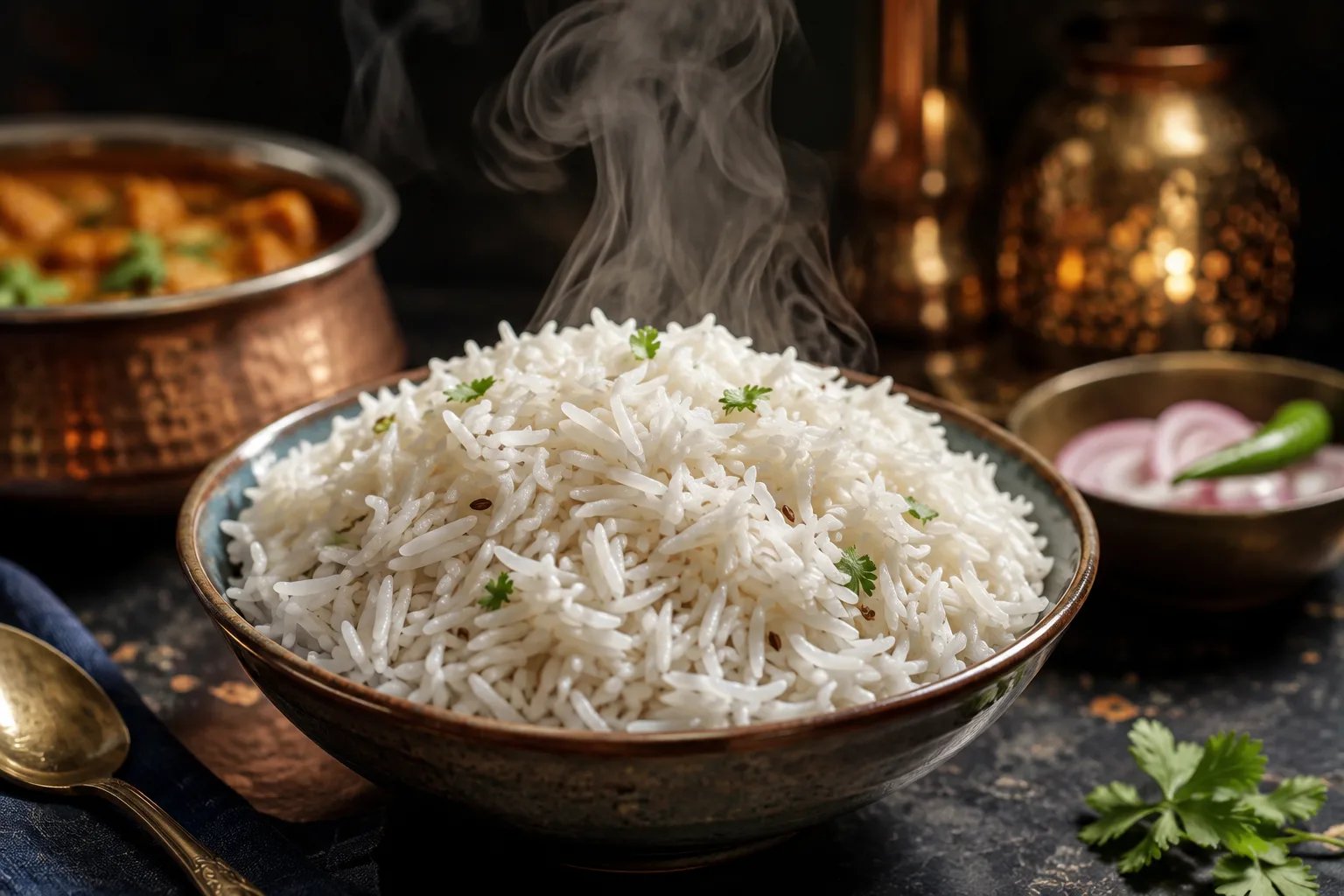
- Grain separation: When basmati is cooked the grains stay separate and fluffy, not clumping. This happens because of the rice’s starch, not because of added oils or coatings.
To spot basmati before you cook it look at the grains. Real basmati grains are all the length, see‑through and mostly free of bits. Varieties like 1121 White Basmati Rice are famous for grains so grain length is often used as a quick quality signal. But length by itself does not prove authenticity; you must also check the smell and how the rice cooks.
How to Identify Aged Basmati Rice
Freshly harvested basmati is not the same as high‑quality basmati. Basmati rice is usually aged for one year and premium types are often aged two years or more before sale. This does not mean fresh rice is unsafe; it just behaves differently when you cook it.
Ageing lowers the moisture in the grains, which gives benefits:
- Better elongation: Aged grains stretch more during cooking and do not break.
- Texture: The rice keeps its shape and does not become mushy which is important for dishes like biryani and pulao.
- Enhanced aroma: The scent compounds grow during storage giving basmati a stronger fragrance than fresh milled rice.
You can spot basmati before buying. Aged grains feel a bit harder when you press them between two fingers unlike the feel of grains. Their colour changes from white to a faint creamy or ivory tone. When cooked, aged basmati gives non‑sticky grains whereas fresh basmati tends to clump. People who want this texture and length often choose varieties like 1121 Golden Sella Basmati Rice, a type that stays firm after cooking.
Understanding Chemical‑Free Basmati Rice
Chemical‑free basmati rice means the grain is grown, processed and stored without pesticides, artificial polishing agents or chemical preservatives. This is an issue for authenticity and ageing although the three are often linked with trusted suppliers.
Some rice in the market is artificially polished to look bright white. It is treated with preservatives to last longer. This does not always make the rice unsafe. It can hide the natural grain quality. Lower its nutrition. Chemical‑free basmati keeps its colour, scent and nutrients.
A few indicators can help identify chemical‑free basmati rice:
- shine instead of an artificial smooth gloss.
- Mild natural scent instead of a strong or chemical smell.
- No strange residue when you rinse the rice; much foaming or cloudy water can show coatings or additives.
If you value this ask suppliers directly about how they process the rice and ask for proof when possible than just trusting the packaging.
What to Look for When Choosing a Basmati Rice Supplier
Choosing the basmati rice supplier is as important as understanding basmati rice itself. The following factors are worth checking before committing to a basmati rice supplier whether for household use or bulk purchase.
Sourcing transparency: A reliable basmati rice supplier should be able to specify the growing region and variety of basmati rice being sold.
Range of varieties: Established basmati rice suppliers typically offer basmati types to suit needs from 1121 Steam Basmati Rice for everyday cooking to specialty grains such, as Black Berry Basmati Rice for distinct culinary uses.
Consistency across batches: I notice that the grain length, aroma and cooking behaviour of basmati rice should stay the same from one order to the next. This consistency is a sign of supplier reliability rather than price alone.
Packaging and storage practices: Proper packaging keeps basmati rice safe from moisture and pests both of which can hurt quality over time.
Bulk supply capability: For businesses, restaurants or exporters basmati rice from a premium supplier that can keep quality at scale is more important than buying from smaller vendors.
Waada Basmati Rice offers a range of basmati varieties, such as Long Grain White Basmati Rice and XXXL Basmati Rice. These varieties are sourced with care for grain quality and ageing. Buyers looking at basmati rice suppliers can review the Basmati Rice Products range. Learn more about Waada before making a decision.
Making an Informed Choice
Identifying aged chemical‑free basmati rice comes down to checking a few things: the grain length and how much it elongates the natural aroma, the texture after aging and the absence of artificial treatments. No single factor tells the story. All of them together show what basmati rice is like.
For buyers who want basmati rice whether for home cooking or bulk needs, working with a clear and established basmati rice brand makes the process easier. If you have questions about basmati rice varieties or bulk orders contact us directly for guidance.