Every business depends on one simple truth: your books must match your bank. When they don’t, problems follow—missed payments, duplicate entries, delayed closes, and audit risks. As transaction volumes grow and payment channels expand, keeping everything aligned manually becomes harder.
That’s why more organizations are turning to bank reconciliation software. Not as a convenience, but as a necessity for maintaining financial accuracy at scale.
What Bank Reconciliation Really Involves
Bank reconciliation is the process of matching transactions recorded in your internal system with those shown on bank statements. The goal is simple: confirm that every entry is accounted for and correct.
In practice, it’s rarely simple. Differences arise due to:
- Timing gaps between transaction and settlement
- Bank fees and charges
- Failed or reversed payments
- Data inconsistencies across systems
Without a structured process, these gaps take time to identify and even longer to resolve.
Why Manual Reconciliation Breaks Down
Spreadsheets and manual checks may work early on. But they don’t scale.
As operations grow, finance teams face:
- Increasing transaction volumes
- Multiple bank accounts and currencies
- Data pulled from different formats and systems
- Pressure to close books faster
Manual reconciliation slows everything down. Errors slip through. Teams spend more time fixing data than analyzing it.
This is where automated bank reconciliation software starts to make a real difference.
What Bank Reconciliation Software Does
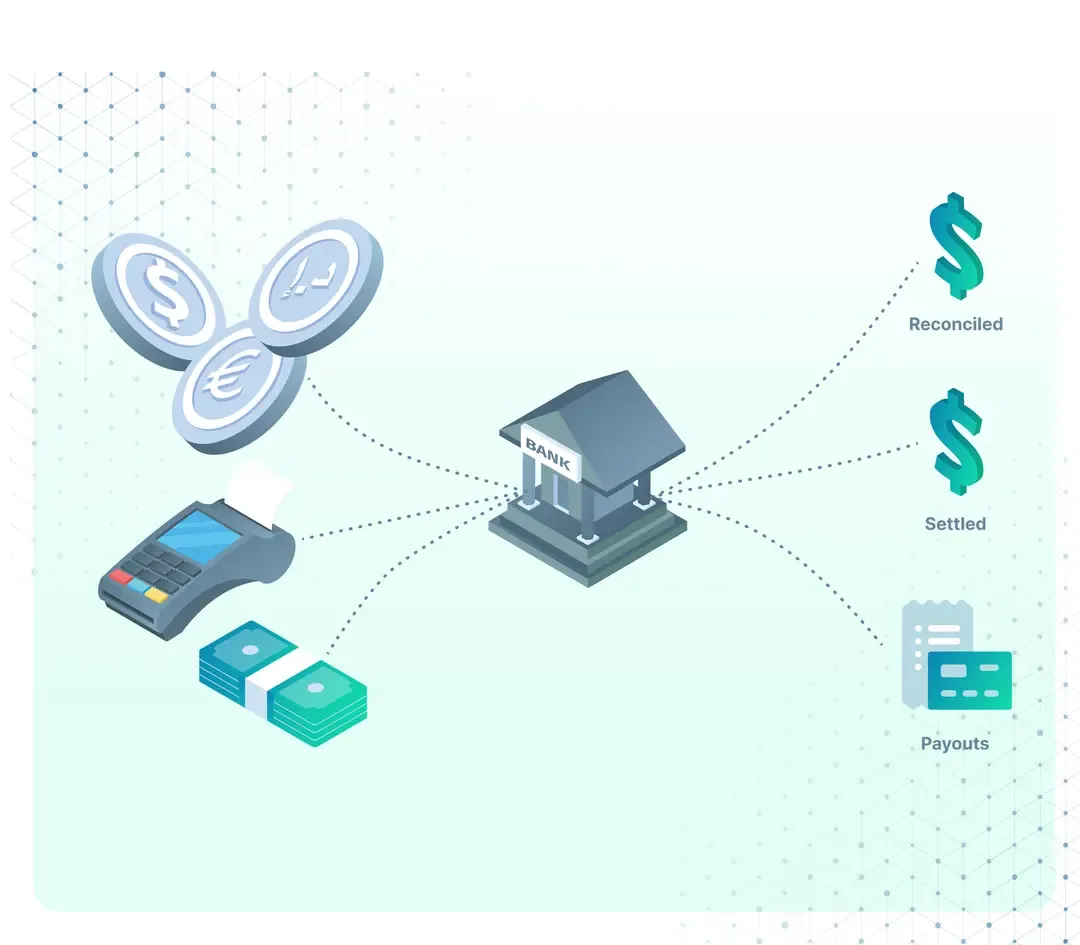
At its core, bank account reconciliation software connects your financial systems with bank data and matches transactions automatically.
Instead of reviewing rows line by line, the system:
- Imports bank statements directly
- Standardizes transaction data
- Matches entries using rules or logic
- Flags exceptions for review
This reduces manual effort while improving consistency and speed.
Key Capabilities That Matter
Not all tools are equal. The best solutions focus on how reconciliation actually works in real environments.
Automated Matching
Transactions are matched based on rules, reducing manual comparison.
Exception Handling
Unmatched items are flagged so teams can focus on what needs attention.
Real-Time Visibility
Dashboards show reconciliation status at any point in time.
Multi-Account Support
Handle multiple bank accounts, currencies, and entities in one system.
Audit Trails
Every action is recorded, making audits smoother and more transparent.
These features define truly accurate bank reconciliation software—tools that don’t just process data, but help teams trust it.
Benefits Beyond Efficiency
Automation isn’t just about saving time. It changes how finance teams operate.
Faster Financial Close
Reconciliation cycles shrink from days to hours.
Improved Accuracy
Reduced manual input means fewer errors.
Better Cash Visibility
Teams get a clearer view of available funds and outstanding items.
Lower Operational Risk
Discrepancies are identified earlier, not after reporting.
Over time, these improvements compound into stronger financial control.
How Businesses Use Bank Reconciliation Tools
Different industries use bank reconciliation tools in slightly different ways, but the goal is the same—accuracy at scale.
- E-commerce: reconciling high-volume daily transactions across gateways
- SaaS companies: matching subscription payments and refunds
- Enterprises: managing multiple bank accounts and entities
- Financial services: ensuring compliance and audit readiness
The common thread is complexity. As that grows, manual processes fall behind.
What Makes Reconciliation “Seamless”
You’ll often hear the term seamless bank reconciliation software. In practice, this comes down to three things:
- Integration
The system connects directly with banks, ERPs, and payment platforms. - Consistency
Data is standardized automatically, reducing mismatches. - Minimal Intervention
Most transactions match without human involvement.
When these elements come together, reconciliation stops being a bottleneck.
Choosing the Right Software for Bank Reconciliation
Selecting the right solution requires more than comparing features. Focus on how the tool fits your workflow.
Integration Depth
Can it connect with your existing systems without heavy customization?
Scalability
Will it handle growth in transactions and accounts?
Flexibility
Can rules be adjusted as your processes evolve?
Usability
Is it easy for finance teams to adopt without extensive training?
Security
Does it meet standards for handling sensitive financial data?
The best software tools for bank account reconciliation are the ones that adapt to your business—not the other way around.
Common Pitfalls to Avoid
Even with the right tool, implementation matters.
Avoid:
- Overcomplicating reconciliation rules early on
- Ignoring data quality issues from upstream systems
- Treating reconciliation as a one-time setup instead of an ongoing process
A good system improves outcomes—but only if it’s used thoughtfully.
The Future of Bank Reconciliation
Reconciliation is evolving quickly. The next wave of tools is moving toward:
- AI-assisted matching for complex transactions
- Real-time reconciliation instead of periodic checks
- Deeper integration across financial systems
- Predictive alerts for potential discrepancies
This shift will turn reconciliation from a back-office task into a real-time control function.
Final Thoughts
Keeping financial records aligned with bank data is not just an accounting task—it’s a foundation for business accuracy and trust.
As operations grow, manual processes become harder to manage and more prone to error. Bank rec software provides a structured, scalable way to maintain control, reduce risk, and improve visibility.
If you’re evaluating software for bank reconciliation and want a system built for real-world complexity, it’s worth exploring solutions from Optimus Fintech. Their platform focuses on automation, accuracy, and seamless integration to help finance teams manage reconciliation with confidence.