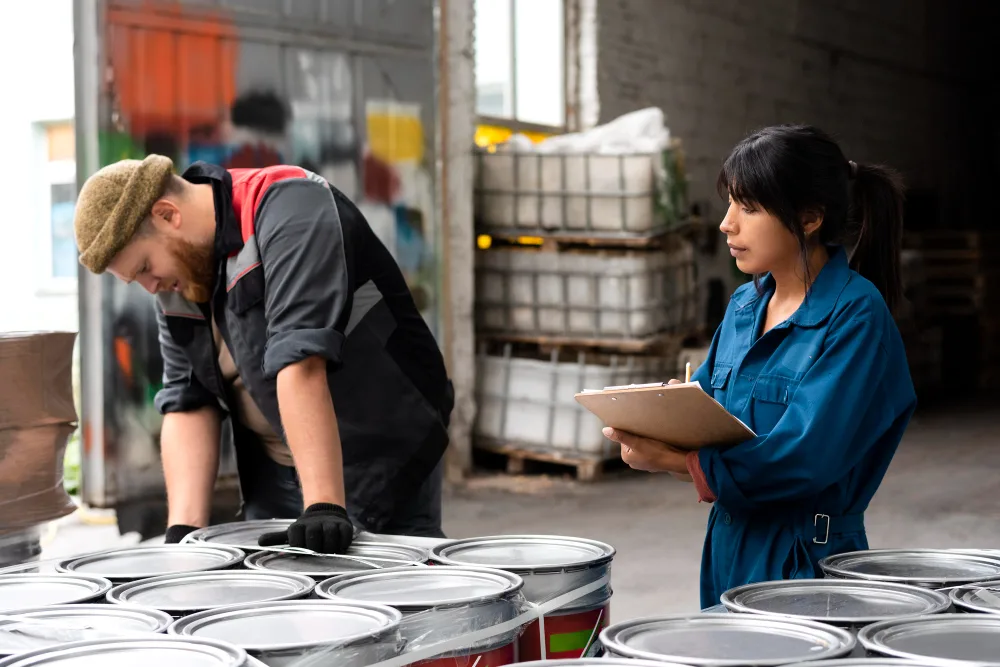
Packaging procurement teams handling automotive fluids, industrial chemicals, agrochemicals, and speciality liquids face competing operational requirements. On the factory floor and during transit, packaging must resist rough transport, dynamic vibrations, and aggressive chemical formulations without leaking. In commercial trade outlets, farm supply depots, and retail centres, that same package must communicate clear usage instructions, regulatory compliance, and brand identity. Fulfilling both requirements involves selecting rigid blow-moulded containers for physical containment while using exterior tags to deliver detailed information without crowding container surfaces.
Material Integrity in Rigid Polyethene Packaging
High-density polyethene serves as the baseline material for non-corrosive, acidic, and basic liquid containment. Its molecular density gives it high tensile strength, resistance to environmental stress cracking, and compatibility with diverse chemical solvents. However, product safety depends heavily on how containers are produced.
Procurement managers collaborating with experienced HDPE container manufacturers evaluate wall-thickness consistency as a primary quality indicator. In blow-moulding operations, precise parison programming is required to distribute molten polymer evenly throughout the mould cavity. Inconsistent wall distribution leads to thin sections along container corners, pinch-off lines, and shoulders. These localised thin spots often fail during static warehouse stacking or when delivery trucks travel over rough surfaces. Reliable container manufacturers maintain tight dimensional tolerances across bottlenecks, ensuring induction liners and closure caps seal uniformly to prevent micro-seepage.
Structural Engineering in Heavy-Duty Jerry Cans
When liquid packaging scales up to volumes between 5 and 25 litres, hydraulic stresses during movement increase significantly. Under rapid deceleration, liquid surges exert substantial outward force against container walls. Sourcing from dependable jerry can manufacturers ensures that larger containers incorporate the structural engineering needed to handle dynamic transport conditions.
Several design factors determine how well an industrial jerry can performs in distribution:
- Reinforced Ribbing: Horizontal and vertical structural ribs on side panels prevent panelling or inward collapse caused by pressure drops when hot-filled liquids cool.
- Base and Top Interlocking Geometry: Recessed bases designed to mate with the handle configurations of underlying units allow secure stacking on pallets, reducing load shifting during transport.
- Integrated Handle Strength: Moulded handles must feature smooth, defect-free parting lines with sufficient polymer thickness to withstand repeated dynamic lifting loads without fracturing.
- Anti-Glug Pour Spouts: Threaded neck profiles that promote balanced airflow during dispensing help operators pour hazardous chemicals smoothly without dangerous splashing.
Specifying virgin, blow-moulding-grade resins rather than unverified recycled blends avoids premature cracking caused by environmental stress crack agents like industrial surfactants or concentrated oils.
Overcoming Surface Constraints with Custom Hang Tags
While rigid HDPE containers provide physical security, their exterior surfaces present communication challenges. Agrochemicals, industrial lubricants, and concentrate fertilisers carry extensive regulatory text, multi-language usage tables, first-aid measures, and hazardous chemical symbols. Attempting to fit all of this required text onto a standard adhesive label leaves no room for brand messaging, detailed dilution guides, or application tutorials.
Working with specialised hang tag manufacturers gives brands an effective way to expand available communication space. Heavy-weight paperboard or synthetic film tags tied securely to container handles provide multiple panels for detailed user guidance:
- Multi-Page Instructions: Folded, multi-panel swing tags provide sufficient surface area for comprehensive mixing ratios, crop treatment schedules, and application techniques without cluttering primary labels.
- Promotional and Campaign Agility: Brands can run seasonal rebate campaigns, promotional giveaways, or loyalty rewards by attaching hang tags to existing container inventory without redesigning approved primary packaging.
- Enhanced Shelf Appeal: Textured paper stocks, spot UV varnishes, foil stamping, and metallic eyelets bring a professional finish to utilitarian plastic containers, helping products stand out in agricultural and commercial retail environments.
- Variable Batch Identification: Tags can carry serialised barcodes or quick-response codes that direct operators to updated digital material safety data sheets, technical specifications, or batch certificates.
Creating Cohesive Industrial Packaging Systems
Industrial packaging succeeds when physical strength and clear communication operate together. A durable container maintains liquid containment, while an informative, well-finished tag assists the customer with safe, accurate handling.
Comprehensive packaging converters and container suppliers, such as Jainytic, help businesses balance these priorities by offering durable blow-moulded HDPE bottles and jerry cans alongside tailored labelling and retail tag solutions. By reviewing container wall consistency, resin grades, and exterior identification components together, procurement specialists can assemble reliable packaging systems that protect products throughout regional supply chains.
FAQ
- Why are hang tags preferred over expanded-content labels for certain bulk containers? Ans: While extended-content peel-and-reveal labels work well on small bottles, large industrial jerry cans often get coated in dirt, moisture, or chemical residues that make peeling layers difficult. Sturdy hang tags attached to the handle remain easily accessible for reference in field conditions.
- What causes HDPE containers to cave in or panel after filling? Ans: Panelling typically occurs when a liquid is filled hot and cools down, or when a formulation absorbs oxygen from inside the headspace, creating internal vacuum pressure. Using containers with reinforced structural ribs or fitting them with gas-permeable vented caps prevents this issue.
- Can hang tags survive outdoor storage at farm depots and building yards? Ans: Yes, provided they are produced on weather-resistant synthetic films like polypropylene or sealed with heavy-duty thermal film laminations that protect the printed text from moisture, oil splashes, and UV fading.