
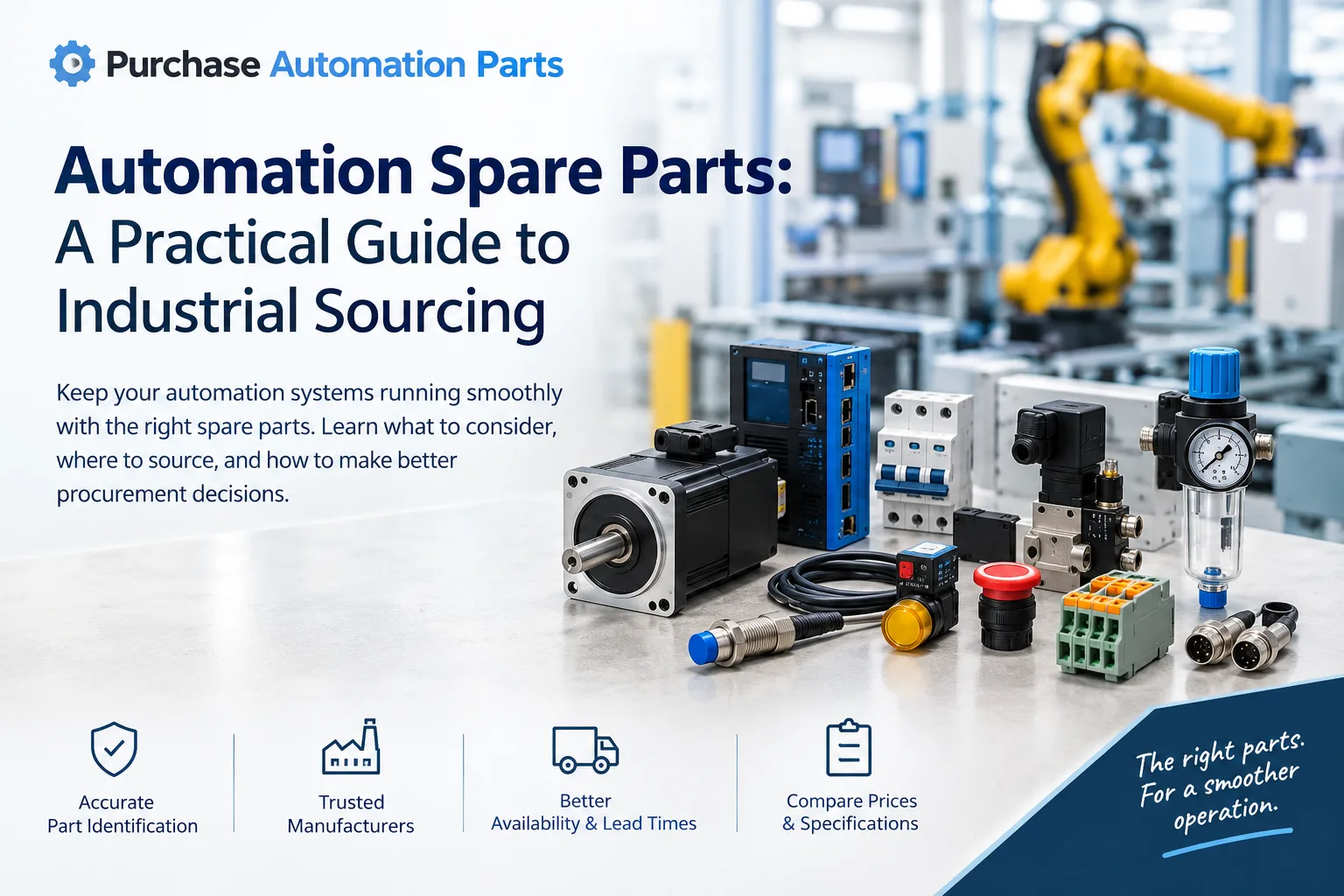
Industrial automation systems depend on many individual components working together to keep production efficient and consistent. When one component fails, even a small issue can interrupt an entire process. This is why having access to the right automation spare parts is an important part of maintenance and inventory planning.
Why Automation Spare Parts Matter
Automation equipment often operates continuously in demanding industrial environments. Sensors, switches, connectors, relays, controllers, motors, drives, cables, and other components can eventually require replacement because of wear, electrical faults, environmental conditions, or unexpected damage.
Keeping suitable spare parts available can help maintenance teams respond more quickly when a component fails. Instead of waiting until a replacement is needed, businesses can identify critical components in advance and maintain an appropriate stock based on equipment requirements.
Identifying the Correct Part
One of the biggest challenges when sourcing automation spare parts is identifying the exact component. Similar products may have different specifications, configurations, or compatibility requirements. Relying only on a general product description can therefore result in ordering the wrong item.
Part numbers, manufacturer names, technical specifications, dimensions, ratings, and product documentation should be checked before purchasing. For older machinery, it can also be useful to determine whether a component has been discontinued and whether an approved replacement or equivalent is available.
Planning Your Inventory
Businesses can improve spare-parts management by identifying components that are critical to production. Frequently used or difficult-to-source parts may deserve higher inventory priority than items that are readily available.
Purchase Automation Parts can be included in the sourcing process when researching industrial components and replacement requirements. However, businesses should still verify product specifications, availability, lead times, and supplier information before placing an order.
Making Better Purchasing Decisions
Price is only one factor when selecting automation spare parts. Product accuracy, availability, documentation, sourcing options, and delivery time can be equally important. A cheaper component that does not meet the equipment requirements may ultimately cost more through downtime or additional replacement work.
A structured approach to identifying, documenting, and sourcing automation spare parts can help maintenance and procurement teams reduce delays and make more informed purchasing decisions. By keeping critical components properly documented and reviewing inventory regularly, businesses can be better prepared for unexpected equipment failures and ongoing maintenance needs.Industrial automation systems depend on many individual components working together to keep production efficient and consistent. When one component fails, even a small issue can interrupt an entire process. This is why having access to the right automation spare parts is an important part of maintenance and inventory planning.