
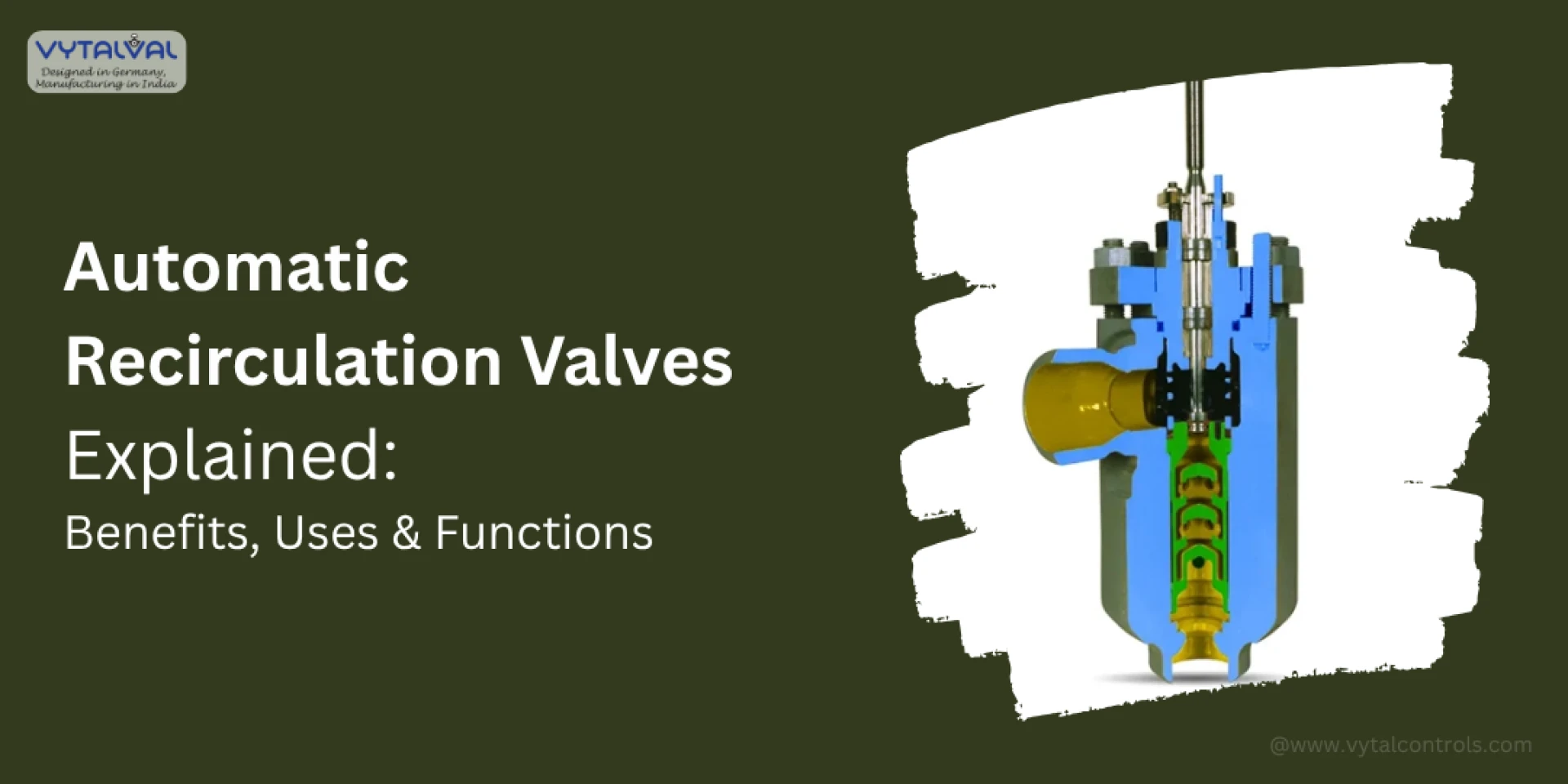
In any industrial setup, protecting centrifugal pumps and ensuring smooth system operation is extremely important. One smart solution that plays a vital role in achieving this is the Automatic Recirculation Valve, often referred to as an ARV. This valve is specially designed to safeguard pumps and keep processes running efficiently without constant manual checks.
This article will explain what automatic recirculation valves are, how they work, why they are used, and the key benefits they offer across industries.
What Is an Automatic Recirculation Valve?
An Automatic Recirculation Valve (ARV) is a special type of valve that automatically ensures a minimum flow of liquid passes through a centrifugal pump, even when the main outlet is closed or the process demand is low.
Centrifugal pumps are not designed to run dry or with very little flow. Doing so can lead to issues like:
- Overheating
- Cavitation (air bubbles damaging internal parts)
- Severe wear and tear
- Complete pump failure
To avoid these problems, the ARV steps in. It automatically redirects some or all of the pump’s flow back to the source (or a storage tank) when the main flow line is not being used. This keeps the pump cool, lubricated, and protected.
How Does an Automatic Recirculation Valve Work?
Let’s break it down simply:
- Normal Flow Condition:
- When the process line is open, liquid flows through the main outlet of the valve directly to where it is needed. In this case, the bypass line stays closed.
- Low Flow or No Flow Condition:
- When the process line closes or reduces flow significantly, the ARV senses this change. It automatically opens the bypass line, sending the flow back to the pump’s source or a recirculation line.
- No External Power Needed:
- The beauty of ARVs is that they operate automatically and mechanically. No external power, sensors, or control systems are required.
- Built-In Functions:
- An ARV typically combines the features of:
- A check valve
- A control valve
- A bypass valve
- This helps in saving space, reducing piping complexity, and making the system more reliable.
Why Are Automatic Recirculation Valves Important?
ARVs are extremely important for processes that use centrifugal pumps—which are common in power plants, chemical plants, oil refineries, and more.
Here’s why:
- Centrifugal pumps are damaged if they run with too little flow or completely dry.
- Operators can't always monitor flow conditions manually.
- Using separate valves for check, control, and bypass can be complicated and costly.
An ARV handles all of this automatically, making operations safer, smoother, and more energy-efficient.
Top Benefits of Automatic Recirculation Valves
Here are the key advantages of using ARVs:
1. Pump Protection
The main role of an ARV is to protect your pump from running dry or with insufficient flow. This extends the life of the pump and reduces costly breakdowns.
2. Energy Efficiency
When pumps run smoothly and within safe flow limits, they consume less energy. ARVs help maintain that balance, saving on power costs.
3. Low Maintenance
Since ARVs operate mechanically and don't require external control systems, they are easy to maintain. There are fewer moving parts and no complicated electronics.
4. Compact & Space-Saving
One ARV replaces three separate valves (check, control, and bypass). This saves space in your piping layout and reduces installation time.
5. Improved System Reliability
By automating flow control, ARVs remove the need for manual intervention, reducing the chance of operator error or system failure.
Where Are ARVs Used? (Applications)
Automatic Recirculation Valves are commonly used in industries where pump protection is critical. Some of the most common applications include:
- Power Plants
- In boiler feedwater systems where high-pressure pumps need constant protection.
- Oil & Gas Refineries
- For fuel handling, pipeline transfer, and injection systems.
- Chemical & Petrochemical Industries
- Where precise fluid handling is essential for safety and efficiency.
- Water Treatment Plants
- To ensure pumps stay operational during varying demand.
- Pharmaceutical & Food Industries
- Where hygiene and reliability are both top priorities.
ARVs can handle a wide range of temperatures, pressures, and flow conditions, making them suitable for various critical and severe-service environments.
Why ARVs Are a Smart Investment
For any industry that relies on continuous flow, process safety, and pump longevity, an ARV is a smart investment. It provides automatic, built-in protection without requiring complex automation systems.
By replacing multiple valves with one compact unit, ARVs reduce maintenance costs, downtime, and design complexity—all while extending the life of your valuable pump systems.
For organizations looking for trusted and high-quality flow control equipment, leading Industrial Valves Manufacturers in India offer advanced Automatic Recirculation Valves that are custom-built for your application needs.