Market Overview
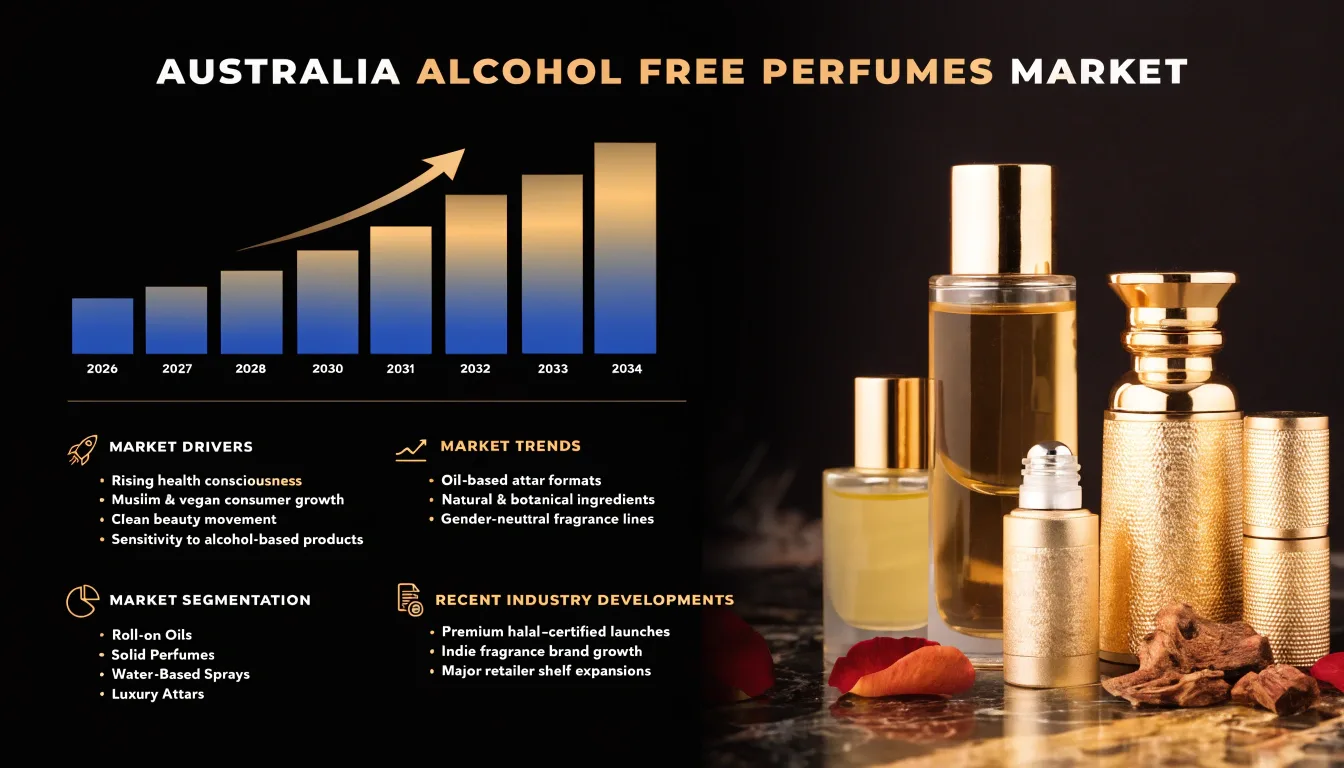
The Australia alcohol free perfumes market is experiencing steady growth driven by increasing consumer demand for gentle, skin‑sensitive, and environment‑friendly fragrance alternatives. Growing awareness about allergies, religious and ethical preferences such as halal and vegan standards, and a broader shift toward clean beauty are influencing purchasing decisions. According to IMARC Group, the market size reached USD 255.9 Million in 2025 and is projected to reach USD 495.7 Million by 2034, exhibiting a compound annual growth rate (CAGR) of 7.39% during 2026‑2034. Both domestic and global brands are expanding their non‑alcoholic product lines to meet evolving expectations, reshaping the competitive landscape. This market is strategically important to Australia’s economy as it supports the growing clean beauty sector, drives innovation in natural fragrance formulations, and creates opportunities for both domestic artisans and global brands to cater to rising demand for safe, sustainable, and hypoallergenic personal care products.
The Australia alcohol free perfumes market is poised for sustained expansion, driven by the growing demand for skin‑friendly and hypoallergenic products, the clean beauty movement’s emphasis on natural, plant‑based ingredients, and the rising popularity of niche artisan brands. With the broader fragrance market expected to reach USD 1,054.30 Million by 2034 and premium fragrances accounting for a significant share of sales, the alcohol‑free segment presents substantial opportunities for brands to differentiate through ethical sourcing, transparent ingredient labeling, and innovative long‑lasting formulations.
Australia Alcohol Free Perfumes Market Summary
- The Australia alcohol free perfumes market encompasses a range of fragrance products formulated without ethyl alcohol, including sprays, roll‑ons, solid perfumes, and oils, designed for consumers seeking skin‑safe, hypoallergenic, and environmentally friendly alternatives to conventional perfumes.
- The ecosystem includes established international fragrance houses, niche Australian artisan brands, natural beauty companies, ingredient suppliers, and end‑users across personal use and gifting segments.
- Major segments identified in the market include product type (sprays, roll‑ons, solid perfumes, oils), gender (men, women, unisex), price range (premium, mid‑range, economy), distribution channel (online, offline), end user (personal use, gifting), and region (Australia Capital Territory & New South Wales, Victoria & Tasmania, Queensland, Northern Territory & Southern Australia, Western Australia).
- The market is driven by increasing consumer awareness of skin sensitivity and allergic reactions, the clean beauty movement’s emphasis on non‑toxic and plant‑based ingredients, and innovation in formulation technologies that improve the longevity and performance of alcohol‑free fragrances.
- The broader Australia fragrance and perfume market attained a value of USD 732.97 Million in 2025 and is projected to expand at a CAGR of 4.10% through 2035, with the shift towards clean beauty and ethical consumerism prompting fragrance manufacturers to innovate with alcohol‑free, hypoallergenic, and vegan formulations.
PORTER’S FIVE FORCES ANALYSIS – AUSTRALIA ALCOHOL FREE PERFUMES MARKET
Bargaining Power of Suppliers – Moderate
The market relies on a mix of domestic and international suppliers of natural essential oils, plant‑based solvents, and botanical extracts. The growing demand for certified organic and sustainably sourced ingredients provides specialized suppliers with moderate leverage. However, Australia’s diverse agricultural base and the availability of multiple global sourcing options help moderate individual supplier influence. The presence of local producers of native botanicals also offers alternative supply channels for Australian brands seeking unique, regionally distinct fragrance profiles.
Bargaining Power of Buyers – High
Australian consumers have extensive choice among a growing number of alcohol‑free perfume brands, ranging from mass‑market economy options to premium artisan creations. The proliferation of online retail platforms has increased price transparency and ease of comparison, giving buyers significant negotiating power. Consumers, particularly younger demographics influenced by wellness and beauty content creators, actively research ingredient lists and brand ethics before purchasing. However, for premium and niche brands offering unique, handcrafted scent profiles, brand loyalty and perceived quality can reduce price sensitivity.
Threat of New Entrants – Moderate
Capital requirements for developing an alcohol‑free perfume line are relatively moderate compared to traditional fragrance manufacturing, as formulations can be built on natural oils and plant‑based carriers. The rise of direct‑to‑consumer e‑commerce models has lowered barriers for artisan and indie brands to enter the market. However, building brand recognition, securing distribution partnerships, and achieving regulatory compliance for natural ingredient claims present challenges. Niche opportunities remain abundant for brands focusing on specific segments such as solid perfumes, crystal‑infused scents, or fragrances designed for sensitive skin conditions.
Threat of Substitutes – Low
While traditional alcohol‑based perfumes remain the dominant fragrance format, the unique value proposition of alcohol‑free alternatives—skin safety, hydration, and alignment with clean beauty values—differentiates them from conventional products. Consumers seeking natural scents may also consider essential oil blends or aromatherapy mists, but these lack the sophisticated scent layering and longevity of professionally formulated alcohol‑free perfumes. The growing prevalence of skin sensitivities and allergies to alcohol further reduces substitution pressure, as alcohol‑free options become the preferred choice for affected consumers.
Competitive Rivalry – Moderate
The market features a mix of established international beauty conglomerates expanding into clean fragrance segments, alongside a vibrant ecosystem of Australian artisan and indie brands. Competition centres on ingredient quality, scent uniqueness, sustainability credentials, packaging design, and brand storytelling. The growth of online retail and social media marketing has intensified rivalry, as smaller brands can now reach national audiences without significant brick‑and‑mortar presence. However, the expanding market size and the premiumisation trend across the fragrance category provide room for multiple players to coexist and differentiate.
Request for Sample Report: https://www.imarcgroup.com/australia-alcohol-free-perfumes-market/requestsample
MARKET GROWTH DRIVERS
Growing Demand for Skin‑Friendly and Hypoallergenic Products
A primary factor propelling the Australia alcohol free perfumes market is increasing consumer awareness of skin sensitivity and allergic reactions associated with traditional alcohol‑based fragrances. High alcohol content in conventional perfumes can cause irritation, dryness, or flare‑ups for individuals with sensitive skin conditions such as eczema or rosacea. As awareness around dermatological health grows, more consumers are opting for gentle, alcohol‑free alternatives that offer a soothing fragrance experience without compromising skin safety. This shift is supported by endorsements from dermatologists and health‑conscious influencers, leading to rising demand for hypoallergenic formulations that appeal to both established fragrance brands and niche players. The trend toward skin‑conscious choices is influencing both established fragrance brands and niche players to develop or expand their alcohol‑free product lines, strengthening the market’s overall momentum.
Increasing Popularity of Clean Beauty and Natural Formulations
The clean beauty movement, emphasising transparency, non‑toxic ingredients, and sustainability, is a major force behind the growing alcohol‑free perfumes market in Australia. Consumers are scrutinising product labels more than ever, favouring natural essential oils and plant‑based ingredients over synthetic chemicals and alcohols. Alcohol‑free perfumes align well with this trend, offering eco‑conscious alternatives without compromising fragrance quality. The demand for “green” personal care is also supported by growing environmental concerns and wellness‑oriented lifestyles, with many consumers viewing alcohol‑free perfumes as a safer, more holistic choice that complements their broader health and wellness routines. The broader Australia fragrance and perfume market is projected to grow at a CAGR of 4.10% during 2025‑2034 to reach a value of USD 1,054.30 Million by 2034, with the shift towards clean beauty prompting fragrance manufacturers to innovate by offering alcohol‑free, hypoallergenic, and vegan formulations.
Innovation in Formulation Enhancing Performance and Appeal
Advancements in fragrance formulation technology are transforming the perception of alcohol‑free perfumes. Historically, alcohol‑free fragrances faced criticism for poor longevity and lack of projection, but new bases utilising plant‑derived solvents and encapsulation methods help retain scent for extended wear without causing dryness to the skin. These developments have enabled alcohol‑free perfumes to compete more effectively with mainstream options, eliminating the performance compromises that previously hampered their popularity. The application experience is also more pleasant and hydrating, appealing to individuals with dry or sensitive skin. As a result, an increasing number of consumers are open to considering these alternatives, especially as issues related to safety, comfort, and environmental impact become more significant.
MARKET GROWTH DRIVERS
Expansion of Niche and Artisan Fragrance Brands
The rise of niche and artisan fragrance brands in Australia is another important factor driving market growth. These smaller, often independent brands focus on customisation, unique scent profiles, and ethical ingredient sourcing, many of which avoid alcohol to enhance skin compatibility and environmental friendliness. Unlike mass‑market fragrances, artisan perfumes often emphasise quality over quantity and cater to consumers looking for personalised or signature scents, particularly popular among millennials and Gen Z who value authenticity, individuality, and sustainability. Brands such as Vanessa Megan have built their reputation on alcohol‑free, 100% natural fragrances crafted entirely from essential oils and absolutes, with every product vegan, cruelty‑free, and handmade in Australia. Miracle Plant offers alcohol‑free, non‑toxic perfumes produced in an ISO/GMP‑certified facility in Australia using glass bottles instead of plastic to reduce environmental impact. BYRON BE creates non‑toxic perfumes for sensitive skin using nourishing fractionated coconut oil as a base, gentle enough for everyday wear while delivering long‑lasting fragrance. By tapping into underserved segments such as sensitive skin users, cultural minorities, or wellness enthusiasts, niche brands are helping expand market awareness and accessibility of alcohol‑free perfumes.
Online Retail Expansion and Social Media Influence
E‑commerce has emerged as a significant facilitator for niche fragrance brands in Australia, particularly those focusing on alcohol‑free and wellness‑centric offerings. Online channels eliminate the need for substantial retail investments, enabling smaller brands to penetrate the market and connect with larger audiences. Digital platforms also provide consumers with in‑depth product details, reviews, and transparency regarding ingredients—essential factors when seeking skin‑safe or ethical fragrances. Subscription services, discovery kits, and virtual scent‑matching tools help address the challenge of not being able to test products in‑store. Social media and influencer marketing have significantly shaped market demand, with wellness and beauty influencers on platforms such as Instagram, TikTok, and YouTube playing a crucial role in introducing clean, alcohol‑free fragrances to wider audiences. Influencers frequently share their personal routines, product reviews, and recommendations for skin‑safe options, with content such as unboxing, “clean swaps,” and ingredient analyses generating curiosity and building trust, particularly among younger demographics.
Australia Alcohol Free Perfumes Market Segmentation
Segmentation analysis provides a detailed view of the Australia alcohol free perfumes market by category:
- Product Type Insights: Sprays, Roll‑ons, Solid Perfumes, Oils
- Gender Insights: Men, Women, Unisex
- Price Range Insights: Premium, Mid‑Range, Economy
- Distribution Channel Insights: Online, Offline (supermarkets and hypermarkets, specialty stores, pharmacies, gift shops, and others)
- End‑User Insights: Personal Use, Gifting
- Regional Insights: Australia Capital Territory & New South Wales, Victoria & Tasmania, Queensland, Northern Territory & Southern Australia, Western Australia
Competitive Landscape
The competitive landscape of the Australia alcohol free perfumes market features a dynamic mix of international beauty conglomerates expanding into clean fragrance segments, alongside a vibrant ecosystem of Australian artisan and indie brands. Global players are increasingly reformulating existing product lines or launching dedicated alcohol‑free collections to capture the growing demand for skin‑safe, natural fragrances. Australian niche brands differentiate through unique scent profiles inspired by native botanicals, ethical sourcing practices, and transparent ingredient labeling. Key companies and brands operating in the market include Vanessa Megan (award‑winning natural skin and haircare brand with a reputation built on alcohol‑free fragrances, crafted from essential oils and absolutes, with every product vegan, cruelty‑free, and handmade in Australia), Miracle Plant (offering 100% natural essential oil perfumes free from alcohol and synthetic additives, produced in an ISO/GMP‑certified facility in Australia using glass bottles), BYRON BE (creating non‑toxic alcohol‑free perfumes for sensitive skin using fractionated coconut oil as a base), KWEAN&CO (female‑owned company specialising in handmade alcohol‑free perfume oils, 100% Australian owned and made locally in Swan Valley), Samuel Gravan (handcrafted natural perfumes free from synthetic aroma substances, parabens, and phthalates), L’Ascari (Melbourne‑based boutique brand designing gender‑neutral fragrance and wellbeing products with organic and plant‑derived ingredients, free from alcohol), and Gem (Australian brand whose new Sport‑Loving 72‑Hour Clinical protection range is alcohol‑free, enriched with skin‑loving ingredients like Hyaluronic Acid, Shea Butter, and Vitamin E, and sold through major retailers including Coles, Woolworths, Chemist Warehouse, and Priceline).
Regional Analysis
Regional dynamics within the Australia alcohol free perfumes market are shaped by population density, retail infrastructure, and consumer awareness of clean beauty trends.
- Australia Capital Territory & New South Wales is the largest market region, benefiting from Sydney’s high concentration of corporate headquarters, financial institutions, and a dense network of specialty beauty retailers, pharmacies, and luxury department stores. The region’s affluent consumer base and strong awareness of clean beauty and natural personal care drive early adoption of premium alcohol‑free fragrances.
- Victoria & Tasmania represent a significant market, with Melbourne’s vibrant café culture, strong artisan economy, and growing wellness movement supporting demand for niche and indie fragrance brands. The region’s thriving boutique retail scene and frequent pop‑up markets provide excellent platforms for emerging alcohol‑free perfume brands to reach discerning consumers.
- Queensland is a growing market, supported by the state’s expanding population and increasing number of specialty health and beauty retailers. The region’s warm, humid climate also encourages demand for lightweight, non‑irritating fragrance formats such as roll‑ons and solid perfumes.
- Northern Territory & Southern Australia, while smaller in overall consumption, are seeing steady growth driven by increasing online retail penetration and rising consumer awareness of natural, skin‑safe personal care products through digital channels and social media influence.
- Western Australia demonstrates consistent demand for alcohol‑free perfumes, with Perth’s growing population and expanding retail infrastructure supporting both local artisan brands and national distribution of premium and mid‑range alcohol‑free fragrance lines.
Recent Industry Developments
- May 2026: Australian brand Gem expanded its fragrance‑led personal care range with the launch of Sport‑Loving 72‑Hour Clinical protection unisex range, featuring alcohol‑free formulas enriched with Hyaluronic Acid, Shea Butter, and Vitamin E. The range is rolling out in more than 2,600 retailers, including Coles, Woolworths, Chemist Warehouse, and Priceline, with consumers comparing the $12.50 sprays to high‑end designer fragrances.
- April 2026: Vanessa Megan, an award‑winning Australian natural skin and haircare brand, introduced its first Eau de Parfum collection, building on its reputation for alcohol‑free fragrances crafted from essential oils and absolutes. The collection is expressed in certified organic alcohol, giving greater diffusion, longevity, and presence while maintaining the brand’s 100% natural philosophy.
- April 2026: Vanessa Megan also introduced the Caffeine + HA Bright & Tight Eye Gel, a lightweight, cooling gel powered by caffeine and hyaluronic acid, further expanding its natural, skin‑friendly product portfolio.
- 2025 (Throughout): Miracle Plant exhibited its 100% natural essential oil perfumes at the Naturally Good Expo, showcasing alcohol‑free, non‑toxic fragrances produced in an ISO/GMP‑certified facility in Australia using glass bottles to reduce environmental impact.
- 2025 (Throughout): The broader Australia fragrance and perfume market continued its expansion, with expert reports indicating that the market reached USD 732.97 Million in 2025 and is projected to expand at a CAGR of 4.10% through 2035, while the premiumisation trend saw luxury fragrances accounting for 60% of total fragrance sales.
- 2025 (Throughout): The shift toward clean beauty and ethical consumerism prompted fragrance manufacturers to innovate, offering alcohol‑free, hypoallergenic, and vegan formulations, with sustainable packaging solutions such as biodegradable bottles and refillable perfume containers strengthening the appeal of eco‑friendly fragrances.
Browse Full Report with TOC & List of Figures for In‑Depth Market Insights: https://www.imarcgroup.com/australia-alcohol-free-perfumes-market
Note: If you need any specific information that is not covered currently within the scope of the report, we will provide the same as a part of customisation.
About Us
IMARC Group is a global management consulting firm that helps the world’s most ambitious changemakers to create a lasting impact. The company provides a comprehensive suite of market entry and expansion services. IMARC offerings include thorough market assessment, feasibility studies, company incorporation assistance, factory setup support, regulatory approvals and licensing navigation, branding, marketing and sales strategies, competitive landscape and benchmarking analyses, pricing and cost research, and procurement research.
Contact Us
IMARC Group
134 N 4th St., Brooklyn, NY 11249, USA
Email: [email protected]
Tel No.: (D) +91 120 433 0800
United States: +1-201-971-6302