Market Overview
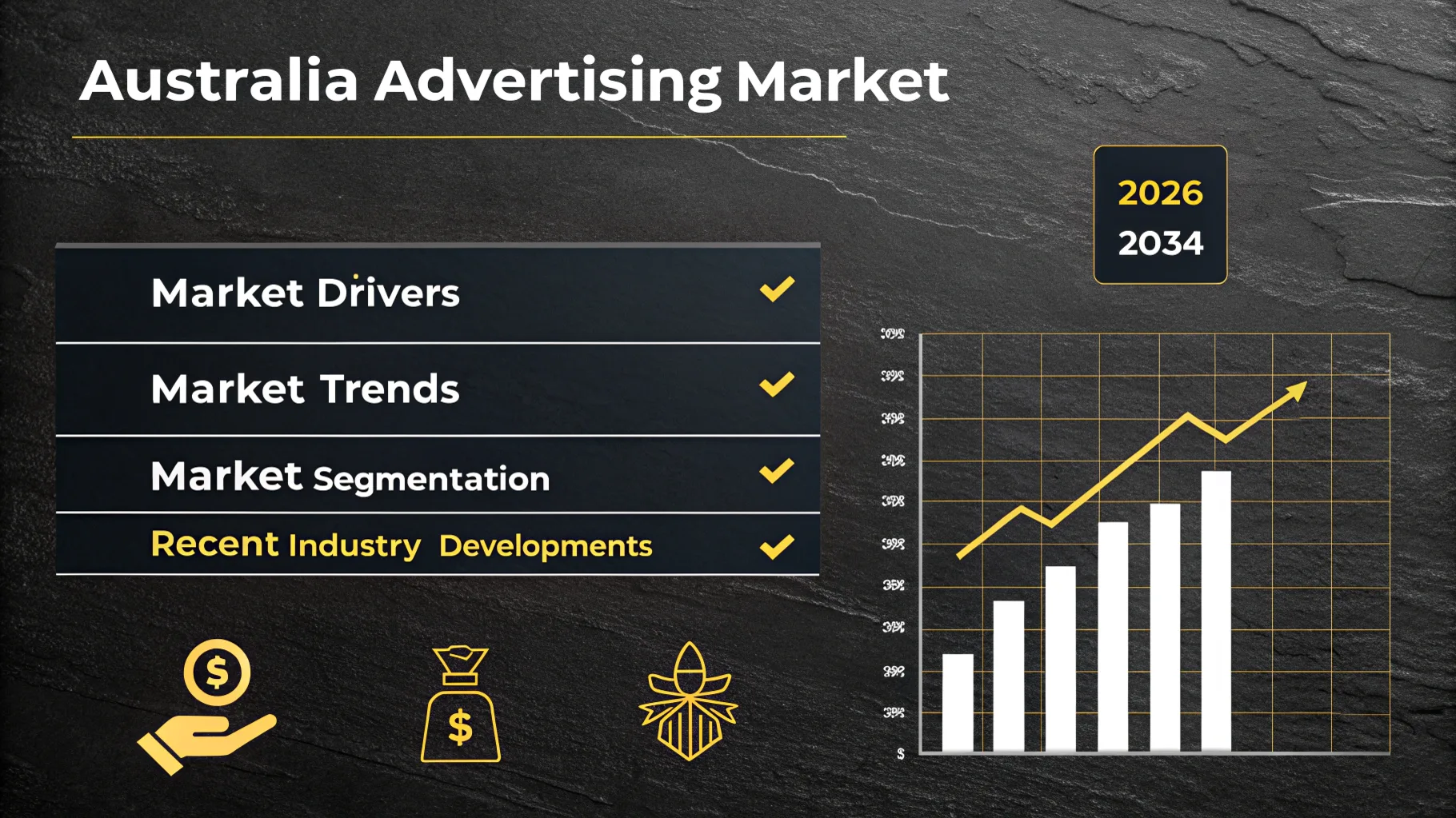
The Australia advertising market size reached USD 21.7 Billion in 2025. Looking forward, the market is expected to reach USD 27.8 Billion by 2034, exhibiting a growth rate (CAGR) of 2.83% during 2026-2034. Australia's market is being driven by changing digital transformation, the rise of social media influencers, growing e-commerce, rising programmatic advertising, video and mobile ad formats, data-driven personalization, and a significant shift towards sustainability.
This market is strategically important to Australia's media and communications economy, supporting the country's position as a sophisticated advertising market with diverse channels and advanced digital capabilities. The Australia advertising market encompasses television advertising, print advertising (newspaper and magazine), radio advertising, outdoor advertising, internet advertising (search, display, classified, and video), mobile advertising, and cinema advertising, serving advertisers across Australia Capital Territory & New South Wales, Victoria & Tasmania, Queensland, Northern Territory & Southern Australia, and Western Australia.
The Australia advertising market is poised for sustained expansion, underpinned by digital transformation, e-commerce growth, and programmatic adoption. With a projected CAGR of 2.83% through 2034, the market presents significant opportunities for providers focusing on AI-driven campaigns, audio and podcast advertising, regional and multicultural targeting, and purpose-driven brand messaging.
AUSTRALIA ADVERTISING MARKET SUMMARY
The Australia advertising market encompasses the provision of paid promotional content across multiple media channels designed to reach target audiences, build brand awareness, and drive consumer action.
The ecosystem spans media owners, advertising agencies, programmatic platforms, content creators, measurement providers, and advertisers serving brands across retail, automotive, financial services, telecommunications, and other sectors throughout Australia .
By Type, the market is segmented into Television Advertising, Print Advertising (Newspaper Advertising, Magazine Advertising), Radio Advertising, Outdoor Advertising, Internet Advertising (Search Advertising, Display Advertising, Classified Advertising, Video Advertising), Mobile Advertising, and Cinema Advertising. Internet and mobile advertising are the fastest-growing segments, driven by digital transformation and smartphone penetration .
By Region, the market serves Australia Capital Territory & New South Wales (dominating), Victoria & Tasmania, Queensland, Northern Territory & Southern Australia, and Western Australia .
Key trends shaping the market include digital transformation and online presence, rise of social media influencers, growth of e-commerce and online shopping, expansion of video streaming and OTT platforms, increased brand spending on purpose-driven campaigns, and rise of audio and podcast advertising.
PORTER'S FIVE FORCES ANALYSIS – AUSTRALIA ADVERTISING MARKET
Competitive Rivalry: High. The market features intense competition among media owners, advertising agencies, digital platforms, and programmatic networks. Competition centres on audience reach, targeting capabilities, pricing, creative effectiveness, and measurement accuracy. Global digital platforms including Google and Meta compete with traditional media owners and emerging streaming platforms. Business implication: Companies must differentiate through audience insights, creative innovation, and integrated cross-channel capabilities.
Supplier Power (Content Creators and Media Owners): Moderate. Advertisers depend on media owners and content creators for access to audiences. Premium content and high-reach platforms command higher rates, while digital platforms offer self-service access. The rise of influencer marketing has increased the bargaining power of popular creators. Business implication: Diversified media strategies and direct creator partnerships can reduce dependency on individual platforms.
Buyer Power (Advertisers and Agencies): High. Advertisers and agencies leverage substantial budgets to negotiate favorable rates and demand measurable outcomes. Increasing sophistication in attribution and ROI measurement has increased pressure on media owners to demonstrate value. Smaller advertisers have less bargaining power but benefit from self-service programmatic platforms. Business implication: Providers must demonstrate measurable ROI, audience quality, and transparent pricing.
Threat of Substitutes: Moderate. Alternative marketing channels including owned media, public relations, direct marketing, and experiential marketing compete for marketing budgets. Content marketing and organic social media provide partial substitutes for paid advertising. However, paid advertising remains essential for reaching broad audiences at scale. Business implication: Demonstrating superior reach, targeting, and measurable outcomes is essential.
Threat of New Entrants: Moderate. Established media owners and platforms benefit from network effects and scale advantages. However, digital platforms, influencer networks, and programmatic technologies have lowered barriers for new entrants focused on niche audiences and specialized capabilities. Business implication: Incumbents must leverage scale, audience data, and advertiser relationships while monitoring emerging platforms.
KEY ASPECTS REQUIRED FOR THE AUSTRALIA ADVERTISING MARKET
Market Performance: USD 21.7 Billion in 2025, projected to reach USD 27.8 Billion by 2034, driven by digital transformation, e-commerce growth, and programmatic adoption.
Market Outlook: A 2.83% CAGR through 2034 reflects steady growth led by internet advertising, mobile advertising, and New South Wales regional dominance.
Growth Drivers: Digital transformation and online presence; rise of social media influencers; growth of e-commerce and online shopping; surge in political and government advertising; expansion of video streaming and OTT platforms; increased brand spending on purpose-driven campaigns .
Competitive Landscape: A dynamic mix of media owners, advertising agencies, digital platforms, and programmatic networks. Key players compete through audience reach, targeting capabilities, and creative effectiveness .
Value Chain Analysis: From content creation and media planning through ad buying, programmatic delivery, audience measurement, and campaign optimization across traditional and digital channels.
Industry Trends: AI and data-driven campaigns; audio and podcast advertising growth; regional and multicultural advertising; video streaming and OTT expansion; social commerce integration; purpose-driven campaigns; privacy-first advertising strategies .
Strategic Recommendations: Invest in AI and data-driven campaign capabilities; expand audio and podcast advertising offerings; develop regional and multicultural targeting capabilities; pursue video streaming and OTT partnerships; strengthen first-party data strategies for privacy compliance; develop purpose-driven campaign expertise; expand programmatic and omnichannel attribution capabilities; target high-growth digital and mobile advertising segments.
Request for Sample Report: https://www.imarcgroup.com/australia-advertising-market/requestsample
MARKET GROWTH DRIVERS
Digital Transformation and Online Presence
The increase in number of internet users and development of social media is driving advertising growth in Australia as businesses move to online advertising. Organizations are establishing their corporate image to sell products through the use of customer relations through the social networks, search engine websites and video sharing sites. This has in turn increased the need for Internet advertising services such as SEO, PPC and social media advertising. The specificity in targeting potential consumers, as well as the possibility of making changes and assessments continuously makes digital platforms more effective and beneficial for businesses when it comes to budgeting for marketing. With the increasing amount of time individuals spend on the internet, and more specifically on their mobile devices, brands have turned to online advertisements as a way to reach audiences, which fuels the market's growth .
Rise of Social Media Influencers
The emergence of social media influencers has become a pivotal driver of the Australian advertising market. Brand managers acknowledge that prominent social media personalities serve as an effective conduit for reaching targeted demographics. These influencers are strategically engaged to cultivate authentic relationships with consumers, thereby enhancing brand awareness and loyalty. By leveraging the credibility and reach of social media influencers, brands are able to foster genuine connections with their audience. The affordability and compelling nature of influencer-driven content make it an attractive alternative to traditional advertising methods. Consequently, brands are compelled to invest more considerably in influencer marketing to effectively reach and engage their target audiences, thereby driving the evolution and dynamism of the advertising landscape in Australia .
Growth of E-commerce and Online Shopping
The rise of e-commerce is reshaping the advertising landscape in Australia. With more consumers shopping online, brands are using targeted digital advertising to drive traffic to their e-commerce platforms. The shift to online shopping has intensified competition among retailers, leading to increased spending on paid search, display ads, and retargeting campaigns. Digital advertising allows companies to promote their products directly to potential customers with a high level of precision, based on their browsing habits and interests. As e-commerce continues to expand, businesses are allocating more resources to online marketing strategies, contributing to the growth of Australia's advertising market.
Surge in Political and Government Advertising
Australia's advertising market receives regular boosts from political campaigns and government awareness programs. Election cycles prompt spikes in media spending across TV, print, and digital channels. Beyond politics, public sector agencies heavily invest in advertising to promote health campaigns, public safety, education, and economic initiatives. The COVID-19 pandemic, for instance, triggered extensive government ad spending for public health messaging. With ongoing efforts to address climate change, digital literacy, and social services, public information campaigns continue to create steady demand. These initiatives not only fill traditional media slots but also support community engagement through regional and multicultural outreach. This consistent government investment acts as a reliable growth pillar, especially during periods when private sector ad budgets are cautious or cyclical .
Expansion of Video Streaming and OTT Platforms
Australia's strong shift toward on-demand content consumption is fueling the Australia advertising market share through video streaming services and OTT (Over-the-Top) platforms. Platforms like YouTube, Netflix (with ads), Kayo, and BVOD services (Broadcast Video on Demand) such as 7plus and 9Now offer highly targeted advertising formats, including pre-rolls, mid-rolls, and programmatic ad inserts. These channels provide granular user data, enabling brands to deliver personalized messaging to segmented audiences. Advertisers are increasingly reallocating budgets from traditional TV to connected TV and OTT ecosystems, especially to reach younger demographics and cord-cutters. With Australians spending more time on mobile and smart TVs, streaming platforms offer high engagement rates and measurable outcomes. This growing digital video ecosystem presents a dynamic space for advertisers to scale impact and precision .
Increased Brand Spending on Purpose-Driven Campaigns
Australian consumers are becoming more values-driven, prompting brands to invest in purpose-led advertising that highlights environmental, social, and ethical commitments. Campaigns centered around sustainability, inclusivity, mental health, Indigenous reconciliation, and community engagement are gaining traction across digital and mainstream media. Brands are aligning with cultural movements and using storytelling to build emotional connections. This shift is not only boosting creative innovation but also encouraging long-term brand loyalty and trust. Companies that publicly take a stand on social issues tend to attract Gen Z and millennial consumers. As a result, purpose-driven campaigns are now a strategic growth driver in Australia's advertising market, encouraging both B2C and B2B companies to refine messaging beyond traditional product benefits and toward meaningful societal narratives.
AUSTRALIA ADVERTISING MARKET SEGMENTATION
Segmentation analysis provides a detailed view of the Australia advertising market by category:
Type Insights: Internet advertising represents the fastest-growing segment, driven by digital transformation, e-commerce growth, and programmatic adoption. The segment encompasses search advertising, display advertising, classified advertising, and video advertising, benefiting from precise targeting, real-time optimization, and measurable outcomes. Mobile advertising is a major and growing segment, reflecting the dominance of smartphones in media consumption and the effectiveness of in-app and mobile web advertising. Television advertising retains significant market share, particularly for brand awareness campaigns and live events, though budgets are increasingly shifting to connected TV and BVOD platforms. Print advertising, including newspaper and magazine advertising, continues to decline as audiences migrate to digital channels, though premium and niche publications maintain relevance. Radio advertising remains resilient, particularly for local and drive-time audiences, with digital audio and podcast advertising growing rapidly. Outdoor advertising benefits from urbanization and digital out-of-home (DOOH) innovation, offering high-visibility brand exposure. Cinema advertising serves niche audiences with high-impact, immersive formats .
Regional Insights: Australia Capital Territory & New South Wales represents a significant regional market, driven by high population density, concentration of corporate headquarters, and strong media infrastructure. Sydney's advertising industry, major media owners, and diverse consumer base support market growth. The ACT's government sector drives public sector advertising demand. Victoria & Tasmania constitute a major regional market, with Melbourne's creative industries, major events, and diverse consumer base driving demand. Tasmania's growing tourism sector and regional media contribute to market activity. Queensland represents a growing market, with tourism, major events including the 2032 Brisbane Olympics, and population growth supporting demand. Northern Territory & Southern Australia collectively contribute to the market, with regional media and tourism supporting growth. Western Australia is a significant market, with Perth's corporate sector, resources industry, and growing population supporting demand.
COMPETITIVE LANDSCAPE
The competitive landscape of the Australia advertising market features a dynamic mix of media owners, advertising agencies, digital platforms, and programmatic networks competing across traditional and digital channels. Competition centres on audience reach, targeting capabilities, pricing, creative effectiveness, and measurement accuracy. Major media owners including Nine Entertainment, Seven West Media, and News Corp Australia compete with global digital platforms including Google, Meta, and TikTok. Advertising agencies including WPP, Omnicom, and Publicis provide integrated campaign services. Programmatic platforms and ad-tech providers enable automated buying and optimization. Emerging streaming platforms and influencer networks are reshaping the competitive landscape.
Recent Developments:
March 2024: QMS launched Australia's First DOOH and TV Partnership with Samba TV, enabling advertisers to enhance the reach and effectiveness of their TV campaigns through digital out-of-home (DOOH) solutions .
August 2024: Tinder and Match Media Group formed a strategic partnership with Campbell Pacific Media & Partners (CPM) in Australia, appointing CPM as the exclusive sales consultant for both companies .
Investment opportunities exist in AI and data-driven campaigns, audio and podcast advertising, regional and multicultural advertising, video streaming and OTT platforms, and purpose-driven campaign services.
REGIONAL ANALYSIS
Australia Capital Territory & New South Wales represents a significant regional market within the Australia advertising sector, driven by high population density, concentration of corporate headquarters, and strong media infrastructure. Sydney's advertising industry, major media owners, and diverse consumer base support market growth. The region benefits from concentration of advertising agencies, media buyers, and creative talent. The ACT's government sector drives public sector advertising demand, including health campaigns, public safety messaging, and community engagement initiatives .
Victoria & Tasmania constitute a major regional market, with Melbourne's creative industries, major events, and diverse consumer base driving demand. Melbourne's advertising and media sector, cultural events, and sports sponsorships support market activity. Tasmania's growing tourism sector and regional media contribute to market activity, with local advertising and destination marketing creating demand .
Queensland represents a growing market, with tourism, major events including the 2032 Brisbane Olympics, and population growth supporting demand. Brisbane's growing media sector, tourism industry, and major events create advertising opportunities. The state's regional centers and tourism destinations support local and destination advertising .
Northern Territory & Southern Australia collectively contribute to the market, with regional media and tourism supporting growth. The Northern Territory's tourism sector and unique regional media landscape create advertising opportunities. Southern Australia's wine regions, tourism destinations, and regional media contribute to market activity .
Western Australia is a significant market, with Perth's corporate sector, resources industry, and growing population supporting demand. The state's mining and resources sector drives B2B and corporate advertising, while Perth's consumer market supports retail and brand advertising. Western Australia's isolation has fostered a strong local media landscape.
RECENT INDUSTRY DEVELOPMENTS
2026 Activity: The Australia advertising market continued its growth trajectory from USD 21.7 Billion in 2025 toward USD 27.8 Billion by 2034 at a CAGR of 2.83% .
March 2024: QMS launched Australia's First DOOH and TV Partnership with Samba TV, enabling advertisers to enhance the reach and effectiveness of their TV campaigns through digital out-of-home (DOOH) solutions.
August 2024: Tinder and Match Media Group formed a strategic partnership with Campbell Pacific Media & Partners (CPM) in Australia, appointing CPM as the exclusive sales consultant for both companies.
FREQUENTLY ASKED QUESTIONS
Q1: What is the current size of the Australia advertising market?
A: The Australia advertising market reached USD 21.7 Billion in 2025 and is projected to reach USD 27.8 Billion by 2034, exhibiting a CAGR of 2.83% from 2026-2034 .
Q2: What are the key drivers of the Australia advertising market?
A: The market is driven by: (i) digital transformation and online presence; (ii) rise of social media influencers; (iii) growth of e-commerce and online shopping; (iv) surge in political and government advertising; (v) expansion of video streaming and OTT platforms; and (vi) increased brand spending on purpose-driven campaigns .
Q3: What are the major types in the Australia advertising market?
A: Major types include Television Advertising, Print Advertising (Newspaper and Magazine), Radio Advertising, Outdoor Advertising, Internet Advertising (Search, Display, Classified, and Video), Mobile Advertising, and Cinema Advertising. Internet and mobile advertising are the fastest-growing segments .
Q4: Which region leads the Australia advertising market?
A: Australia Capital Territory & New South Wales represents a significant regional market, driven by high population density, concentration of corporate headquarters, and strong media infrastructure .
Q5: Who are the major players in the Australia advertising market?
A: Major players include media owners including Nine Entertainment, Seven West Media, and News Corp Australia, global digital platforms including Google, Meta, and TikTok, and advertising agencies including WPP, Omnicom, and Publicis .
Q6: What are the challenges facing the Australia advertising market?
A: Key challenges include ad fatigue and consumer resistance, fragmentation across media channels, tightening data privacy regulations, measurement complexity, and competition from alternative marketing channels .
Q7: What is the outlook for the Australia advertising market?
A: The market is projected to grow at a 2.83% CAGR through 2034, with growth driven by digital transformation, e-commerce expansion, and programmatic adoption. The shift toward AI-powered programmatic advertising, video and short-form social content, social commerce integration, and privacy-first advertising strategies are expected to shape the market's evolution.
Note: If you need any specific information that is not covered currently within the scope of the report, we will provide the same as a part of customization.
https://www.imarcgroup.com/request?type=report&id=24749&flag=E
Report Format, Delivery, and Customization Details
Report Format Mode: PPT, PDF, and Excel
Report Delivery Mode: Online Delivery, Physical Delivery
Report Delivery Time: Report Delivered Over Email within 24 to 48 hours. If requested by the client, a physical copy will be delivered within three to ten days.
Report Confirmation Mode: Yes via Email
Report Customization Mode: Yes via Email / Call
Report Table of Content: Yes
Report List of Figures: Yes
Report Methodology Mode: Yes
Request For Sample Report: Yes