
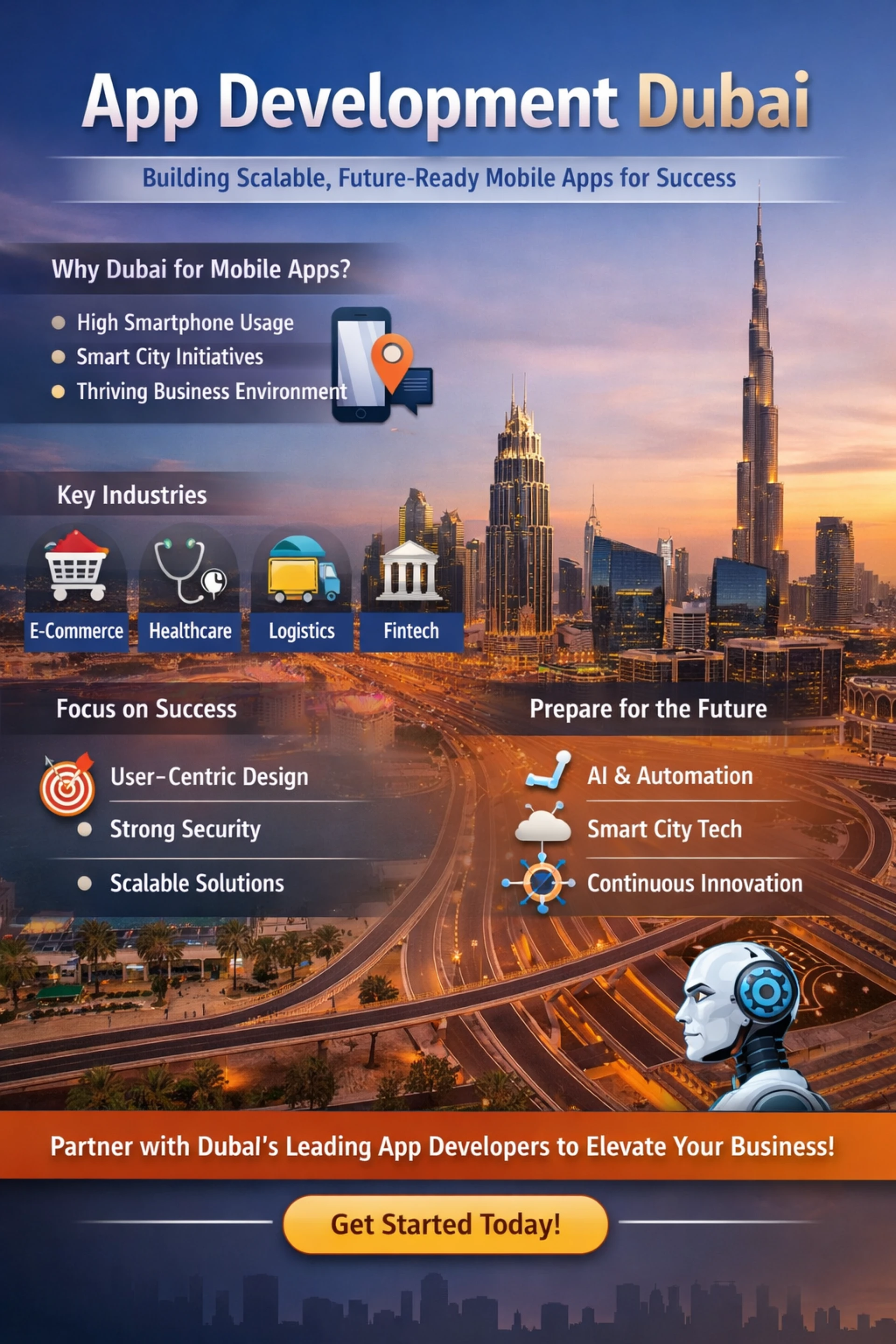
Dubai has rapidly transformed into one of the world’s most progressive digital ecosystems. From smart government services to tech-enabled retail, healthcare, logistics, and finance, mobile applications now play a central role in how businesses operate and how customers interact with brands. As a result, app development Dubai is no longer just a technical initiative—it is a strategic investment that directly influences growth, market reach, and long-term sustainability.
For companies planning to launch or upgrade a mobile solution in the UAE, understanding how Dubai’s digital environment works, what users expect, and how to build a future-ready product is essential. This article explores why app development in Dubai is booming, how businesses can approach their mobile strategy, and what best practices lead to long-term success.
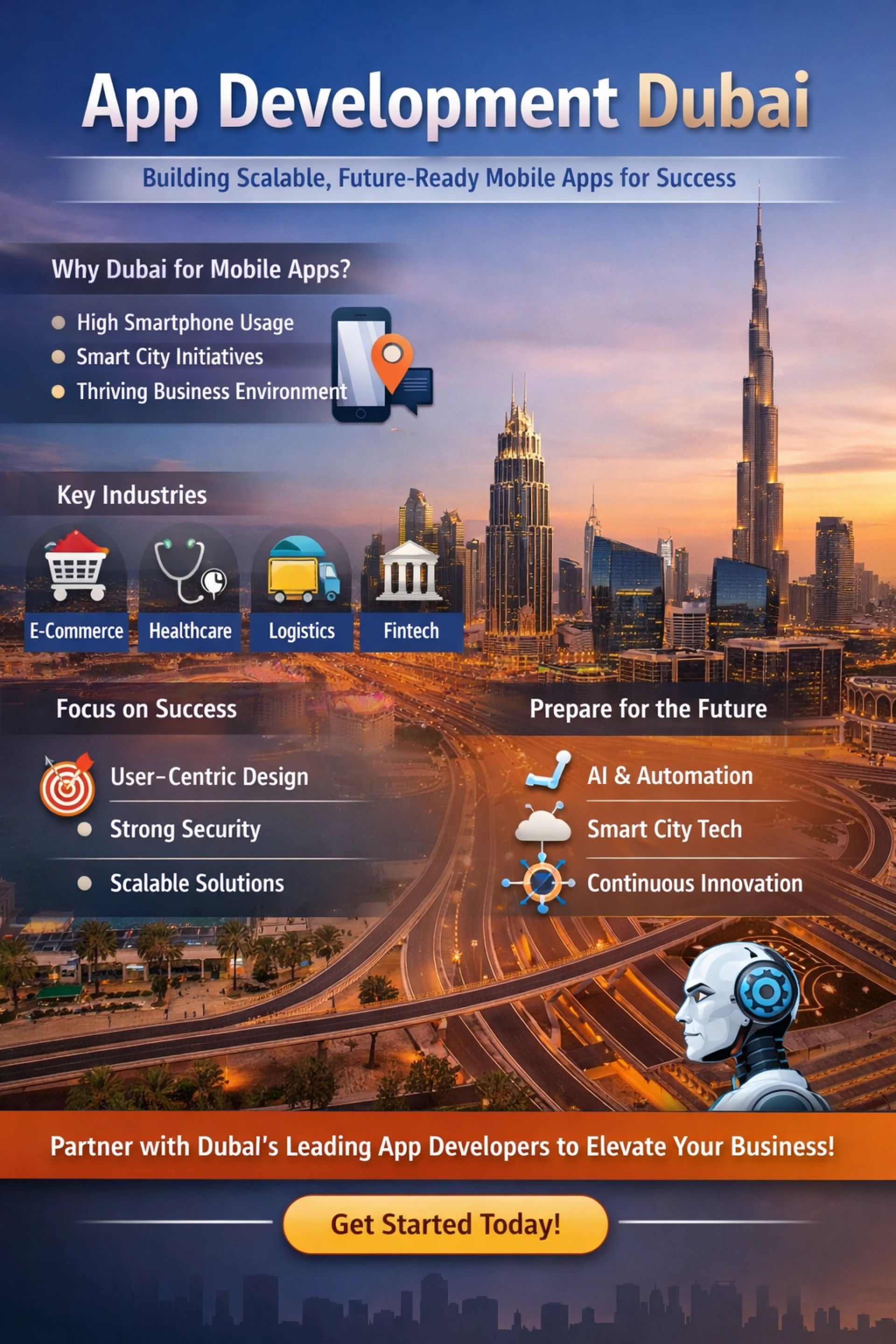
Dubai’s Digital Environment: Why Mobile Apps Matter More Than Ever
Dubai has built its reputation on innovation, infrastructure, and forward-thinking policies. Businesses across the emirate operate in a highly connected, mobile-first environment where customers expect fast, seamless, and personalized digital experiences.
Smartphones are now the primary access point for services such as:
- Online shopping and deliveries
- Ride-hailing and transportation
- Healthcare appointments and telemedicine
- Real estate browsing and bookings
- Digital payments and banking
In such an ecosystem, companies that fail to provide a high-quality mobile experience risk losing visibility and relevance. This is one of the main reasons why app development Dubai has become a priority for both startups and established enterprises.
More importantly, mobile apps in Dubai are not just customer-facing tools. They are also widely used for internal operations, logistics tracking, workforce management, and real-time analytics. Businesses increasingly rely on mobile platforms to improve productivity and decision-making.
Understanding the Real Business Value of App Development Dubai
When organizations think about mobile app development, they often focus on features and design. However, in Dubai’s competitive market, the real value lies in business impact.
A well-planned mobile application can help businesses:
- Improve customer engagement and retention
- Automate operational workflows
- Enable real-time communication with customers and teams
- Reduce dependency on manual processes
- Unlock new digital revenue channels
In short, app development Dubai is about aligning technology with business goals—not just creating software.
Key Industries Driving App Development in Dubai
Several sectors are leading the demand for modern mobile solutions in Dubai.
1. Retail and E-Commerce
Retail businesses are rapidly shifting toward mobile-first strategies. Shopping apps, loyalty programs, personalized recommendations, and mobile payments have become essential for customer engagement.
E-commerce companies use mobile apps to:
- Offer seamless checkout experiences
- Push real-time promotions
- Track user behavior and preferences
- Improve delivery coordination
2. Healthcare and Wellness
Healthcare organizations increasingly rely on mobile applications to provide:
- Appointment booking and reminders
- Telemedicine services
- Digital health records
- Remote monitoring tools
This shift has created new opportunities for secure, compliant, and user-friendly app development Dubai solutions focused on patient experience and data privacy.
3. Logistics and Transportation
Dubai’s logistics and transportation sector depends heavily on mobile systems for:
- Fleet tracking
- Real-time route optimization
- Driver communication
- Inventory monitoring
Custom mobile apps play a crucial role in improving operational efficiency and service reliability.
4. Real Estate and Property Management
Property portals, virtual tours, tenant management platforms, and maintenance tracking apps are now widely adopted. Mobile applications help real estate companies manage large portfolios and connect more effectively with buyers and tenants.
5. Fintech and Digital Payments
With the rise of digital wallets, mobile banking, and contactless payments, fintech has become a major contributor to app development Dubai. Security, performance, and regulatory compliance are critical requirements in this sector.
Choosing the Right App Development Strategy
Before starting a mobile project, businesses must define a clear strategy. The most successful app development initiatives in Dubai begin with planning, validation, and market alignment.
1. Identify the Business Objective
Is the app designed to:
- Increase sales?
- Improve customer experience?
- Automate operations?
- Support internal teams?
A mobile app should solve a measurable business problem. Without a clear objective, even a technically perfect application can fail to deliver value.
2. Understand the Target Users
Dubai is a diverse, multicultural city. Many mobile apps must support:
- Multiple languages (often Arabic and English)
- Different usage behaviors
- Varying levels of digital literacy
User experience design must reflect this diversity while remaining simple and intuitive.
3. Choose the Right Platform
Depending on the business goals, organizations may select:
- Native iOS and Android development
- Cross-platform frameworks such as Flutter or React Native
- Progressive Web Applications (PWAs)
Each option offers different trade-offs related to performance, cost, scalability, and time to market.
The Role of Modern Technologies in App Development Dubai
The mobile ecosystem in Dubai is evolving rapidly. Companies increasingly expect advanced features that go beyond basic functionality.
1. Artificial Intelligence and Automation
AI is being integrated into mobile apps to support:
- Intelligent chatbots
- Recommendation engines
- Predictive analytics
- Automated customer support
AI-powered mobile applications help businesses deliver more personalized experiences and improve operational efficiency.
2. Cloud-Based Architecture
Modern app development Dubai projects rely heavily on cloud infrastructure to:
- Scale applications dynamically
- Improve system reliability
- Support real-time data synchronization
- Reduce infrastructure management overhead
Cloud-native mobile apps are easier to maintain and expand as business needs evolve.
3. Internet of Things (IoT) Integration
In sectors such as logistics, manufacturing, and smart buildings, mobile apps serve as control and monitoring platforms for connected devices. IoT-enabled mobile applications allow organizations to track assets, automate workflows, and improve safety.
4. Data Analytics and Business Intelligence
Mobile apps increasingly collect valuable user and operational data. When combined with analytics platforms, this data supports:
- Better product decisions
- Improved marketing strategies
- Real-time performance tracking
Security and Compliance: A Critical Priority
One of the most important aspects of app development Dubai is security. Mobile apps often handle sensitive user information such as personal data, payment details, and medical records.
Best practices include:
- Secure authentication and authorization
- Data encryption at rest and in transit
- Secure API communication
- Regular vulnerability testing
- Compliance with regional data protection regulations
Security should be embedded into the development lifecycle rather than treated as a final step.
The Importance of UX and Performance
In a highly competitive market like Dubai, users are quick to abandon slow or confusing applications. Performance and usability directly influence adoption and long-term engagement.
High-quality mobile apps focus on:
- Fast loading times
- Smooth navigation
- Minimal user friction
- Clear onboarding processes
- Accessibility considerations
A strong UX strategy improves customer satisfaction and directly supports business retention goals.
From MVP to Scalable Platform
Many organizations begin with a Minimum Viable Product (MVP) to test their idea in the market. This approach is particularly effective in Dubai’s fast-moving business environment.
An MVP allows companies to:
- Validate assumptions quickly
- Collect real user feedback
- Reduce early development risks
- Optimize features before large-scale investment
However, scalability must be considered from day one. Even MVP-level app development Dubai projects should be built on an architecture that supports future expansion, new integrations, and higher user volumes.
Partnering with the Right Development Team
The success of any mobile initiative depends heavily on the team behind it. An experienced app development partner brings not only technical expertise but also market understanding and delivery discipline.
A reliable development team typically provides:
- Business and technical consulting
- UI/UX design services
- Full-cycle mobile development
- Quality assurance and testing
- Deployment and store submission
- Post-launch support and maintenance
Working with professionals who understand the local business environment, compliance expectations, and user behavior in Dubai can significantly reduce risks and development delays.
Measuring Success After Launch
Launching the application is only the beginning. Ongoing optimization plays a major role in achieving sustainable results.
Key performance indicators (KPIs) often include:
- User acquisition and activation rates
- Retention and session frequency
- Conversion rates
- Feature usage metrics
- App store ratings and reviews
Continuous monitoring allows businesses to refine their product roadmap and improve user experience based on real data.
How Businesses Can Prepare for the Future of App Development Dubai
The future of mobile innovation in Dubai will be driven by:
- Greater use of AI and automation
- Deeper integration with smart city infrastructure
- Increased demand for secure digital services
- Growth of industry-specific mobile platforms
To stay competitive, businesses should invest in long-term mobile strategies rather than one-off development projects. Flexibility, scalability, and continuous improvement will define success.
Final Thoughts
App development Dubai represents far more than building a mobile application—it reflects how businesses participate in Dubai’s digital economy. With rising customer expectations, intense competition, and rapid technological change, organizations must adopt a strategic approach to mobile development.
By aligning business objectives with user experience, modern technologies, and secure infrastructure, companies can build mobile solutions that support growth, innovation, and operational excellence.
Whether you are a startup launching your first digital product or an enterprise modernizing existing systems, investing in well-planned app development Dubai services can help you unlock new opportunities, improve customer engagement, and position your brand for long-term success in one of the world’s most dynamic business environments.