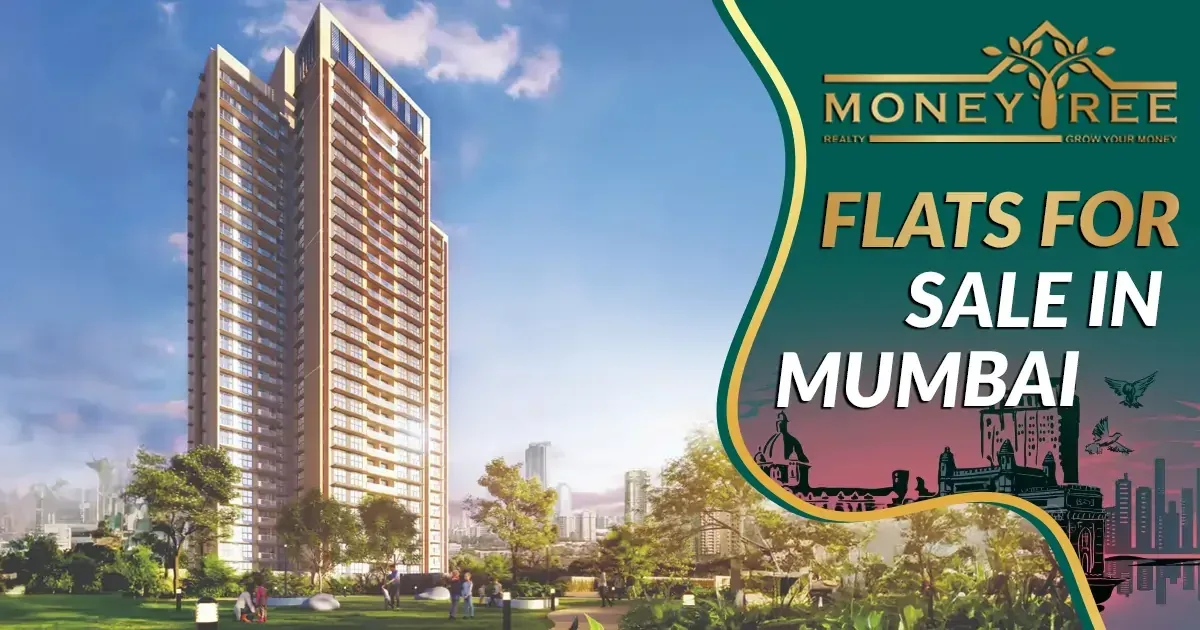
If there's one city in India that never stops dreaming, it's Mumbai. The city of lights, ambition, and relentless hustle has long been the ultimate destination for homebuyers seeking not just a roof over their heads, but a stake in one of the world's most dynamic urban economies. Whether you're a first-time buyer trying to buy a 2 BHK in Mumbai on a modest budget, or a seasoned investor eyeing 4 BHK flats in Mumbai for sale in a luxury tower overlooking the Arabian Sea, this guide is written for you. The Mumbai real estate market in 2026 is more layered, more data-driven, and more buyer-friendly than it has ever been — but only if you know how to navigate it intelligently. Let's break it all down.
Why Mumbai Remains India's Most Coveted Real Estate Market
Have you ever wondered why, despite sky-high prices, people from every corner of India still dream of owning an apartment in Mumbai? The answer lies not just in emotion, but in hard economic logic. Mumbai is the financial capital of India, home to the Bombay Stock Exchange, the Reserve Bank of India headquarters, and the country's largest concentration of Fortune 500 offices. It's a city where career opportunities, social infrastructure, and investment returns converge in a way no other Indian city can quite replicate. This unique combination makes property in Mumbai not just a lifestyle choice, but a financially sound long-term decision.
The demand for buying a home in Mumbai is fuelled by multiple forces simultaneously — young professionals migrating for work, established families upgrading to larger homes, and NRIs parking their wealth in trusted residential assets. The Mumbai real estate market in 2026 is in a more dependable and transparent phase, with buyers purchasing homes based on genuine understanding of price fluctuations and market trends, rather than speculative impulses. This shift in buyer psychology has brought greater stability to the market and made informed decision-making far more achievable than it was even five years ago. The days of buying blindly are behind us — today's Mumbai homebuyer is smarter, better-informed, and more deliberate, and this guide is built to serve exactly that kind of buyer.
Mumbai Real Estate Market Overview in 2026
MMR Residential Transaction Value & Price Growth
The numbers don't lie, and in 2026, the numbers tell a compelling story. The Mumbai Metropolitan Region (MMR) crossed ₹1.55 lakh crore in residential transaction value in FY 2024–25, driven by higher ticket-size homes rather than volume growth, with city-wide residential price appreciation recorded at 4–6% year-on-year.
What this tells us is that Mumbai's real estate market isn't growing recklessly — it's growing smartly, with buyers gravitating toward quality over quantity. This disciplined appreciation is actually great news for homebuyers because it signals stability rather than a bubble. If you're planning to buy property in Mumbai in 2026, you're entering a market that has found its rhythm, and that's a rare and valuable thing.
In 2026, residential price movement across the MMR reflects a more stable and structured pattern compared with earlier market cycles, increasingly shaped by improved connectivity, expanding commercial districts, and sustainable housing demand.
This environment rewards buyers who have done their homework. The market is no longer being pushed up purely by speculative flipping — real end-users are the primary drivers of absorption, which means prices are anchored in genuine living value rather than artificial inflation. For anyone seriously considering buying a flat in Mumbai, this macroeconomic backdrop couldn't be more reassuring.
Key Drivers Shaping Demand in 2026
What's really powering Mumbai's property market right now? At its core, demand is being driven by three converging forces: infrastructure expansion, redevelopment of old housing stock, and a demographic wave of young professionals who are now financially ready to own rather than rent. The metro rail network, improved road connectivity, and the approaching launch of Navi Mumbai International Airport are reshaping how Mumbaikars think about location. Areas that were once considered "too far" are now attracting serious homebuyer interest because commute times have dropped dramatically. Collectively, these infrastructure catalysts are converting connectivity into long-term residential value, both in 2026 and the years ahead.
Best Areas to Buy Property in Mumbai in 2026
South Mumbai & Premium Corridors
South Mumbai has always been the crown jewel of the city's real estate map, and that status hasn't changed in 2026. Areas like Malabar Hill, Cuffe Parade, Worli, and Parel continue to attract ultra-high-net-worth buyers and discerning investors who understand the concept of irreplaceable location. South and South-Central Mumbai corridors lead pricing at ₹45,000–75,000 per sq ft for premium flats, reflecting extreme land scarcity and strong redevelopment-led appreciation. If you're looking at 4 BHK flats in Mumbai for sale with sea views, branded lobbies, and world-class amenities, South Mumbai and the Worli–BKC–Lower Parel belt are the places to begin your search. These are not just homes; they are statements of arrival — and they hold their value through every market cycle.
Western Suburbs: Bandra, Andheri, Borivali
The western suburbs form the beating heart of Mumbai's mid-to-premium residential market, and they remain among the most sought-after corridors for buying property in Mumbai in 2026. Bandra sustains luxury pricing due to lifestyle permanence, with Carter Road and Pali Hill continuing to attract high-intent families due to low redevelopment density and restricted future supply — factors that sustain long-term price resilience.
Andheri, both East and West, is a powerhouse for rental demand and capital appreciation, sitting at the intersection of the Western Express Highway, multiple metro lines, and the domestic airport. Borivali and Kandivali offer more accessible price points while still benefiting from excellent connectivity and robust social infrastructure. For a 2 BHK flat in Mumbai that balances budget with lifestyle, the western suburbs offer some of the most compelling options in the city.
Central Mumbai: Ghatkopar, Mulund, Powai
Central Mumbai's residential landscape has undergone a remarkable transformation over the past decade, and 2026 is proving to be its moment of maturity. Ghatkopar benefits from its role as a major metro interchange, while Mulund offers controlled supply and a strong residential profile, making both among the best areas to invest in Mumbai's real estate market in 2026 due to stable and predictable price growth.
Powai, home to Hiranandani Gardens and the IIT campus, continues to punch above its weight as a premium lifestyle destination with strong IT-sector employment nearby. If you're weighing options for 3 BHK apartments in Mumbai that offer genuine value for money with excellent long-term appreciation potential, Powai and Ghatkopar should be high on your list. These areas also tend to offer better carpet area per rupee compared to their western counterparts.
Emerging Hubs: Thane, Navi Mumbai & Beyond
If you want to stretch your budget without compromising on quality, Thane and Navi Mumbai are your best friends in 2026. Rapidly growing locales across MMR, including Navi Mumbai, accounted for 20% of new launches in Q2 2025, with diverse pricing, strong rental demand, and large-scale township developments making them prime destinations for both homebuyers and investors seeking long-term growth and high appreciation.
Thane, in particular, offers a full township lifestyle with greenery, wide roads, and modern amenities at price points significantly lower than Mumbai's core suburbs. Mid-segment areas in Thane, including Ghodbunder Road, Hiranandani Meadows, and Manpada, offer upscale housing units priced from ₹14,000 per sq ft onwards. For a family looking to buy a home in Mumbai's extended metropolitan region without stretching their finances to the breaking point, these emerging hubs deliver genuine lifestyle value.
Understanding Property Prices in Mumbai — Segment by Segment
Price Range for 1 BHK Apartments
Before we dive into the bigger configurations, it's worth understanding where 1 BHK apartments stand in Mumbai's pricing ecosystem, because they often set the floor for the broader market. A standard 1 BHK in central or western suburbs like Kandivali or Ghatkopar typically ranges from ₹60 lakh to ₹1.5 crore in 2026.
These are typically attractive to young professionals, newly married couples, and investors looking for high rental yield assets. While a 1 BHK may seem limiting, in Mumbai's context it represents a meaningful first step on the property ladder and can deliver solid rental returns in well-connected neighbourhoods. The key is buying in an area with strong employment generators nearby — that's what drives sustained tenant demand and keeps your rental income consistent.
Price Range for 2 BHK Flats in Mumbai
The 2 BHK flat in Mumbai is the undisputed king of the city's residential market. It's the configuration that most families aspire to, most developers build, and most investors target for rental income. Mid-range 2 BHK units in emerging hubs like Thane or Goregaon have settled in the ₹1.5 crore to ₹3 crore bracket in 2026, offering solid value for money in well-connected locations.
In premium corridors, 2 BHK flats in Mumbai's South and South-Central areas are priced at ₹45,000–75,000 per sq ft, a reflection of land scarcity and lifestyle premium. The wide price band for 2 BHKs means there's genuinely something for every budget — the trick is matching your financial capacity with the right location so you're not over-leveraged and can still enjoy life in your new home. When you buy a 2 BHK in Mumbai, you're making one of the smartest residential investments available in the Indian market today.
3 BHK Apartments in Mumbai: Space Meets Value
3 BHK apartments in Mumbai represent the sweet spot between comfort and aspiration. They work beautifully for growing families, joint family setups, or buyers who work from home and need that dedicated study or office room. In 2026, the 3 BHK segment is seeing particularly strong demand because post-pandemic lifestyle preferences have permanently shifted toward larger, more functional living spaces.
Luxury 3 BHK apartments in prime areas like Worli or Bandra West easily cross the ₹5 crore to ₹15 crore mark, while well-planned 3 BHK units in Thane, Navi Mumbai, or Mulund can be found in the ₹2 crore to ₹4 crore range — making them genuinely accessible for upper-middle-class buyers. For investment purposes, 3 BHK units in luxury areas offer steady capital appreciation, though 1 BHK and 2 BHK configurations typically deliver higher rental yield percentages. If lifestyle and space are your priorities, a 3 BHK is where Mumbai's residential market truly shines.
4 BHK Flats in Mumbai for Sale: The Luxury Tier
If you're searching for 4 BHK flats in Mumbai for sale, you're operating in a world where price tags are measured in crores and amenities rival five-star hotels. These are properties with private elevators, home automation systems, designer kitchens, and views that justify every rupee spent. The premium luxury corridor stretching from Worli to Bandra Kurla Complex to Parel is where most 4 BHK inventory is concentrated, with developers like Lodha, Godrej, Piramal Realty, and Oberoi Realty competing fiercely to offer the most coveted addresses. In premium South Mumbai localities like Malabar Hill, rates can reach as high as ₹1,20,000 per square foot for sea-facing properties, which means a 4 BHK in such a building could easily command ₹20 crore to ₹50 crore or more. These properties are not just homes — they are generational assets that appreciate over decades and carry enormous social and financial prestige.
How to Buy a Flat in Mumbai: Step-by-Step Process
Define Your Budget and Get Home Loan Pre-Approval
The biggest mistake most first-time buyers make when trying to buy a flat in Mumbai is falling in love with a property before they've done their financial homework. Start with your numbers — not with property listings. Calculate your net monthly income, existing EMIs, savings available for down payment, and realistic home loan eligibility. Most banks offer home loans up to 80% of the property value, meaning you'll need to arrange 20% yourself as a down payment, plus registration charges of approximately 5–6% in Maharashtra. Get pre-approved for a home loan before you begin site visits, because it will give you real negotiating power and prevent you from wasting time on properties outside your budget. A pre-approved home loan also signals seriousness to developers, which can sometimes unlock better payment terms or early-bird pricing on new launches.
RERA Verification & Due Diligence
This step is non-negotiable. Before you invest a single rupee in any property in Mumbai, verify that the project is registered with MahaRERA — Maharashtra's Real Estate Regulatory Authority. RERA-approved projects from reputable developers like Adani Realty ensure that buyers have regulatory protection and that the project meets defined construction and delivery standards.
Beyond RERA, check the title of the land, verify that all approvals (Commencement Certificate, IOD, Building Plan) are in order, and run a background check on the developer's track record for on-time delivery. In Mumbai's redevelopment-heavy market, clarity on land tenure — whether it's freehold, leasehold, or on CHS society land — is absolutely critical. Don't skip this step to save time; the few hours you spend on due diligence today can save you years of legal headaches tomorrow.
Site Visits and Shortlisting
Once your finances are sorted and the project's legal status is verified, it's time to experience the property with your own senses. Visit at different times of the day to assess natural light, ventilation, traffic noise, and neighbourhood activity. Talk to existing residents of the developer's previous projects — their honest feedback is more valuable than any brochure. When evaluating the actual flat, pay attention to carpet area versus super built-up area (since RERA now mandates carpet area pricing, this comparison is cleaner than it used to be), ceiling height, kitchen layout, and the quality of fixtures and fittings. For 3 BHK apartments in Mumbai or larger configurations, insist on understanding the exact positioning of the unit in the building — corner units and higher floors typically offer better light, ventilation, and views.
Agreement, Registration & Possession
Once you've chosen your property and negotiated the price, the legal journey begins. The Agreement for Sale must be registered at the Sub-Registrar's Office and stamp duty of approximately 5% of the property value (with a 1% discount for women buyers in Maharashtra) must be paid. Post-registration, you'll receive an Occupancy Certificate upon project completion — this is your proof that the building has been legally constructed and is safe for habitation.
Never take possession of an apartment without a valid OC, regardless of developer pressure. Track your project's construction progress on the MahaRERA portal, where registered developers are required to post quarterly updates. Following this disciplined process ensures that your journey to buy property in Mumbai concludes with joy rather than litigation.
2 BHK vs 3 BHK in Mumbai — Which One Should You Buy?
This is the question on every homebuyer's lips, and the answer genuinely depends on your life stage, financial bandwidth, and long-term goals. Think of it this way: a 2 BHK in a well-connected Mumbai suburb is like a reliable mid-size sedan it does everything you need, costs less to maintain, and is easier to resell or rent out. A 3 BHK, on the other hand, is like upgrading to an SUV more room, more comfort, and better suited for a growing family, but it comes with a higher price tag and a slightly longer absorption period in the resale market. 1 BHK and 2 BHK configurations are better for ROI in Mumbai, as they deliver higher rental yield percentages and faster liquidity, while 3 BHK units in luxury areas offer steady capital appreciation. If maximising rental income is your goal, a well-located 2 BHK wins. If you're buying for self-use and plan to stay for 10+ years, a 3 BHK gives you the space flexibility that a growing family or hybrid work lifestyle truly demands. The ideal answer is the one that aligns your current needs with your future aspirations — and doesn't leave you financially stretched for the next decade.
Top Builders & Developers to Trust in Mumbai 2026
Choosing the right developer is arguably as important as choosing the right location when you buy a home in Mumbai. Mumbai's real estate landscape has a handful of names that have earned their reputation through decades of consistent delivery, quality construction, and transparent dealings. Lodha, Hiranandani, Kalpataru, Rustomjee, and Runwal Group hold the maximum housing inventory in Mumbai, making them the most active and visible players in the market.
Beyond these established names, developers like Godrej Properties, Piramal Realty, Adani Realty, Oberoi Realty, and Sobha have built strong reputations for premium product quality and on-time delivery. When evaluating developers, always check their RERA compliance track record, the number of completed projects versus ongoing ones, and independent customer reviews on property portals. A trustworthy developer is not just building your home — they're your partner in one of life's most significant financial commitments.
Infrastructure Boost: How Metro & Connectivity Drive Property Value
Here's something every smart Mumbai homebuyer should understand: in this city, infrastructure doesn't just improve commute times — it directly translates into property price appreciation. The ongoing metro rail expansion across Mumbai is one of the most powerful value drivers in the 2026 real estate market. Metro projects impact prices positively by improving commute reliability and enhancing work-life balance, with areas that benefit from metro interchanges recording the strongest price appreciation.
The Navi Mumbai International Airport, when fully operational, is expected to catalyse a whole new wave of residential and commercial development across Panvel, Ulwe, and the surrounding areas. Similarly, the Mumbai Trans Harbour Link, which connects South Mumbai to Navi Mumbai, has already begun to reshape property demand patterns along the southeastern corridor. If you're considering a long-term investment in Mumbai real estate, buying in areas that are in the path of confirmed infrastructure development is one of the shrewdest strategies available to you in 2026.
Red Flags to Watch Out for When Buying Property in Mumbai
With so much money on the line, buyers need to be as sharp about what to avoid as they are about what to pursue. The Mumbai property market, for all its maturity, still has pockets of risk that can trap unwary buyers. First and foremost, be deeply suspicious of any project that isn't registered with MahaRERA there is no legitimate reason in 2026 for a new project to lack RERA registration, and any developer who can't produce one should be avoided unconditionally. Second, watch out for unusually low pricing that seems disconnected from market rates in the area — discounts of 20–30% below market rates in established localities are almost never legitimate and often signal title disputes, construction quality issues, or financial distress of the developer. Third, be cautious of projects where possession dates keep getting revised on the RERA portal — this is a red flag for structural delays that may indicate financial trouble. Finally, avoid purchasing flats in buildings that don't have clear redevelopment agreements if they're SRA or cluster redevelopment projects — the legal complexities in these cases can lock your investment for years. Due diligence isn't pessimism; it's wisdom.
Conclusion
Buying an apartment in Mumbai in 2026 is one of the most exciting and consequential decisions you'll ever make. The city offers an unmatched breadth of options — from affordable 2 BHK flats in Mumbai's growing suburbs to opulent 4 BHK flats in South Mumbai with panoramic sea views — and the market fundamentals in 2026 are as strong and transparent as they've ever been. Prices are appreciating at a healthy 4–6% annually, infrastructure is reshaping connectivity across the MMR, and regulatory protections like RERA have made the buying process significantly safer. The key to navigating this market successfully lies in three things: having crystal-clear financial clarity before you begin, doing thorough due diligence on the project and developer, and choosing a location that aligns with both your lifestyle needs and long-term investment horizon. Mumbai isn't just a city — it's a lifelong investment in one of the world's most resilient urban economies. Make your move wisely, and it will reward you generously.