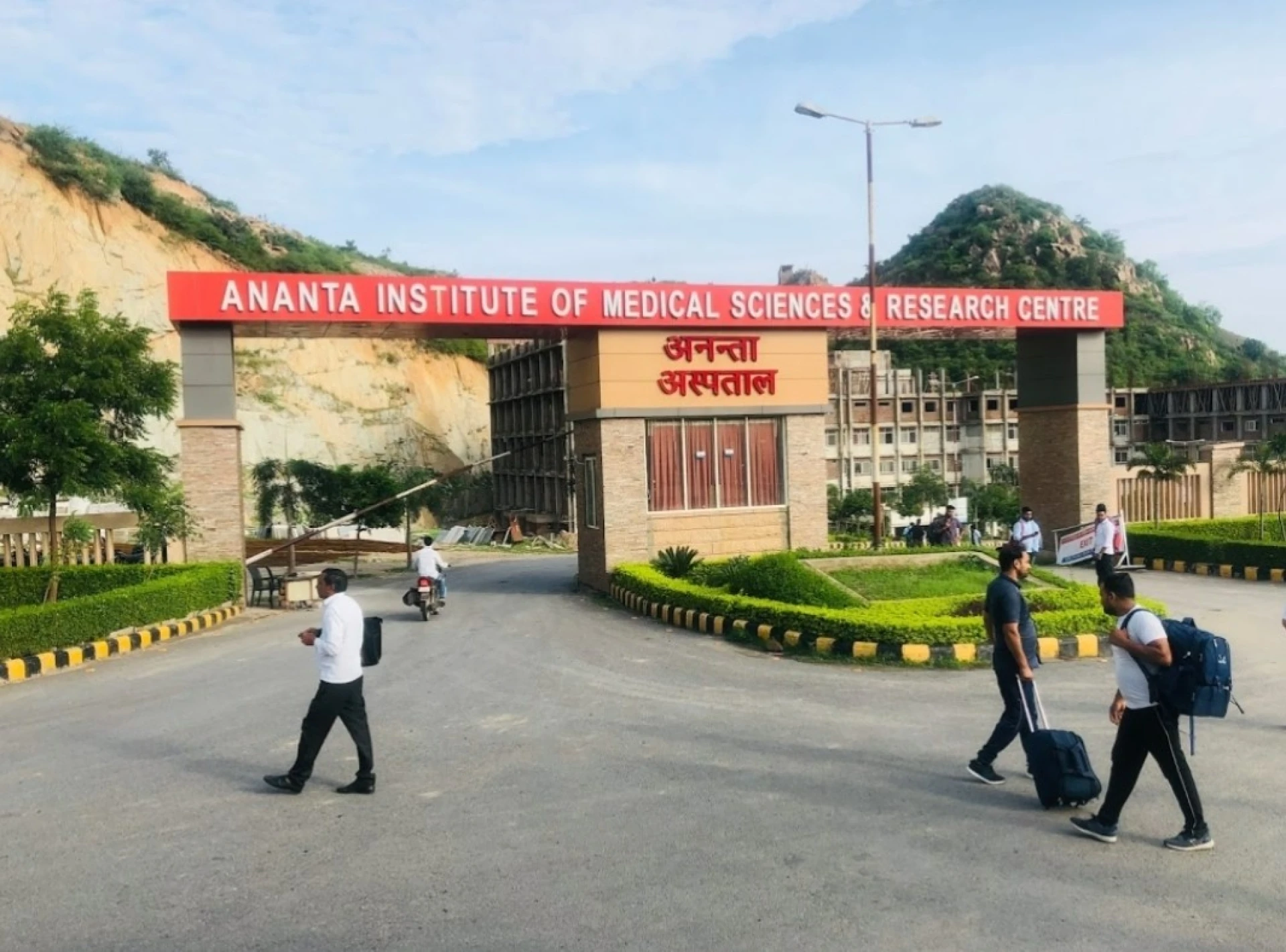
Medical education in India has expanded significantly in recent years, especially in states like Rajasthan where new institutions are helping to meet the growing demand for qualified doctors. Among the emerging medical colleges in the region, Ananta Institute of Medical Sciences and Research Centre has steadily gained recognition for its modern infrastructure, academic focus, and commitment to quality healthcare education. Located in Rajsamand district, this institution plays an important role in strengthening medical training and healthcare services in southern Rajasthan.
Introduction to Ananta Institute of Medical Sciences
Ananta Institute of Medical Sciences and Research Centre (AIMSRC) is a private medical college established with the objective of providing high-quality medical education and healthcare facilities. The college is affiliated with the Rajasthan University of Health Sciences and is recognized by the National Medical Commission (NMC). Since its establishment, the institution has worked to create a learning environment that blends theoretical knowledge with clinical exposure.
The institute is situated near Udaipur in the Rajsamand district of Rajasthan, offering students a peaceful academic atmosphere away from the distractions of large metropolitan cities. At the same time, its proximity to Udaipur ensures accessibility, connectivity, and exposure to urban medical facilities.
The primary goal of the college is to train competent doctors who not only possess strong medical knowledge but also demonstrate compassion, ethics, and responsibility toward society.
Vision and Mission
Every successful medical institution operates with a clear vision and mission, and Ananta Institute of Medical Sciences is no exception.
Vision
The vision of the institute is to become a center of excellence in medical education, research, and healthcare services while contributing to the overall development of public health in India.
Mission
The institution aims to deliver high-quality medical education through advanced teaching methods, modern infrastructure, and experienced faculty. It also focuses on promoting medical research, community healthcare services, and ethical medical practices.
By emphasizing these goals, the institute strives to create a generation of doctors who are capable of addressing both rural and urban healthcare challenges.
Location and Campus Environment
The campus of Ananta Institute of Medical Sciences is located in Nathdwara, Rajsamand district of Rajasthan. The region is known for its calm surroundings, scenic landscapes, and cultural heritage. This environment provides an ideal setting for academic learning and personal development.
The institute is well connected by road networks and is located within a reasonable distance from Udaipur city. Udaipur’s railway station and airport provide convenient connectivity for students traveling from different parts of India.
The campus itself is spacious and thoughtfully designed to support academic activities, hospital services, and student life. Modern buildings, green spaces, and well-planned infrastructure create a comfortable and productive learning environment.
Courses Offered
The primary program offered at Ananta Institute of Medical Sciences is the Bachelor of Medicine and Bachelor of Surgery (MBBS) degree. This program is designed to prepare students for professional medical practice through a structured curriculum that includes both theoretical education and clinical training.
MBBS Program
The MBBS course typically spans five and a half years, including one year of mandatory internship. During this period, students study a wide range of medical subjects such as anatomy, physiology, biochemistry, pathology, microbiology, pharmacology, community medicine, surgery, medicine, pediatrics, obstetrics and gynecology, and other specialized fields.
The curriculum follows the guidelines set by the National Medical Commission. It incorporates classroom lectures, laboratory sessions, clinical postings, and community health training to ensure a comprehensive educational experience.
Students also participate in clinical rotations in the attached teaching hospital, where they gain practical exposure to real patient cases under the supervision of experienced doctors.
Admission Process
Admission to the MBBS program at Ananta Institute of Medical Sciences is conducted through the National Eligibility cum Entrance Test (NEET-UG). This entrance examination is mandatory for all medical aspirants seeking admission to undergraduate medical courses in India.
Students must qualify in NEET and participate in the centralized counseling process conducted by the state authorities. Seats are allocated based on merit, reservation policies, and seat availability.
The counseling process generally includes multiple rounds, allowing students to choose colleges based on their preferences and rank. Once allotted a seat at Ananta Institute of Medical Sciences, candidates must complete the admission formalities, document verification, and fee payment to confirm their enrollment.
Infrastructure and Facilities
One of the key strengths of Ananta Institute of Medical Sciences is its well-developed infrastructure. The campus has been designed to support modern medical education and patient care.
Academic Facilities
The college features well-equipped lecture halls with modern teaching aids, including audiovisual systems that enhance interactive learning. Laboratories for anatomy, physiology, biochemistry, pathology, and microbiology are equipped with advanced instruments that allow students to perform experiments and practical training.
The dissection hall provides hands-on learning opportunities for anatomy students, while demonstration rooms facilitate small-group discussions and tutorials.
Library
The central library serves as a vital academic resource for students and faculty. It houses a large collection of medical textbooks, reference materials, journals, and digital resources. Students can access both printed and electronic materials to support their academic research and study.
Quiet reading spaces and internet access allow students to study comfortably and efficiently.
Teaching Hospital
The institute is associated with a multi-specialty teaching hospital that provides clinical training for medical students. The hospital offers a range of healthcare services, including outpatient and inpatient care, diagnostic services, and specialized treatments.
Clinical departments such as general medicine, surgery, pediatrics, orthopedics, obstetrics and gynecology, dermatology, and radiology provide valuable learning opportunities for students during their clinical rotations.
Through regular patient interaction and supervised clinical training, students gain practical knowledge that is essential for their future medical careers.
Faculty and Academic Support
Ananta Institute of Medical Sciences employs experienced and qualified faculty members who are dedicated to teaching and mentoring students. Faculty members come from diverse medical backgrounds and possess extensive experience in both clinical practice and academic teaching.
The teaching approach emphasizes concept-based learning, problem-solving, and clinical reasoning. Faculty members encourage students to actively participate in discussions, research activities, and community outreach programs.
Regular academic assessments, seminars, and workshops help students stay engaged with the learning process and continuously improve their knowledge.
Research and Academic Development
Research plays a crucial role in modern medical education. Ananta Institute of Medical Sciences encourages students and faculty to participate in research projects, scientific studies, and medical conferences.
Students are introduced to research methodologies early in their academic journey, helping them develop analytical thinking and scientific curiosity. Faculty members also guide students in presenting research papers and participating in academic competitions.
By promoting research activities, the institute aims to contribute to advancements in medical science and improve healthcare practices.
Student Life and Campus Facilities
Life at Ananta Institute of Medical Sciences extends beyond classrooms and hospital wards. The institute provides a supportive and engaging campus environment that encourages holistic development.
Hostel Facilities
The college offers separate hostel facilities for male and female students. Hostels are equipped with essential amenities such as comfortable rooms, dining facilities, security services, and recreational spaces.
Living in the hostel allows students to build friendships, collaborate academically, and experience a vibrant campus life.
Sports and Recreation
Physical fitness and recreational activities are encouraged to maintain a balanced lifestyle. The campus includes sports facilities for indoor and outdoor games, allowing students to participate in various athletic activities.
Annual sports events and cultural programs create opportunities for students to showcase their talents and strengthen their sense of community.
Cafeteria and Basic Amenities
The campus cafeteria provides nutritious meals and refreshments for students and staff. Other facilities such as transportation services, medical support, and internet connectivity contribute to a comfortable campus experience.
Community Healthcare and Social Responsibility
One of the important aspects of medical education at Ananta Institute of Medical Sciences is community engagement. The institute regularly organizes medical camps, health awareness programs, and outreach activities in nearby rural areas.
These initiatives allow students to understand the healthcare challenges faced by rural communities. By participating in community health programs, students develop empathy and a deeper understanding of public health issues.
Such experiences are valuable in shaping responsible doctors who are committed to serving society.
Clinical Exposure and Practical Training
Clinical training forms the foundation of a medical student's education. At Ananta Institute of Medical Sciences, students receive extensive clinical exposure through the attached hospital and community health programs.
Students observe and assist in various medical procedures, patient consultations, and diagnostic processes. Under the supervision of senior doctors, they gradually develop the skills required for patient care.
The internship year is particularly significant, as students rotate through different medical departments and gain hands-on experience in real clinical settings.
Importance of Studying in Rajasthan
Rajasthan has emerged as an important center for medical education in India. The state offers a combination of government and private medical colleges that provide quality education and clinical training.
Studying in Rajasthan also exposes students to a diverse patient population and a wide range of medical cases. This diversity helps students develop strong diagnostic and treatment skills.
Institutions like Ananta Institute of Medical Sciences contribute significantly to the state's healthcare infrastructure by training skilled medical professionals and providing healthcare services to local communities.
Career Opportunities After MBBS
Graduates from Ananta Institute of Medical Sciences have numerous career opportunities after completing their MBBS degree. Many students choose to pursue postgraduate medical education in specialized fields such as internal medicine, surgery, pediatrics, radiology, or orthopedics.
Others may begin practicing as general physicians or work in hospitals, healthcare organizations, and public health programs.
Some graduates also pursue careers in medical research, hospital administration, or academic teaching. The medical profession offers diverse career paths, and an MBBS degree serves as the foundation for many of these opportunities.
Why Choose Ananta Institute of Medical Sciences
There are several reasons why aspiring medical students consider Ananta Institute of Medical Sciences for their MBBS education.
First, the institute offers modern infrastructure and well-equipped laboratories that support effective learning. Second, the presence of an attached teaching hospital ensures strong clinical exposure for students.
Third, the peaceful campus environment allows students to focus on their studies while enjoying a supportive academic community. The experienced faculty and structured curriculum further contribute to a strong educational foundation.
Additionally, the institute’s commitment to community healthcare and research provides students with opportunities to expand their knowledge beyond traditional classroom learning.
Conclusion
Ananta Institute of Medical Sciences and Research Centre has emerged as a promising medical college in Rajasthan. With its focus on quality education, clinical training, and community healthcare, the institute plays a significant role in shaping the next generation of medical professionals.
The combination of experienced faculty, modern facilities, and practical learning opportunities ensures that students receive a well-rounded medical education. As the demand for skilled doctors continues to grow in India, institutions like Ananta Institute of Medical Sciences contribute meaningfully to strengthening the country's healthcare system.
For aspiring medical students who wish to pursue MBBS in Rajasthan, this institute offers a balanced environment where academic excellence, professional training, and social responsibility come together to create competent and compassionate healthcare professionals.