
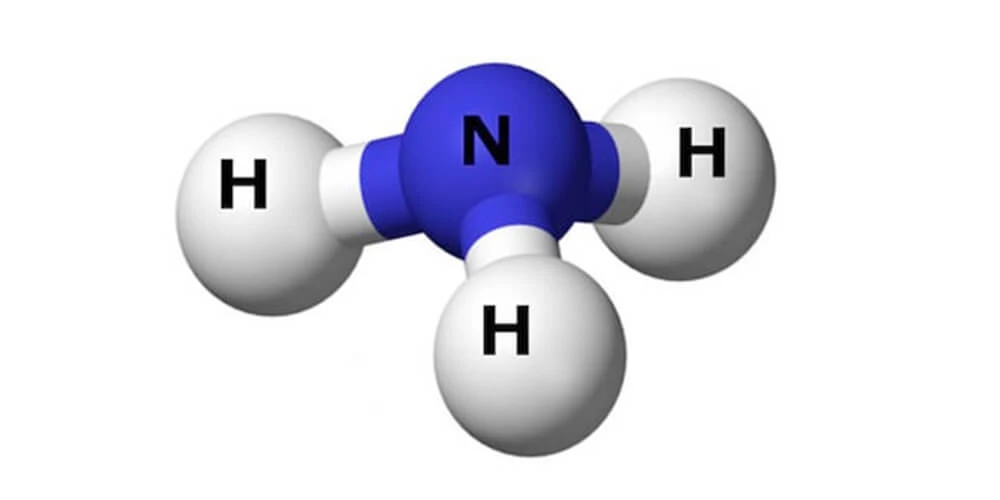
Ammonia, one of the most widely produced industrial chemicals in the world, has played a crucial role in supporting global agriculture for more than a century. However, as the world transitions toward a low-carbon economy, ammonia is emerging as more than just a fertilizer ingredient — it is becoming a central player in the clean energy revolution. Its versatility, scalability, and potential to act as a carbon-free fuel make it a key component in the world’s efforts to achieve sustainability and energy independence.
According to recent industry analysis, the global ammonia market was valued at US$ 79.9 Bn in 2024. It is projected to expand at a CAGR of 4.7% from 2025 to 2035, reaching an estimated US$ 131.8 Bn by the end of 2035. This steady growth underscores ammonia’s importance in both established industries and emerging energy technologies.
Agricultural Backbone of the World
Ammonia’s most traditional and significant application lies in agriculture. It is the foundational chemical used to produce nitrogen-based fertilizers such as urea, ammonium nitrate, and ammonium sulfate. These fertilizers are essential for enhancing soil fertility, improving crop yield, and supporting the food supply chain that feeds billions of people.
In many developing economies, rising population pressures and limited arable land are driving the adoption of ammonia-based fertilizers. Countries such as India, China, and Brazil are heavily investing in domestic ammonia production to meet agricultural demand and reduce dependency on imports. Meanwhile, advanced nations are focusing on sustainable farming practices and optimized fertilizer usage to minimize environmental damage while maintaining productivity.
As the global food demand is expected to increase by nearly 50% by 2050, the ammonia market is set to expand in tandem, ensuring consistent fertilizer supply to support the growing population.
Sample Research Report Copy- https://www.transparencymarketresearch.com/sample/sample.php?flag=S&rep_id=1307
Industrial Applications: Beyond Fertilizers
Beyond its agricultural roots, ammonia serves as a vital industrial chemical used in various processes. It is an essential input in the production of plastics, explosives, textiles, and pharmaceuticals. Additionally, it functions as a refrigerant in cooling systems due to its high energy efficiency and zero ozone depletion potential.
Another critical use of ammonia is in environmental control. It plays a significant role in selective catalytic reduction (SCR) systems that help reduce nitrogen oxide (NOx) emissions from industrial plants and vehicles. As industries worldwide adopt stricter emission norms, the use of ammonia in environmental management is expected to rise sharply.
Moreover, advancements in chemical manufacturing have enabled ammonia to be a precursor for multiple downstream products, thereby increasing its industrial significance.
Green Ammonia: The Fuel of the Future
Perhaps the most transformative trend reshaping the ammonia industry is the emergence of green ammonia — a clean, carbon-free variant produced using renewable energy. Traditional ammonia production via the Haber-Bosch process relies on natural gas or coal, making it one of the most carbon-intensive chemical processes globally. Green ammonia, however, is synthesized using hydrogen derived from water electrolysis powered by renewable energy sources like solar and wind.
This innovation opens a new era where ammonia can serve as a clean energy carrier. It can store, transport, and release hydrogen efficiently, offering a viable alternative for sectors seeking carbon neutrality. Moreover, ammonia can be used directly as a carbon-free fuel for shipping, power generation, and industrial heating.
Countries such as Japan, Australia, Norway, Saudi Arabia, and the Netherlands are leading in green ammonia research and project development. These nations are investing billions into developing large-scale production facilities, export infrastructure, and ammonia-based power solutions.
The International Energy Agency (IEA) recognizes green ammonia as one of the most promising options to decarbonize heavy industries and global shipping, which are among the hardest sectors to electrify.
Regional Insights: Global Expansion and Innovation
Asia Pacific holds the largest share of the global ammonia market, driven by high fertilizer demand and growing investments in energy infrastructure. China remains the dominant producer, followed by India and Indonesia.
North America continues to be a major ammonia exporter due to its vast natural gas reserves and established manufacturing base. The U.S. is also witnessing rapid innovation in low-carbon and blue ammonia projects that capture and store CO₂ emissions.
Europe is focusing on sustainability and has become a hotspot for green ammonia innovation. Countries like Germany, the Netherlands, and Spain are developing pilot projects that integrate ammonia into renewable hydrogen ecosystems.
Meanwhile, the Middle East and Africa are emerging as key players in the export market. Nations such as Oman, Saudi Arabia, and Morocco are leveraging their abundant solar and wind resources to produce green ammonia for global energy markets.
Leading Players and Strategic Developments
The ammonia market is characterized by strong competition among global leaders such as Yara International ASA, CF Industries Holdings, Inc., Nutrien Ltd., BASF SE, SABIC, OCI N.V., and Mitsubishi Gas Chemical Company. These companies are actively investing in sustainable technologies, forming partnerships with renewable energy firms, and developing low-emission ammonia production systems.
The trend of vertical integration — combining fertilizer manufacturing with energy storage or hydrogen production — is becoming increasingly common. This shift enables companies to diversify revenue streams and align with the global decarbonization agenda.
Outlook: A Dual Role in Food and Energy Security
The ammonia market stands at the crossroads of two critical global needs — food security and energy transition. As the world seeks sustainable solutions to feed its population and power its industries, ammonia provides a unique bridge between these sectors.
By 2035, as the market value approaches US$ 131.8 Bn, ammonia will continue to support global agriculture while emerging as a pivotal component in the hydrogen economy. Its evolution from a fertilizer ingredient to a clean energy carrier underscores its importance in the sustainable growth narrative.
In essence, ammonia is no longer just a commodity — it is an innovation driver, an environmental solution, and a catalyst for the next phase of industrial progress. The coming decade will likely see ammonia play a defining role in shaping both the future of global food systems and the clean energy landscape.