The broadcasting industry is changing rapidly as television networks, streaming businesses, and independent content creators look for more flexible ways to manage their channels. Cloud-based broadcasting, automated scheduling, and internet distribution have made it possible to operate television services without depending entirely on traditional broadcast infrastructure.
As a result, broadcasters are exploring different software platforms to find technology that matches their operational needs and budgets. Some are searching for an amagi alternative that provides suitable channel management capabilities, while others want a reliable video playout software mac solution that fits their existing production environment.
Choosing the right platform requires a clear understanding of the broadcasting workflow, the features needed, and the long-term goals of the business.
Understanding Cloud-Based Broadcasting Platforms
Cloud-based broadcasting platforms help media organizations manage television channels using software and remote infrastructure. Depending on the product, these platforms may support content preparation, channel scheduling, automated playout, live feed integration, graphics, advertising workflows, and streaming distribution.
Traditional broadcasting often requires specialized hardware and dedicated facilities. Cloud-based systems can reduce some of these infrastructure requirements by allowing broadcasters to access services through network-connected tools.
This approach can be especially useful for organizations that want to launch new channels, expand existing operations, or distribute programming to multiple digital platforms.
Why Broadcasters Explore Alternatives
A broadcaster may begin searching for alternatives when its requirements change. A platform that works well for a large media company may not be the best fit for a small channel operator, independent producer, or startup.
Budget is one consideration, but it should not be the only factor. Businesses also need to evaluate workflow complexity, automation capabilities, support options, integration requirements, and the technical experience of their staff.
The objective is to select a solution that supports the channel's actual needs without introducing unnecessary operational challenges.
What to Look for in an Amagi Alternative
When evaluating an amagi alternative, broadcasters should first identify which capabilities they require. Some organizations need a complete cloud broadcasting environment, while others only need a dependable playout system or a specific part of the channel workflow.
A useful comparison begins with the functions that matter most to the operation.
Scheduling and Automation
Scheduling is essential for channels that operate continuously. The software should allow operators to organize programs, advertisements, promotional clips, and other media assets into a structured timeline.
Automation can reduce manual work by starting content at the correct time and managing transitions between scheduled items. Depending on the platform, it may also support live input switching and backup programming.
For broadcasters running multiple channels, centralized scheduling and management can simplify day-to-day operations.
Media Management and Compatibility
A broadcasting platform should provide a practical way to organize video assets and their associated metadata. Operators need to find content quickly, prepare schedules accurately, and manage media without creating unnecessary duplication.
Compatibility is also important. Broadcasters may work with different video formats, resolutions, frame rates, and audio configurations. The chosen system should support the formats required by the production and distribution workflow.
Understanding Video Playout Software for Mac
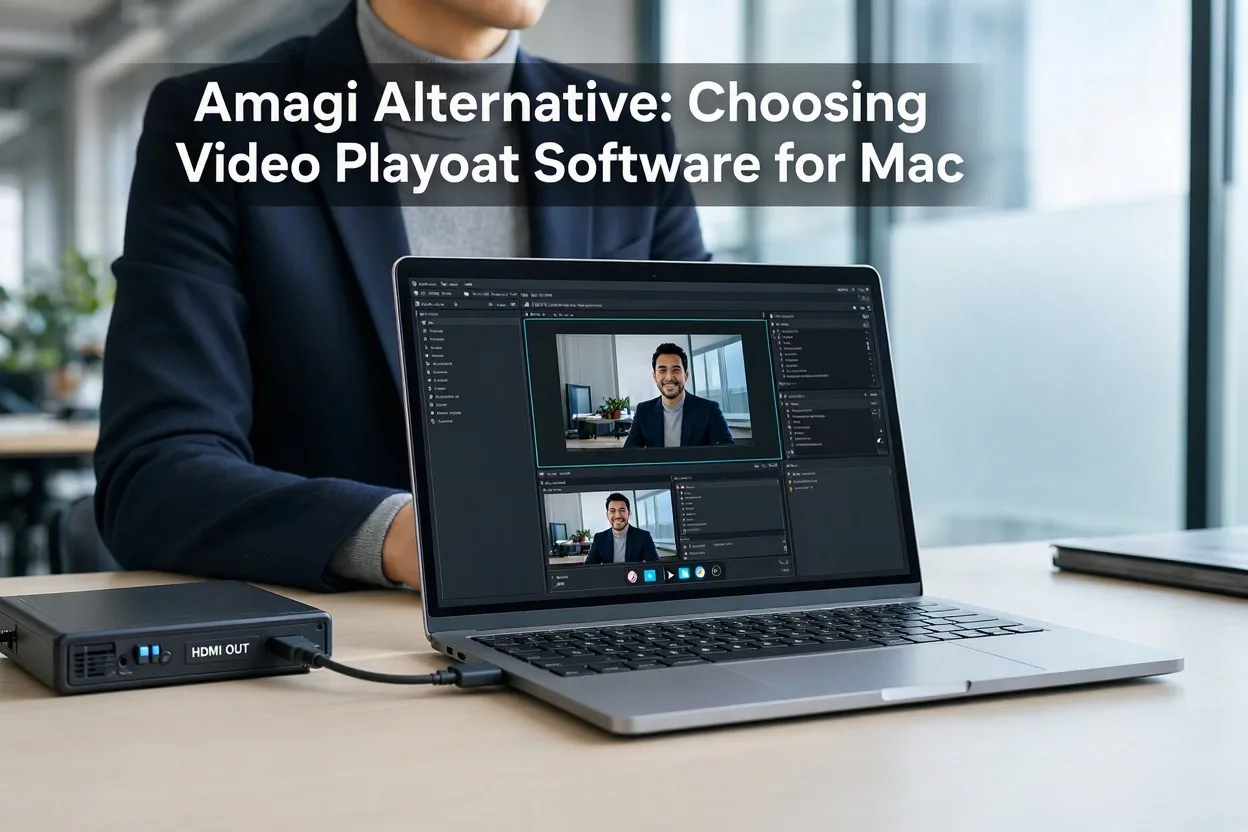
Mac computers are common in creative production environments, including video editing, content preparation, and media management. For broadcasters already using macOS, video playout software mac options can provide a convenient way to manage scheduled content from familiar hardware.
However, software compatibility must be checked carefully. Not every professional playout platform supports macOS natively, and some systems may require additional configuration, external hardware, or a separate server environment.
Before selecting a solution, broadcasters should confirm that the software supports their Mac model, operating system version, video interfaces, and intended streaming workflow.
Important Features for Mac-Based Playout
A suitable Mac-based playout system should provide reliable media playback and scheduling. Depending on the requirements, other useful capabilities may include playlist automation, graphics overlays, audio control, live source integration, and streaming output.
For a small operation, a straightforward interface and easy schedule management may be more valuable than a long list of advanced functions.
For a more demanding broadcast workflow, the ability to handle continuous operation, recover from interruptions, and integrate with external encoders or streaming platforms may be essential.
Comparing Cloud Playout and Local Playout
Cloud playout and local playout address related needs but operate differently.
A local playout system uses computing resources located at the broadcaster's premises or within its own infrastructure. This approach can provide direct control over hardware and may suit workflows that depend on local media storage or specialized equipment.
Cloud playout moves selected functions into remote infrastructure. It can support centralized management and make remote access easier, although it also introduces dependencies on internet connectivity, cloud service availability, and the provider's pricing model.
Which Approach Is More Suitable?
The answer depends on how the broadcaster operates.
A small content creator using a Mac workstation may prefer a local system for simple playback and scheduling. An organization operating several internet television channels may benefit from cloud-based tools that centralize scheduling and distribution.
Some broadcasters use a hybrid model. Content can be prepared locally while scheduling, playout, or distribution functions are handled through cloud services.
This allows businesses to combine local control with the flexibility of remote infrastructure.
Integrating Playout With Streaming Distribution
Playout software is only one component of a complete broadcasting workflow. Once content has been played in the correct sequence, it may need to be encoded and distributed through a streaming platform.
The distribution environment could include a website, mobile application, smart TV application, or connected television service.
Broadcasters should confirm that the selected playout system can produce an output compatible with their intended distribution setup. This may involve supported streaming protocols, encoding settings, external encoders, or integrations with third-party services.
Managing Live Feeds
Live content can introduce additional requirements. A broadcaster may need to switch between scheduled video and a live camera feed, remote contribution, or external program source.
The chosen software should support the required live workflow, either directly or through compatible equipment and services.
Testing these transitions before launching a channel is important because live interruptions can immediately affect the viewer experience.
Reliability and Technical Support
A professional broadcasting system must be dependable. A software platform that works well during short tests may still require additional configuration to operate continuously.
Broadcasters should evaluate monitoring capabilities, recovery procedures, backup options, and available technical support.
For Mac-based environments, they should also consider system updates, available storage, cooling, hardware compatibility, and the impact of running other applications on the same machine.
A dedicated playout workstation can help reduce conflicts with unrelated production tasks.
Cost and Long-Term Planning
The overall cost of a broadcasting solution includes more than the software license. Hardware, storage, encoding, bandwidth, cloud resources, technical support, and maintenance can all affect the total operating expense.
Cloud services may use subscription or usage-based pricing, while local systems may require greater upfront investment in hardware and ongoing maintenance.
The best comparison considers the expected cost over time rather than focusing only on the initial purchase price.
Planning for Growth
A broadcaster may start with one channel and later expand into additional services. Choosing a system that can accommodate future requirements may prevent a costly migration.
Businesses should consider whether they may need more channels, more advanced automation, additional live sources, advertising integration, or distribution to new platforms.
The ideal solution should meet current requirements while providing a practical path for future expansion.
How to Evaluate the Right Platform
Before committing to an amagi alternative or a Mac-compatible playout product, broadcasters should test the most important parts of their workflow.
A practical evaluation can include importing media, creating a schedule, playing different file formats, testing transitions, connecting a live source if required, and confirming the output reaches the intended streaming destination.
The broadcaster should also review documentation and support arrangements. Clear setup instructions and accessible technical assistance can make a substantial difference, particularly for smaller teams without dedicated broadcast engineers.
Final Thoughts
Choosing an amagi alternative involves understanding the channel's operational requirements, the level of automation needed, and the infrastructure available to support broadcasting. Businesses should compare scheduling, media management, cloud capabilities, integration options, reliability, and total operating costs before making a decision.
For organizations using Apple computers, video playout software mac options can be worth evaluating when they provide the necessary compatibility and broadcasting features. However, macOS support, continuous operation, and distribution requirements should always be verified before deployment.
The most suitable solution is not necessarily the one with the greatest number of features. It is the one that supports the broadcaster's workflow reliably, fits its budget, and can grow alongside the business.