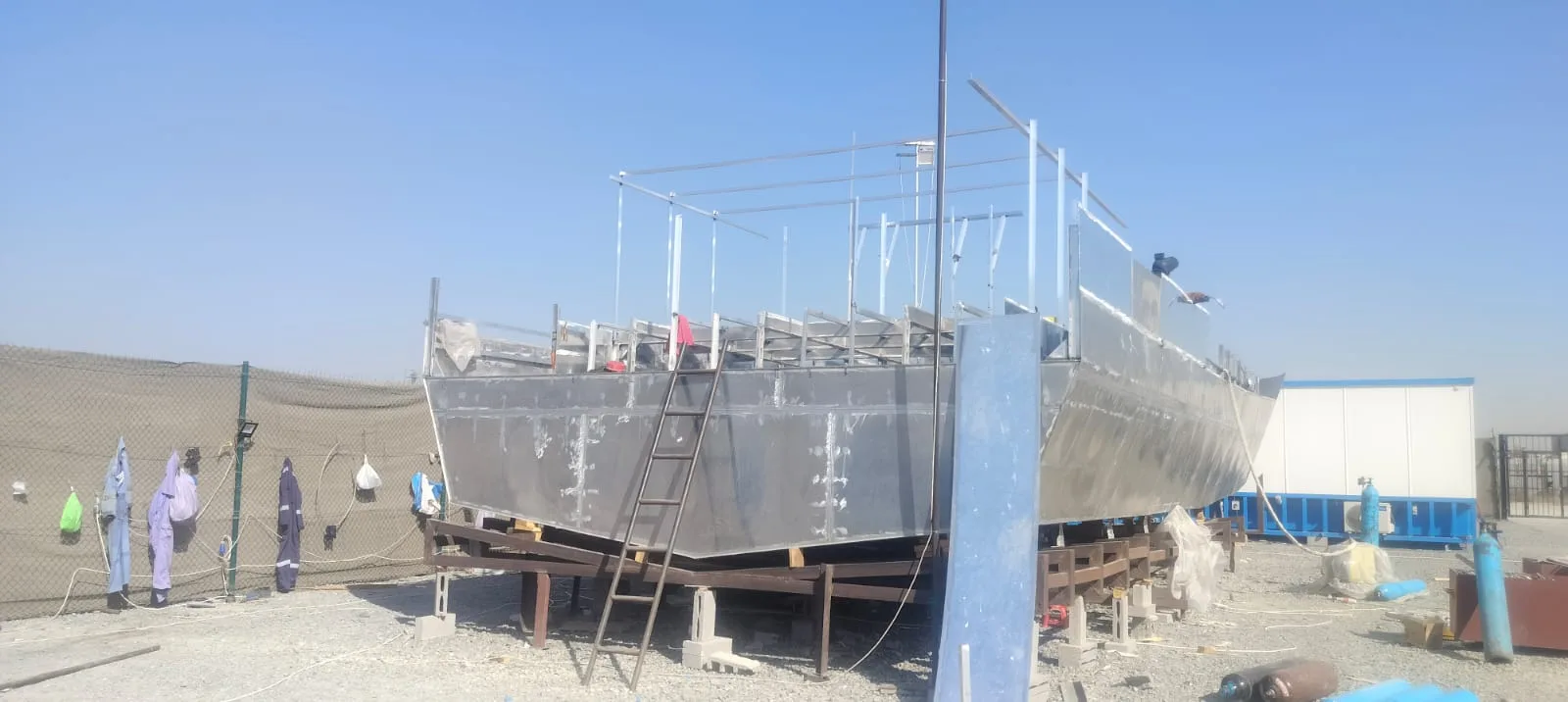
Offshore marine operations require vessels that can perform demanding tasks while maintaining strength, stability, and reliability in challenging sea conditions. Tugboats play an important role in supporting offshore platforms, towing large vessels, moving floating equipment, and assisting ships during difficult manoeuvres. Aluminum tug builders focus on developing vessels that combine lightweight construction with structural strength, efficient performance, and long-term durability.
Modern tugboat construction involves advanced engineering, carefully selected materials, and detailed planning. Every component, from the hull structure to the propulsion system, must be designed according to the vessel's intended working conditions. Aluminium has become an important material in specialised marine construction because of its low weight, corrosion resistance, and useful strength-to-weight ratio.
Importance of Strong Construction in Offshore Tugboats
Offshore tugboats frequently operate in demanding conditions, including strong currents, changing weather, heavy waves, and continuous towing activities. These vessels must maintain reliable performance even when working far from sheltered coastal areas.
A strong hull is essential for handling external forces and protecting onboard machinery. Engineers consider water pressure, structural loads, vibration, and repeated operational stress when developing the vessel's design. Reinforced frames, properly designed bulkheads, and suitable deck arrangements help distribute loads throughout the structure.
The towing system also requires careful engineering. Towing hooks, winches, ropes, and supporting foundations must be suitable for the vessel's expected pulling capacity. Proper load distribution reduces unnecessary stress on individual structural components and improves operational safety.
Why Aluminium Is Suitable for Tugboat Construction
Aluminium offers several advantages for specialised marine vessels. One of its most important characteristics is its lightweight structure. According to technical material data, aluminium has a density of approximately 2.7 g/cm³, compared with approximately 7.8 g/cm³ for iron. This means aluminium is roughly one-third the density of iron.
Lower structural weight can provide several operational benefits, including improved payload capacity, reduced displacement, and greater flexibility in vessel design. Depending on the hull configuration and propulsion system, weight reduction can also contribute to improved fuel efficiency.
Another important advantage is corrosion resistance. Aluminium naturally develops a thin protective oxide layer that helps protect its surface against corrosion. However, marine environments still require appropriate surface protection, inspection, and maintenance, particularly where aluminium comes into contact with other metals.
The correct alloy selection is equally important. Marine-grade aluminium alloys are selected according to strength, weldability, fabrication requirements, and exposure conditions. Proper material selection helps achieve a balance between structural performance and long-term reliability.
Advanced Engineering Techniques for Durable Vessels
Modern tugboat construction depends on accurate engineering and advanced fabrication methods. Aluminium tug manufacturers use computer-aided design software to develop detailed structural models before physical construction begins. These digital models help identify potential design weaknesses, evaluate material requirements, and improve the arrangement of internal structures.
Precision cutting, controlled welding, and accurate component alignment are essential during fabrication. Aluminium welding requires specialised knowledge because heat input and welding procedures can influence the strength of the finished joints.
Structural inspections are carried out at different construction stages to identify possible defects and maintain fabrication quality. Properly executed welding, suitable joint preparation, and dimensional checks contribute to a stronger and more dependable vessel.
Advanced fabrication equipment also helps improve construction accuracy and reduce material waste. Careful quality control ensures that individual components fit correctly and meet the required engineering specifications.
Hull Design and Structural Strength
The hull is one of the most important parts of an offshore tugboat. Its design influences stability, manoeuvrability, resistance, and overall performance.
Engineers develop hull shapes according to the vessel's intended operations. Offshore tugboats may require reinforced bow sections, suitable freeboard, strong towing foundations, and carefully designed stern arrangements.
The internal structure also plays an important role in durability. Longitudinal stiffeners, transverse frames, bulkheads, and deck supports help distribute loads and maintain structural integrity.
A well-designed hull must withstand both normal operating conditions and unexpected stresses. Engineers consider the vessel's displacement, centre of gravity, loading conditions, and stability characteristics during the design process.
These factors become particularly important when tugboats perform towing or anchor-handling activities, where changing loads can affect vessel balance.
Propulsion Systems and Offshore Performance
A reliable propulsion system is necessary for tugboats working in offshore environments. These vessels need sufficient power to tow floating structures, assist larger ships, and maintain controlled movement in changing sea conditions.
Modern tugboats may use conventional propellers, azimuth thrusters, or other propulsion arrangements depending on their operational requirements. Some designs also incorporate specialised steering systems to improve manoeuvrability.
Bollard pull is an important performance measurement in tugboat operations. It represents the pulling force a tug can generate while connected to a fixed point. This measurement helps operators understand the vessel's towing capability.
Bollard pull alone is not enough to determine whether a tug is suitable for a particular operation. Vessel dimensions, engine power, weather conditions, towing equipment, and the characteristics of the object being towed must also be considered.
Efficient propulsion planning helps improve vessel control, operational reliability, and fuel management.
Safety Features for Offshore Operations
Safety is a major consideration in offshore tugboat construction. These vessels often work around large ships, offshore installations, floating equipment, and heavy towing arrangements.
Important safety features include emergency shutdown systems, fire detection equipment, firefighting arrangements, navigation systems, communication equipment, and suitable lifesaving appliances.
The wheelhouse should provide clear visibility and convenient access to essential controls. This allows operators to monitor surrounding activities and respond effectively during complicated manoeuvres.
Deck equipment must also be arranged carefully. Safe access routes, non-slip surfaces, suitable lighting, and secure working areas help reduce operational risks.
According to the International Marine Contractors Association's 2024 safety report, line-of-fire incidents accounted for 52% of lost-time injuries reported in its marine contractor data. This highlights the importance of safe working arrangements, proper equipment handling, and effective crew training in marine operations.
Maintenance and Long-Term Durability
Even a well-engineered tugboat requires regular maintenance to maintain its performance. Offshore exposure can affect hull surfaces, machinery, electrical systems, and deck equipment over time.
Routine inspections help identify corrosion, damaged welds, loose fittings, and equipment wear before these problems become serious. Particular attention should be given to areas where different metals are connected because galvanic corrosion can occur under unsuitable conditions.
Propulsion systems, cooling arrangements, steering equipment, and towing machinery should be inspected according to established maintenance schedules.
Protective coatings and suitable marine-grade materials can further support long-term durability. Regular cleaning and proper storage of equipment also help reduce unnecessary deterioration.
A planned maintenance programme improves vessel availability, supports crew safety, and helps control unexpected repair costs.
Role of Technology in Modern Tugboat Construction
Technology continues to improve the way marine vessels are designed and constructed. Digital engineering tools, modern welding equipment, and advanced inspection techniques allow shipyards to achieve greater accuracy during fabrication.
Computer-based monitoring systems can provide information about engine performance, fuel consumption, equipment conditions, and operational efficiency. These systems help crews identify unusual performance changes and support timely maintenance decisions.
Energy-efficient propulsion arrangements and hybrid technologies are also receiving attention in the marine sector. Their suitability depends on vessel size, operating profile, available infrastructure, and project requirements.
For offshore vessels, technology must support practical performance rather than simply add complexity. Reliable equipment, straightforward maintenance, and well-integrated control systems remain essential.
Contribution of VU Marine to Marine Construction
VU Marine is a leading shipbuilding and marine services company based in the UAE since 2009. Its experience in aluminium boat building, tugboat construction, ship repair, retrofitting, and marine maintenance reflects the importance of combining engineering knowledge with practical marine requirements.
A professional tug builder in UAE needs to consider regional sea conditions, customer specifications, material quality, and international marine standards when developing vessels for different applications. Proper planning and accurate fabrication help ensure that tugboats meet their intended operational requirements.
VU Marine focuses on delivering marine solutions that address different operational needs while supporting quality, durability, and efficiency. Its marine activities extend across the Gulf region and other international markets.
Future of Offshore Tugboat Construction
The future of offshore tugboat construction will involve greater attention to fuel efficiency, improved vessel monitoring, advanced materials, and environmentally responsible engineering.
Modern tugs building company operations increasingly depend on combining traditional shipbuilding expertise with digital design and improved manufacturing processes. These developments can help improve construction accuracy, reduce material waste, and support better vessel performance.
As offshore activities expand, demand for dependable tugboats will continue to create opportunities for innovation in marine engineering. Manufacturers will need to balance structural strength, operational efficiency, crew safety, and maintenance requirements.
Conclusion
Strong and durable offshore tugboats are the result of careful engineering, suitable material selection, advanced fabrication, and effective quality control. Aluminium provides valuable advantages through its lightweight characteristics and natural corrosion resistance, while modern construction techniques help improve structural reliability.
From hull reinforcement and propulsion systems to towing equipment and onboard safety, every element contributes to the vessel's overall performance. Regular maintenance and appropriate operating practices further support long-term durability.
As offshore marine activities continue to develop, well-designed tugboats will remain important for towing, vessel assistance, and specialised marine operations. Combining modern technology with reliable construction methods helps create vessels capable of meeting the demanding requirements of offshore work.