
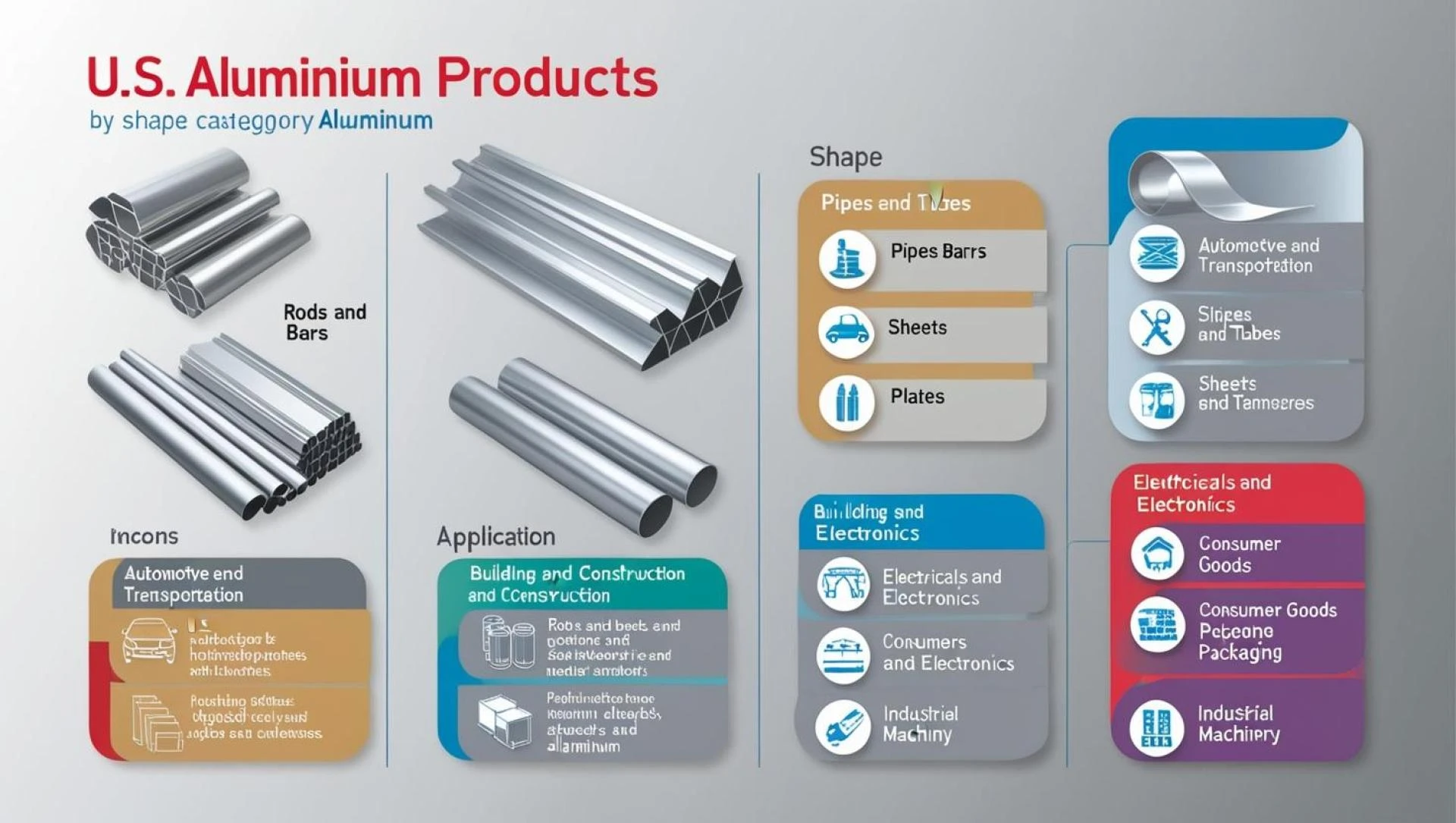
The U.S. aluminum market stands at a pivotal moment of transformation, charting an impressive journey from USD 14.32 billion in 2024 to a projected USD 21.36 billion by 2032. With a steady Compound Annual Growth Rate (CAGR) of 5.25% during the 2025–2032 period, aluminum is emerging as a critical material driving innovation across multiple industries, from automotive and aerospace to packaging and construction.
The Multifaceted Drivers of Aluminum's Growth
Technological Innovation
Aluminum's unique properties are revolutionizing multiple sectors:
- Lightweight Strength: Critical for automotive and aerospace industries
- Corrosion Resistance: Essential in challenging environmental conditions
- Recyclability: Leading the charge in sustainable material solutions
- Thermal Conductivity: Crucial for advanced electronics and energy systems
Sustainability at the Forefront
The material is becoming a cornerstone of green technology:
- Reduced carbon footprint in manufacturing
- Enabling lightweight electric vehicle designs
- Supporting renewable energy infrastructure
- Facilitating circular economy principles
Market Segment Insights
Automotive Transformation
The automotive sector is driving significant aluminum demand:
- Electric Vehicle Revolution: Aluminum's lightweight properties crucial for EV efficiency
- Structural Components: Replacing traditional steel materials
- Performance Enhancement: Improving vehicle range and energy efficiency
- Sustainable Manufacturing: Reducing overall vehicle carbon emissions
Aerospace and Defense
Aerospace applications are pushing aluminum's technological boundaries:
- Advanced alloy developments
- Increased fuel efficiency
- Structural integrity improvements
- Next-generation aircraft design
Technological Frontiers
Advanced Aluminum Alloys
Cutting-edge material science is transforming aluminum:
- Nanoengineered Alloys: Enhanced strength-to-weight ratios
- 3D Printing Technologies: Complex geometric manufacturing
- Hybrid Material Composites: Combining aluminum with advanced materials
- Smart Manufacturing Processes: Precision engineering techniques
Recycling and Circular Economy
Aluminum is leading sustainable material management:
- Energy-Efficient Recycling: Significantly lower energy consumption
- Closed-Loop Manufacturing: Reducing virgin material extraction
- Urban Mining: Extracting aluminum from existing infrastructure
- Innovative Recycling Technologies: Improving material recovery rates
Economic and Industrial Implications
Manufacturing Transformation
Aluminum is reshaping industrial capabilities:
- Job creation in high-tech manufacturing
- Supply chain innovation
- Advanced material research
- Competitive global manufacturing positioning
Strategic Economic Importance
The market represents critical economic opportunities:
- Reduced dependence on imported materials
- Supporting domestic manufacturing
- Driving technological innovation
- Creating high-value economic ecosystems
Challenges and Opportunities
Market Challenges
The industry must navigate complex considerations:
- Global competition
- Fluctuating raw material costs
- Technological obsolescence
- Regulatory compliance
Emerging Opportunities
Forward-thinking companies are focusing on:
- Sustainable production technologies
- Advanced material research
- Cross-industry collaboration
- Circular economy solutions
Future Outlook
The projected growth from USD 14.32 billion to USD 21.36 billion represents more than market expansion. It symbolizes:
- Technological innovation
- Sustainable material solutions
- Advanced manufacturing capabilities
- Economic resilience
The Broader Vision
As we progress through 2025 and beyond, aluminum is evolving from a traditional material to a critical enabler of:
- Sustainable technology
- Advanced manufacturing
- Green industrial transformation
Ready to be part of the aluminum revolution? Explore innovative aluminum solutions that are shaping our future! https://bitl.to/4Vzc