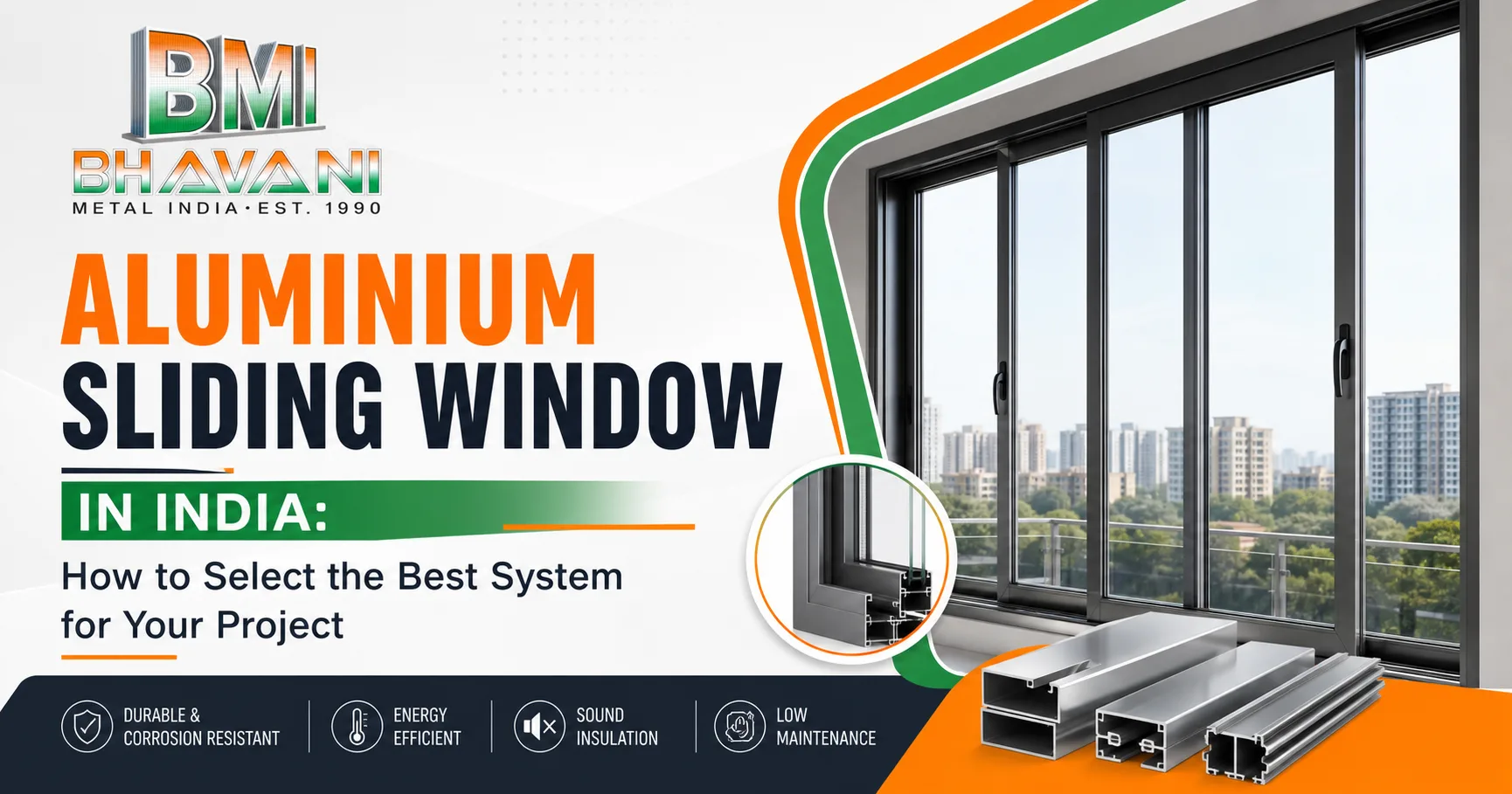
Aluminium sliding windows have quietly taken over as the default choice for new construction across Indian cities, from Mumbai high-rises to Bangalore villas. Anyone comparing an Aluminium Sliding Window in India against older wood or UPVC options usually lands on aluminium within the first site visit, once cost, maintenance, and space efficiency enter the conversation. This guide walks through what actually separates a good sliding window system from a mediocre one, and what to check before you sign a purchase order.
Builders and homeowners rarely fail because they picked the wrong material outright; they fail because they picked the right material at the wrong specification. A 1.2mm profile facing direct coastal wind, or a single-glazed pane behind a busy road, both technically qualify as aluminium sliding windows while performing nowhere close to what the buyer expected. The sections below break down exactly which specifications matter and why.
An Aluminium Sliding Window in India typically costs between 350 and 650 rupees per square foot depending on profile thickness, glass type, and hardware quality, and a well-built system should run smoothly for 15 to 20 years with almost no maintenance beyond occasional track cleaning. The right choice depends less on brand and more on profile grade, glass thickness, and how the frame handles monsoon-driven water pressure.
Why Aluminium Has Overtaken Wood and Steel in Indian Homes
Aluminium frames resist rust, termites, and warping in ways that timber simply cannot match in India's humidity range, which swings from bone-dry Rajasthan summers to coastal Mumbai monsoons. A timber frame left untreated for two monsoon seasons in a coastal city often starts swelling at the joints, while aluminium holds its shape regardless of humidity.
Weight is the other deciding factor for builders working on upper floors. A standard aluminium sliding window panel weighs roughly a third of an equivalent steel-framed unit, which cuts down on structural load calculations and installation time on site. Contractors handling an Aluminium Sliding Window Providing & Fixing in India project often finish a mid-sized apartment in two to three days once the openings are ready.
Cost also plays a role beyond the sticker price. Steel windows need repainting every three to five years to prevent corrosion, and that recurring expense usually erases any initial price advantage within a decade.
Maintenance frequency is where the long-term math really separates the two materials. A homeowner budgeting for a steel-framed apartment should plan on at least three repainting cycles over fifteen years, each involving scaffolding or ladder access for upper floors, while an aluminium frame over the same period typically needs nothing beyond a damp cloth and an occasional lubricant on the rollers. That difference alone often justifies the switch for anyone doing a full renovation rather than a quick fix.
How to Choose the Right Aluminium Sliding Window System
Picking a system means looking past the showroom finish and checking three technical details that determine how the window performs after installation.
What Profile Thickness Should You Look For
A profile wall thickness of 1.2mm to 1.4mm is the working standard for residential Aluminium Sliding Window Mumbai installations, since anything thinner tends to flex under wind load on higher floors. Commercial buildings facing open exposure, such as seafront properties, generally move up to 1.6mm or thicker to handle sustained wind pressure without frame distortion.
Glass Selection and Sound Insulation
Standard 5mm float glass works for interior-facing rooms, but street-facing bedrooms in dense areas like Mumbai's western suburbs benefit from 6mm toughened glass or a double-glazed unit that cuts external noise by roughly 25 to 30 decibels. Anyone near a main road or railway line should treat acoustic performance as a primary specification rather than an afterthought.
Hardware and Track Quality
The rollers and track determine whether a sliding window still glides smoothly after five years of daily use. Nylon or UV-stabilised rollers outlast plain plastic ones by a wide margin, and stainless steel track inserts prevent the aluminium channel itself from wearing down under repeated friction. Cheaper hardware often looks identical on the showroom floor, so asking the supplier for the roller and track material in writing is worth the two extra minutes it takes.
Does an Aluminium Sliding Window Actually Improve Energy Efficiency
Yes, but the improvement depends entirely on glass specification rather than the frame material alone. A single-glazed aluminium window with a thermal break barely outperforms a basic wooden frame, while a double-glazed unit with a low-emissivity coating can cut heat gain through the window by close to 40 percent compared to plain float glass.
Thermal break profiles, which insert a polyamide strip between the inner and outer aluminium sections, matter most in cities with extreme summer temperatures like Ahmedabad or Delhi. Without that break, aluminium conducts heat directly into the room, undermining whatever the air conditioning is trying to do.
Comparing Sliding Windows Against Casement and Fixed Options
Window TypeVentilation AreaSpace NeededTypical UseSliding50% of openingNone (moves horizontally)Balconies, living roomsCasementUp to 90% of openingSwing clearance requiredBedrooms, kitchensFixed0% (sealed)NoneStairwells, facadesSliding systems trade some ventilation area for a real practical benefit: they never intrude into room space, which matters in Indian apartments where furniture often sits close to the window line. Casement windows open wider and ventilate better, but they need clearance that balconies and narrow corridors rarely have.
What Installation Process Should You Expect
A proper Aluminium Sliding Window Providing & Fixing in Mumbai job follows a fixed sequence: site measurement, frame fabrication at the factory, opening preparation with correct waterproofing, frame anchoring, glass fitting, and a final water test before handover. Skipping the waterproofing step at the frame-to-wall junction is the single most common cause of leakage complaints during the first monsoon after installation.
Installation teams should also check that the window sill has a slight outward slope, since a flat or inward-sloping sill collects standing water that eventually seeps through even a well-sealed frame. This detail gets missed more often on renovation projects than new construction, where the sill was cast before the window trade even arrived on site.
Buyers working with a fabricator for the first time should ask for a sample corner joint before placing a bulk order. A mitred and welded corner holds up far better under repeated sliding motion than a screwed or crimped joint, and running your thumb along the seam tells you within seconds which method was used. It is a small check that takes almost no time and rules out a large share of quality problems before they become someone else's monsoon complaint.
Frequently Asked Questions
How long does an aluminium sliding window last?
A well-fabricated aluminium sliding window typically lasts 15 to 20 years with minimal upkeep, provided the hardware gets cleaned periodically and the frame was installed with proper waterproofing at the outset.
Is aluminium sliding window better than UPVC for Indian weather?
Aluminium handles high heat and direct sun exposure better than UPVC, which can soften and discolour under prolonged UV exposure in peak summer regions. UPVC edges ahead on thermal insulation and noise reduction, so the better choice depends on the specific climate and location of the property.
What is the average cost of aluminium sliding windows in Mumbai?
Pricing in Mumbai generally falls between 400 and 700 rupees per square foot, running slightly higher than the national average due to higher fabrication and labour costs in the city. Coastal exposure also pushes buyers toward thicker profiles and marine-grade hardware, which adds to the base price.
Can aluminium sliding windows be customised for balcony sizes? \
Yes, fabricators cut and weld profiles to the exact opening size, so irregular balcony dimensions are not a barrier to installation. Most providers ask for on-site measurement before fabrication begins, since factory-standard sizes rarely match real openings precisely.
Do aluminium sliding windows need a thermal break for Indian homes?
Homes in consistently hot regions benefit noticeably from a thermal break profile, since it reduces heat transfer into the room and lowers cooling load. In moderate climate cities, a standard profile without a thermal break is usually sufficient and more cost-effective.
Choosing an Aluminium Sliding Window in India ultimately comes down to matching profile thickness, glass type, hardware grade, and installation quality to the specific building and climate rather than picking the cheapest quote on the table. Get a written specification sheet from any fabricator before work begins, and insist on a water test as part of the handover so problems surface before the first monsoon rather than after.