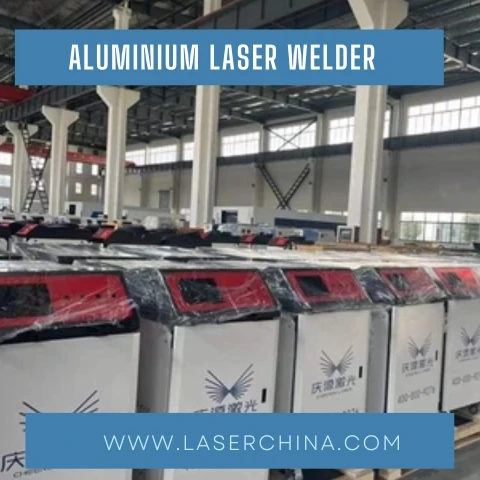
An aluminium laser welder has become a critical solution for modern manufacturing environments where precision, consistency, and production efficiency are essential. Aluminium, as a material, is widely used across industries due to its lightweight nature, corrosion resistance, and adaptability in complex designs. However, welding aluminium requires a controlled and refined process because of its thermal conductivity, reflectivity, and sensitivity to contamination. This is where the aluminium laser welder plays a central role, offering manufacturers a reliable approach to joining aluminium components with accuracy and repeatability.
In industrial fabrication, aluminium is rarely used in simple forms. It is often part of intricate assemblies, thin sheets, structural frames, housings, heat exchangers, battery enclosures, and aerospace-grade components. Traditional joining methods struggle to meet the strict quality and dimensional tolerances required for these applications. The aluminium laser welder addresses these demands by applying focused laser energy that allows precise control over the welding process, even in demanding production conditions.
The working principle of an aluminium laser welder is based on concentrating laser energy into a highly focused beam. This beam interacts with the aluminium surface, creating a localized molten pool that enables fusion between parts. Because the laser delivers energy in a controlled and directed manner, the process supports consistent weld geometry and stable joint formation. This level of control is especially important when working with aluminium alloys, which can vary significantly in composition and response to heat.
Aluminium laser welder systems are widely integrated into automated production lines. In automotive manufacturing, they are commonly used for welding body structures, battery trays, motor housings, and lightweight frames. The increasing adoption of electric vehicles has further expanded the demand for aluminium welding solutions, as manufacturers rely heavily on aluminium to reduce vehicle weight while maintaining structural integrity. An aluminium laser welder fits seamlessly into these high-volume environments, supporting repeatable welding cycles and uniform joint quality.
In aerospace and aviation industries, aluminium components must meet extremely strict standards for strength, dimensional accuracy, and surface finish. The aluminium laser welder is well suited for these requirements because it allows precise energy input, minimizing distortion and ensuring tight tolerances. Aircraft panels, internal supports, fuel system components, and structural elements often rely on laser-welded aluminium joints to meet regulatory and performance expectations.
Consumer electronics manufacturing also benefits from aluminium laser welder technology. Devices such as smartphones, laptops, tablets, and wearable products frequently use aluminium housings for their balance of durability and aesthetics. Welding these thin and finely machined parts requires a joining method that maintains surface quality while ensuring strong internal connections. An aluminium laser welder provides manufacturers with the ability to join small, delicate components without compromising design integrity.
The use of an aluminium laser welder is also expanding in industrial equipment manufacturing. Machinery frames, enclosures, heat sinks, and custom aluminium assemblies are often produced in small to medium batches with varying designs. Laser welding systems offer flexibility, allowing operators to adapt welding parameters to different part geometries and thicknesses. This adaptability makes aluminium laser welder systems valuable for job shops and contract manufacturers handling diverse production requirements.
Another important aspect of aluminium laser welder applications is their compatibility with modern digital control systems. Many production environments rely on CNC platforms, robotic arms, and integrated monitoring solutions. Aluminium laser welder units can be synchronized with these systems, enabling precise movement, repeatable positioning, and real-time process control. This integration supports consistent output quality across long production runs and complex assemblies.
Material preparation plays a vital role in aluminium laser welding. Aluminium surfaces are naturally covered with an oxide layer, which has a higher melting point than the base metal. Proper surface cleaning and preparation ensure stable weld formation and consistent results. An aluminium laser welder is designed to operate effectively when material preparation standards are followed, allowing manufacturers to achieve clean and uniform weld seams across various aluminium grades.
Different aluminium alloys respond differently to laser welding due to variations in silicon, magnesium, and other alloying elements. An aluminium laser welder accommodates these differences through adjustable process parameters such as power, pulse duration, and beam focus. This flexibility allows manufacturers to work with common alloys used in transportation, construction, electronics, and industrial applications while maintaining consistent production quality.
In the construction and architectural sectors, aluminium laser welder systems are increasingly used to fabricate structural components, façade elements, and customized aluminium profiles. Modern building designs often incorporate aluminium for its visual appeal and structural properties. Laser welding supports precise joining of visible components, helping manufacturers meet both structural and aesthetic requirements without compromising design intent.
Energy efficiency and production optimization are also important considerations in modern manufacturing. An aluminium laser welder supports streamlined workflows by reducing rework and maintaining stable welding conditions. Consistent weld quality minimizes downstream processing and inspection efforts, which is particularly valuable in large-scale production environments where efficiency directly impacts profitability.
The demand for aluminium laser welder technology continues to grow as industries shift toward lightweight materials and advanced manufacturing processes. From transportation and aerospace to electronics and industrial fabrication, aluminium remains a key material in product innovation. Laser welding systems provide manufacturers with the capability to meet evolving design requirements while maintaining control over quality and production output.
As global manufacturing standards become more stringent, companies are investing in equipment that supports repeatability, traceability, and process stability. An aluminium laser welder aligns with these objectives by offering controlled energy delivery and compatibility with automated inspection and monitoring systems. This alignment helps manufacturers meet quality certifications and customer expectations across international markets.
Training and operator expertise also contribute to the effective use of aluminium laser welder systems. Skilled technicians understand how to adjust parameters, prepare materials, and monitor weld consistency to achieve optimal results. With proper implementation, aluminium laser welding becomes a dependable process that supports both high-volume manufacturing and specialized fabrication tasks.
In summary, the aluminium laser welder represents a modern solution for joining aluminium components across a wide range of industries. Its ability to support precise, controlled, and repeatable welding processes makes it an essential tool in today’s manufacturing landscape. As aluminium continues to play a central role in lightweight design and advanced engineering, the relevance of aluminium laser welder systems will continue to expand within global industrial production.