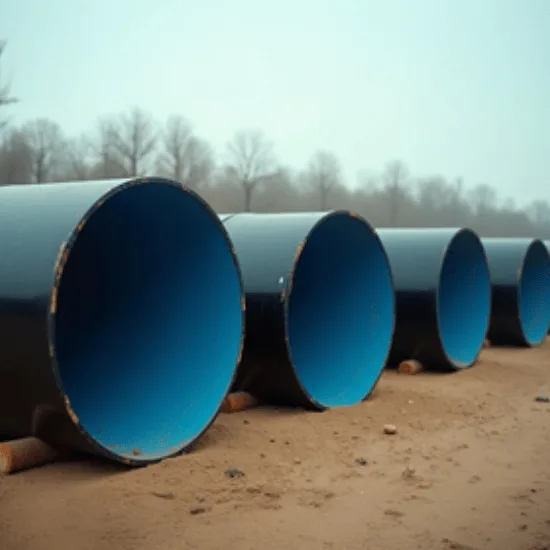
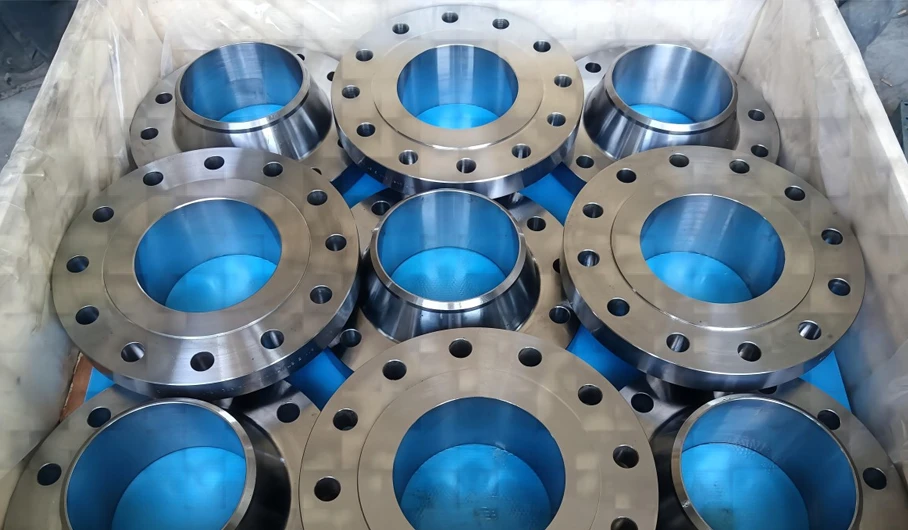
Alloy Steel ASTM A182 F22 Flanges are trusted worldwide for high-pressure, high-temperature piping systems where operational safety and long-term reliability are critical. In today’s global energy and industrial landscape, EPC contractors and procurement specialists demand materials that consistently meet stringent international standards. ASTM A182 F22 flanges are engineered precisely for such demanding service conditions. As a globally recognized steel manufacturing and export partner, we deliver not just components—but dependable solutions built for mission-critical infrastructure.
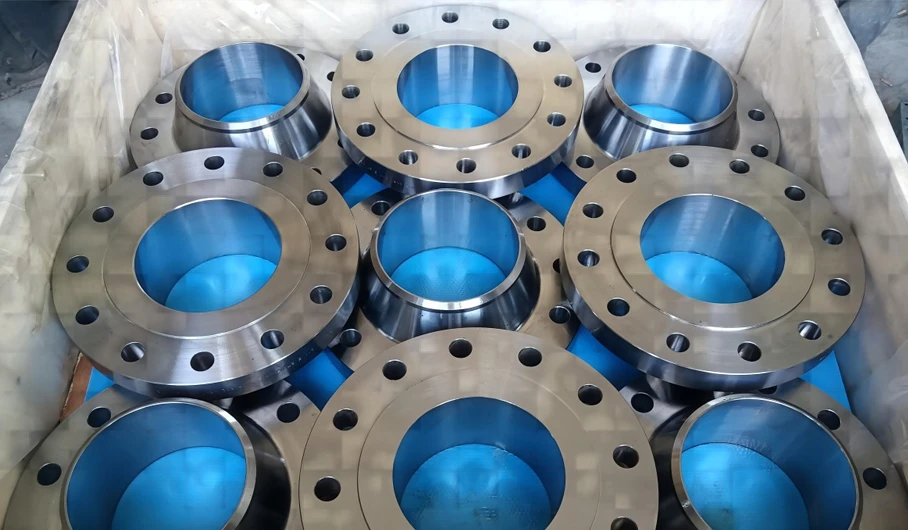
Understanding Alloy Steel ASTM A182 F22 Flanges
Alloy Steel ASTM A182 F22 Flanges are forged chromium-molybdenum alloy steel components manufactured according to ASTM A182 and ASME SA182 specifications. The F22 grade contains approximately 2.00–2.50% chromium and 0.87–1.13% molybdenum, making it ideal for elevated temperature and pressure service.
International equivalents include:
- ASTM A182 F22 Class 1 / Class 3
- ASME SA182 F22
- EN 10222-2 10CrMo9-10
- DIN 1.7380
These flanges are commonly specified for power generation plants, refineries, and petrochemical systems where creep resistance and oxidation resistance are essential.
Chemical Composition and Mechanical Strength
The performance of Alloy Steel ASTM A182 F22 Flanges comes from their carefully controlled chemical structure:
- Chromium improves oxidation and corrosion resistance
- Molybdenum enhances creep strength at elevated temperatures
- Balanced carbon content ensures mechanical stability
Mechanically, F22 flanges offer:
- High tensile strength
- Excellent yield strength
- Superior creep resistance
- Resistance to hydrogen embrittlement
- Long-term structural reliability
This makes them particularly suitable for continuous service temperatures up to approximately 540°C (1000°F).
Forging Process and Heat Treatment Excellence
The strength of Alloy Steel ASTM A182 F22 Flanges begins at the forging stage. Using premium alloy billets, we employ controlled forging techniques to refine grain structure and ensure uniformity.
The manufacturing process includes:
- Raw material verification
- High-temperature forging
- Controlled heat treatment (quenching and tempering for Class 3)
- Precision CNC machining
- Surface finishing and marking
Heat treatment is critical for achieving the mechanical properties required under ASTM and ASME standards. Our facilities maintain strict metallurgical monitoring to ensure dimensional accuracy and mechanical consistency across production batches.
Compliance with Global Standards
For international projects, certification is non-negotiable. Our Alloy Steel ASTM A182 F22 Flanges comply with:
- ASTM A182 / ASME SA182
- ASME B16.5
- ASME B16.47
- EN 1092-1
- ISO 9001 quality management systems
Each shipment includes:
- Mill Test Certificate (MTC 3.1 / 3.2)
- Chemical and mechanical test reports
- Ultrasonic testing (UT)
- Magnetic particle testing (MPI)
- Positive Material Identification (PMI)
- Third-party inspection options (SGS, TUV, Lloyd’s)
This ensures full traceability and acceptance across global procurement frameworks.
Types of ASTM A182 F22 Flanges Available
Alloy Steel ASTM A182 F22 Flanges are supplied in multiple configurations to meet diverse piping system requirements:
- Weld Neck Flanges
- Slip-On Flanges
- Blind Flanges
- Socket Weld Flanges
- Threaded Flanges
- Lap Joint Flanges
- Ring Type Joint (RTJ) Flanges
For high-pressure steam and refinery systems, weld neck and RTJ flanges are most commonly selected due to their enhanced sealing performance and stress distribution.
Industrial Applications Worldwide
ASTM A182 F22 flanges are widely used in:
- Thermal and nuclear power plants
- Oil & gas refineries
- Petrochemical processing facilities
- Offshore platforms
- High-pressure steam pipelines
- Pressure vessels and boiler systems
In the Middle East and Asia-Pacific regions, F22 flanges are critical for refinery and LNG infrastructure projects. In North America and Europe, they are specified in ASME-compliant power generation and hydrocarbon systems.
Pressure Ratings and Dimensional Range
We supply Alloy Steel ASTM A182 F22 Flanges in:
- Sizes from ½” to 60” and above
- Pressure classes: 150#, 300#, 600#, 900#, 1500#, 2500#
- Facing types: RF, FF, RTJ
- Custom drilling and thickness as per project drawings
This flexibility allows EPC contractors to procure complete flange packages tailored to project-specific requirements.
Quality Control and Testing Protocols
Quality is embedded into every stage of production. Each Alloy Steel ASTM A182 F22 Flange undergoes:
- Spectro chemical analysis
- Tensile and impact testing
- Hardness verification
- Ultrasonic inspection
- Dimensional verification
- Surface integrity testing
Our stringent quality assurance ensures consistent performance in high-risk industrial environments.
Export Readiness and Global Logistics
Beyond manufacturing excellence, global supply capability is essential. Our Alloy Steel ASTM A182 F22 Flanges are prepared for export with:
- Seaworthy wooden cases
- Anti-corrosion oil coating
- Proper marking and traceability
- HS code documentation
- Compliance with international customs requirements
We supply to clients in the USA, UAE, Saudi Arabia, Germany, Singapore, and Africa, supporting major infrastructure and energy projects worldwide.
F22 vs. F11 and F91: Performance Comparison
Compared to ASTM A182 F11, F22 offers higher chromium and molybdenum content, resulting in improved high-temperature creep resistance. While F91 provides even greater strength for ultra-high temperature service, F22 remains a preferred solution for many high-pressure steam systems due to its balance of performance and cost efficiency.
For projects requiring reliable performance at elevated temperatures without exceeding budget constraints, Alloy Steel ASTM A182 F22 Flanges provide an optimal solution.
Frequently Asked Questions
1. What is the difference between F22 Class 1 and Class 3?
Class 3 undergoes quenching and tempering, providing enhanced mechanical properties compared to Class 1.
2. Are ASTM A182 F22 flanges suitable for high-temperature steam systems?
Yes, they are specifically designed for elevated temperature service in power plants and refineries.
3. What industries commonly use F22 flanges?
Power generation, oil & gas, petrochemical, and offshore industries.
4. Do you provide third-party inspection certificates?
Yes, inspections from SGS, TUV, and Lloyd’s are available upon request.
5. What pressure ratings are available?
Pressure classes range from 150# to 2500# as per ASME standards.
6. Can custom dimensions be supplied?
Yes, we provide customized sizes and drilling patterns based on project specifications.
Conclusion: Delivering Strength, Reliability, and Long-Term Value
Alloy Steel ASTM A182 F22 Flanges are engineered to perform where it matters most — in high-temperature, high-pressure environments that demand structural integrity and operational safety. Backed by precision forging, rigorous testing, and international certification, these flanges provide dependable performance for critical infrastructure projects worldwide.
As global industries advance toward greater efficiency and sustainability, the need for high-performance alloy steel components will continue to grow. By partnering with an experienced manufacturer and export specialist, you gain technical expertise, consistent quality, and a reliable long-term supply partner committed to supporting your most demanding projects.
Contact Us
Address: 10, Floor-2, 18, Vijay Apartment, Khetwadi 12th Lane, Girgaon, Mumbai-400004
Email: [email protected]
Phone: +91-91725-59933
Website: https://www.mfpind.com
Let us support your next high-performance piping project with precision-engineered alloy steel solutions built for global standards.