
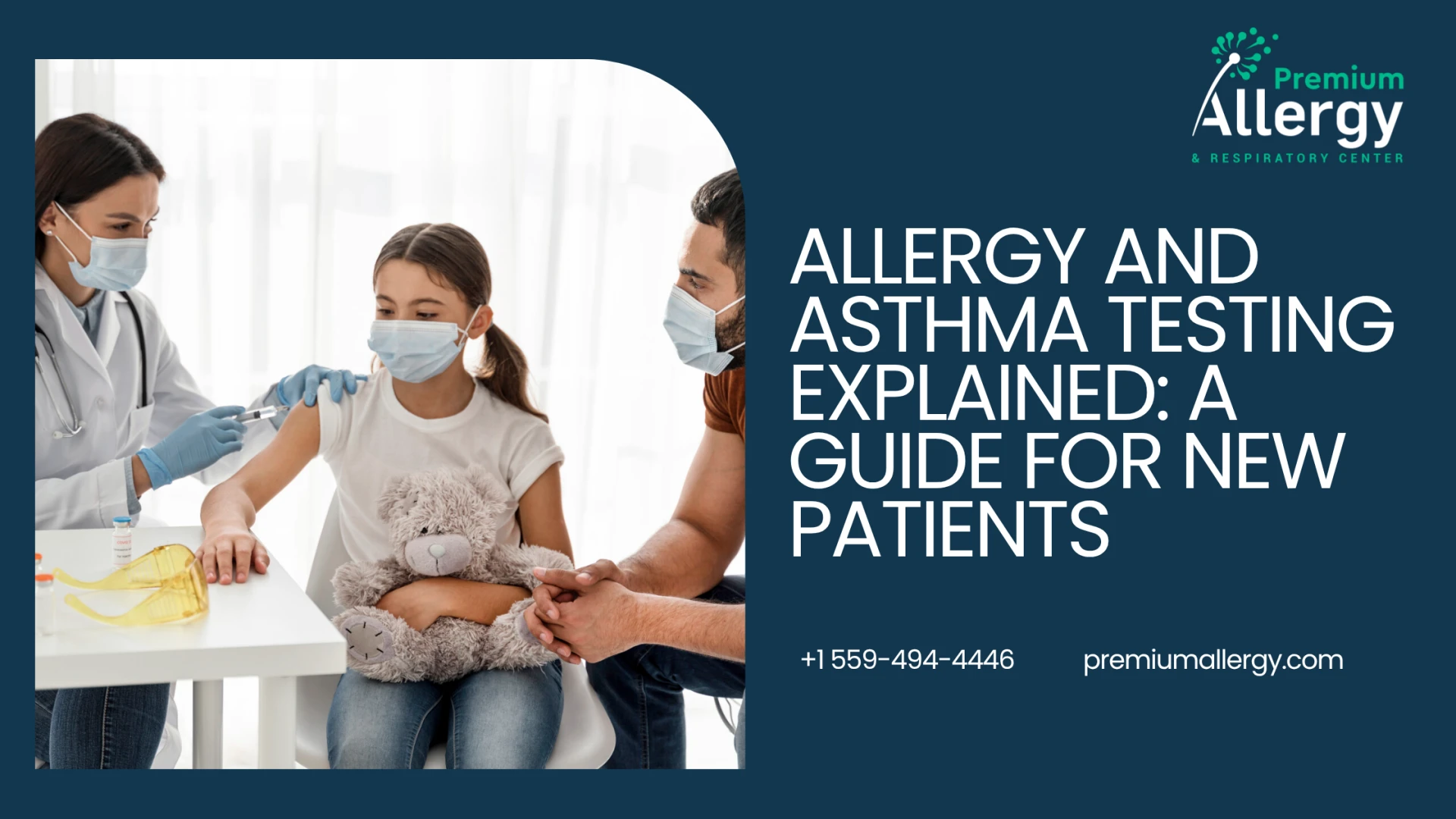
Unless you have followed the allergy and asthma testing path before, it is easier to feel stress-free and be prepared to be on it as opposed to entering it blindly. Allergies as well as asthma are frequent and, in many cases, intersecting disorders that might have a definite influence on your quality of life. Allergy and asthma testing can help you with the right attitude based on immunology and asthma knowledge, and help you breathe easier and lead a better life.
The importance of Allergy and Asthma Testing
Asthma and allergies are normal companions. The symptoms of asthma may be promoted by allergic reactions, or even caused by them, which is called allergic asthma and occurs in children (most often) and adults as well. To be able to manage it, it is also important to know what exactly triggers you as long as sneezing, having a runny nose, suffering from itchy eyes, shortness of breath, or wheezing.
Allergy and asthma testing will not only assist in validating a diagnosis, but it will dictate your plan of care, as it will enable you and your healthcare provider to focus on things that are actually causing your symptoms.
The fundamentals of allergy tests
Clinical History: The Initial Stage
Your healthcare provider will conduct a thorough history prior to any tests being done. This will involve questions regarding your symptoms, timing, anything that might have caused it, and any patterns such as you might have observed. This history is crucial because the testing of allergy becomes most effective when symptom- and exposure-directed rather than a screening procedure in general.
Skin Prick Testing
- How it works: You will be put on a small dose of suspected allergens on your skin, usually your forearm or back. They then lightly prick the skin to allow the allergen to get through only a little bit under the skin.
- What to expect: In a case of allergy, after some minutes, a tiny, itchy bump can be observed.
- What it is used for: This test is short, safe and very sensitive to environmental allergens as well as certain foods.
Blood Testing
- How it works: A Blood sample is collected to count the allergen-specific IgE antibodies.
- How it is helpful: It is helpful when you have some skin problems, use antihistamines, or cannot undergo skin testing for some reason.
- Limits: Blood test is not as sensitive as skin test and must not be ordered unless clinical history indicates an IgE-mediated allergy.
Other Tests
- Patch testing: It is applied in delayed allergic reactions, particularly contact dermatitis.
- Oral food challenge: This is, at times, done under strict supervision to prove or invalidate food allergies.
Immunology and Asthma Testing
Asthma is a long-term disease, whose characteristics include the inflammation of the airways and perturbable airflow restriction. Asthma is diagnosed based on the combination of history, physical examination and lung function testing. This is the flow that this process normally follows:
Spirometry and Peak Expiratory Flow (PEF)
- Testing: Spirometry: This is a meter that measures the amount of air that you are able to breathe out and the rate at which you are able to breathe out your lungs before and after the usage of a bronchodilator. The positive response following the medication will validate an asthma diagnosis.
- PEF: A straightforward instrument to keep an eye on the variation of airflow with time, which is frequently employed to monitor regularly.
Biomarkers
- Fractional exhaled Nitric Oxide (FeNO): An elevated FeNO may signal that the airways are inflamed, as often seen with Type 2 asthma, which is related to allergies.
- Blood eosinophils: Elevated levels could also assist in establishing the diagnosis of allergic asthma.
Connection between Immunology and Asthma
Testing of allergies is especially crucial in the event that you are allergic to certain allergens and such allergens are the cause of your asthma. Comprehending your immune system response assists in customising avoidance strategies as well as inspires the medication selection, including inhaled corticosteroids or biologic drugs.
How to Expect as a New Patient?
- First Visit: Your provider will question you about any symptoms, exposures and any history of disease.
- Testing: Depending on your history, you can be tested by skin prick, blood test, spirometry, or other tests.
- Results and Interpretation: The results are interpreted depending on your own symptoms. You therefore do not always react to a positive test in the real situation; what counts is clinical judgment.
- Individualised Management Plan: This can be allergen avoidance, medications, immunotherapy or lifestyle changes.
Conclusion
If you or any of your dear ones are undergoing some or other allergic or asthmatic problems, then you are welcome. This blog of information will consist of all the information, including the best Fresno Allergist for Fresno allergy testing. Asthma is in the severe category of respiratory problems, along with immunology and asthma which should not be taken lightly as a mere allergic complaint. It results in problems affecting breathing, and if not well treated, it has a disastrous outcome.