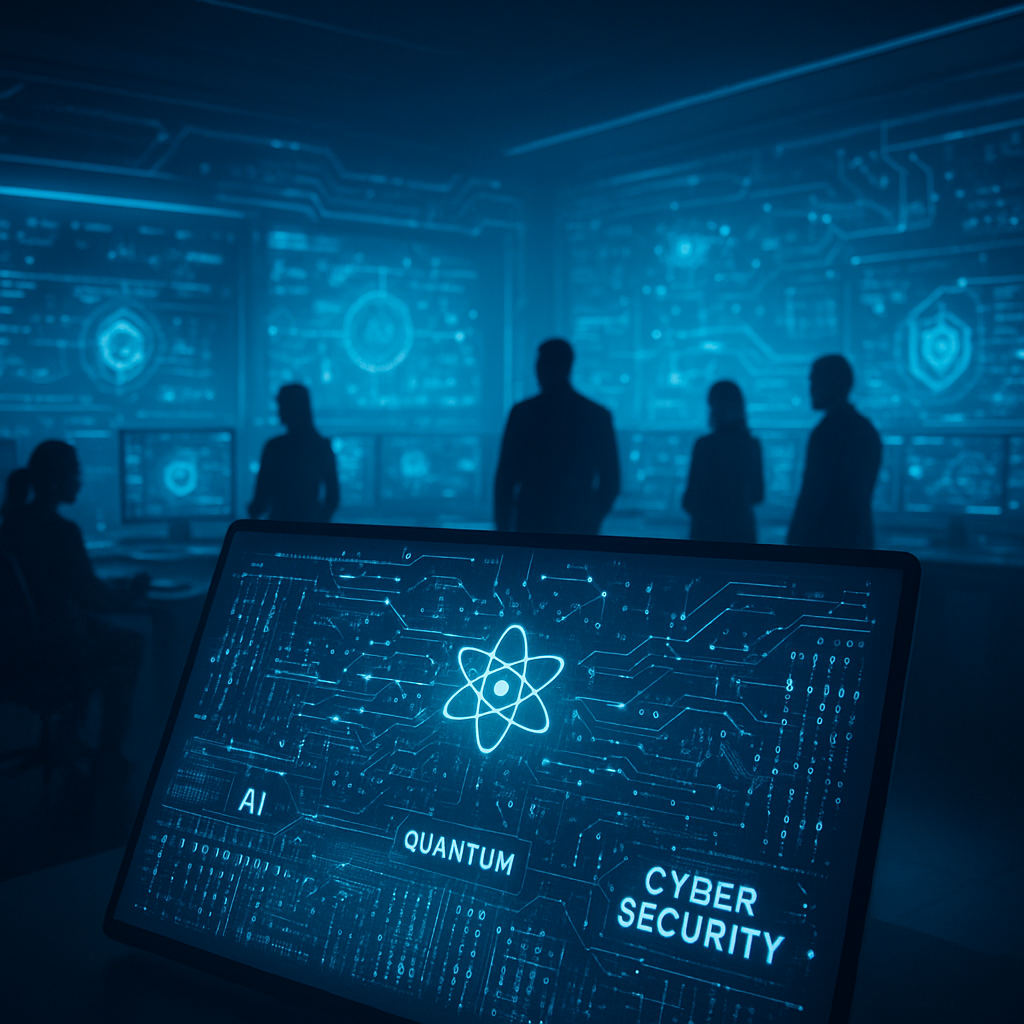
Cybersecurity at a Crossroads: The 2026 Landscape
On a brisk April morning in 2026, a major multinational energy firm narrowly averted what could have been one of the most catastrophic cyberattacks in recent history. Hackers, leveraging advancements in artificial intelligence, attempted to infiltrate the firm’s operational technology systems, aiming to disrupt power grids across multiple continents. Thanks to cutting-edge quantum-resistant encryption and AI-driven anomaly detection, the attack was detected and mitigated within minutes. This incident underscores the dramatic shifts in cybersecurity that have defined 2026—a year marked by unprecedented threats and technological defenses.
The stakes have never been higher. Cybersecurity today is no longer about merely defending against known threats; it is about anticipating threats that can evolve autonomously and leverage technologies once confined to research labs. According to industry estimates, global cybercrime costs have surged to over $11 trillion annually, driven largely by AI-enabled attacks and vulnerabilities exposed by quantum computing advancements. This article explores the core trends shaping cybersecurity in 2026, analyzing how organizations and governments are responding to this new paradigm.
"In 2026, cybersecurity is a race between intelligent attackers and defenders harnessing quantum and AI capabilities," notes Dr. Lina Chen, Chief Security Strategist at CypherGuard Technologies.
From Reactive to Proactive: How Cybersecurity Evolved to Meet 2026’s Challenges
The journey to today’s cybersecurity environment is rooted in a transformative decade. Early 2020s cybersecurity was characterized by perimeter defense and signature-based antivirus solutions. However, the rapid proliferation of cloud computing, IoT devices, and remote work environments expanded attack surfaces exponentially. By 2024, ransomware had become a dominant threat, with attacks like the Colonial Pipeline incident acting as wake-up calls to governments and businesses alike.
Simultaneously, advancements in AI began to reshape both offensive and defensive cybersecurity. Hackers employed AI to automate phishing campaigns, evade detection, and identify system vulnerabilities. In response, cybersecurity firms integrated machine learning models capable of real-time threat hunting, behavioral analysis, and predictive analytics. These developments were accelerated by geopolitical tensions, which saw state-sponsored cyberattacks targeting critical infrastructure.
Quantum computing, once theoretical, entered practical realms by 2025, challenging existing cryptographic standards. Traditional encryption algorithms like RSA and ECC faced obsolescence as quantum algorithms demonstrated the ability to crack them in feasible timeframes. This threat catalyzed the adoption of quantum-safe cryptography, demanding a complete overhaul of secure communications.
By 2026, the landscape is defined by this dual wave of AI and quantum computing, pushing cybersecurity from a reactive stance to a proactive, anticipatory discipline. This shift reflects a broader understanding that tomorrow's attacks will be faster, smarter, and more sophisticated than ever before.
Core Trends Driving Cybersecurity Innovation in 2026
Several key trends dominate cybersecurity strategies this year, each reflecting the technological and threat evolutions of the past few years.
- AI-Augmented Defense Systems: AI is not just a tool for attackers. Organizations deploy AI-powered security operations centers (SOCs) that analyze terabytes of data to flag anomalies, predict attack vectors, and automate responses. Gartner reports that 81% of enterprises have integrated AI into their cybersecurity frameworks by 2026.
- Quantum-Resistant Cryptography: The National Institute of Standards and Technology (NIST) finalized its post-quantum cryptographic standards in late 2025, leading to widespread adoption of algorithms designed to withstand quantum attacks. Companies like IBM and Microsoft have integrated these protocols into their cloud services to secure data against future quantum threats.
- Zero Trust Architecture Maturation: The zero trust model, advocating "never trust, always verify," has entered mainstream enterprise deployment. Enhanced by AI, these frameworks continuously authenticate users and devices, limiting lateral movement within networks.
- Supply Chain Cybersecurity: Following high-profile breaches like the SolarWinds hack, organizations invest heavily in securing software supply chains. Blockchain-based provenance tracking and AI-driven vendor risk assessments are commonplace.
- Privacy-Enhancing Technologies (PETs): Driven by increasing regulatory demands and consumer awareness, PETs such as homomorphic encryption and secure multi-party computation enable data analytics without compromising privacy.
Each trend is interconnected, reflecting a complex ecosystem where cybersecurity efforts must be agile and multifaceted. For deeper exploration, see our detailed analysis in Cybersecurity in 2026: Trends, Challenges, and Strategic Responses.
2026’s Defining Technologies: AI and Quantum Computing in Focus
Artificial intelligence and quantum computing stand at the forefront of cybersecurity innovation and threat vectors in 2026. Their dual-edged nature demands nuanced understanding.
AI’s Expanding Role
AI’s capacity to learn and adapt autonomously has revolutionized threat detection and response. Modern AI models can:
- Analyze vast network traffic in real time to identify subtle indicators of compromise.
- Automate incident response workflows, reducing mean time to detect (MTTD) and mean time to respond (MTTR) by up to 70%.
- Perform continuous penetration testing and vulnerability scanning without human intervention.
However, attackers exploit generative AI to craft highly convincing social engineering attacks and polymorphic malware that morphs to evade signature detection. Cybersecurity teams employ adversarial AI techniques to simulate these attacks and strengthen defenses.
Quantum Computing’s Disruptive Force
Quantum processors with over 1,000 logical qubits are now operational within specialized research facilities and select commercial entities. While large-scale quantum computers capable of breaking all encryption remain aspirational, hybrid quantum-classical algorithms are already influencing cryptanalysis.
In response, organizations have prioritized:
- Transitioning to quantum-safe cryptographic standards endorsed by NIST.
- Developing quantum key distribution (QKD) networks, which use quantum mechanics principles to guarantee secure communication channels.
- Investing in quantum threat intelligence to anticipate emerging vulnerabilities.
These technologies are not only defensive tools but also represent a new battleground in cyber warfare, as nation-states race to leverage quantum advantages.
"Quantum computing is not just a future threat; it is actively reshaping our cryptographic landscape right now," warns Professor Miguel Alvarez, a quantum cryptography expert at MIT.
Real-World Impact: Case Studies Illustrate the 2026 Cybersecurity Reality
Concrete examples highlight how these trends manifest in practice.
Case Study 1: Financial Sector Fortifies Against AI-Powered Fraud
Global bank TitanTrust deployed an AI-driven fraud detection system in early 2026, which reduced fraudulent transactions by 60% within the first quarter. The system uses deep learning models to analyze customer behavior patterns and transaction anomalies. When a sophisticated AI-generated phishing campaign targeted TitanTrust's customers, the system flagged suspicious activity instantly, preventing losses exceeding $150 million.
Case Study 2: Energy Grid Defended with Quantum-Resistant Encryption
Following the thwarted attack mentioned earlier, energy giant EnerCore transitioned its entire control network to quantum-resistant cryptography by March 2026. This move was part of a broader initiative mandated by international regulatory bodies to protect critical infrastructure. EnerCore’s approach included deploying QKD links between control centers, ensuring data integrity and confidentiality even under potential quantum decryption attempts.
Case Study 3: Supply Chain Security in the Automotive Industry
Auto manufacturer Velocity Motors integrated blockchain-based software provenance tools to secure its supply chain after suffering a ransomware attack traced to a compromised third-party vendor in 2025. The blockchain solution provides immutable records verifying the authenticity and integrity of software components, significantly reducing the risk of tampering.
These cases demonstrate that the interplay of AI and quantum technologies is no longer theoretical but a tangible force reshaping cybersecurity practices across industries.
Expert Insights and Industry Responses to Emerging Threats
Leading voices in cybersecurity emphasize a collaborative, multidisciplinary approach to addressing 2026’s challenges.
"Cybersecurity must evolve from a technical problem to a strategic imperative involving policy, education, and international cooperation," argues Sarah Malik, CTO of Sentinel Cyber Defense.
Several industry-wide initiatives have gained traction:
- Public-Private Partnerships: Governments increasingly collaborate with tech firms to share threat intelligence and develop common standards for AI and quantum security.
- Workforce Upskilling: Cybersecurity talent programs now focus on expertise in AI ethics, quantum algorithms, and cross-domain threat analysis.
- Regulatory Frameworks: The EU’s Cybersecurity Act 3.0 and US Cyber Resilience Act introduce stricter requirements for AI transparency and quantum readiness.
Organizations are also adopting holistic risk management frameworks, integrating cyber resilience into business continuity planning. This strategic shift is crucial as cyber threats become more integrated with physical world risks.
For a comprehensive discussion on the evolving challenges, see Why Cybersecurity Challenges Are Evolving Faster Than Ever in 2026.
Looking Ahead: What to Watch in Cybersecurity Beyond 2026
The trajectory of cybersecurity suggests several focal points for the immediate future:
- AI Governance and Ethics: As AI systems become more autonomous, establishing transparent, accountable frameworks will be essential to prevent misuse.
- Quantum Computing Democratization: Widening access to quantum resources could accelerate both innovation and threats, necessitating agile defense mechanisms.
- Integration of Cyber and Physical Security: The convergence of IT and operational technology (OT) security demands unified approaches to protect smart cities, autonomous vehicles, and critical infrastructure.
- Emergence of Cybersecurity Insurance Models: With increasing risks, insurance markets will evolve, incorporating AI risk assessments and quantum threat scenarios.
- Global Cybersecurity Governance: International treaties and norms will likely expand to address state-sponsored cyber warfare and cross-border cybercrime.
Organizations must embed adaptability into their cybersecurity strategies, continuously monitoring technological advances and threat intelligence. As Dr. Chen emphasizes, "The defenders who anticipate the future rather than react to the past will shape cybersecurity’s next decade."
"The cybersecurity arms race in 2026 is defined by those who master AI and quantum technologies first," concludes Dr. Chen.
In conclusion, 2026 marks a pivotal year where cybersecurity is no longer a static defense but a dynamic interplay of emerging technologies and evolving threats. Staying ahead requires not just tools but vision, collaboration, and resilience.