Clinical trials are essential for bringing new medical treatments to market. But the process of finding eligible participants is still painfully outdated. Manual screening, disjointed data, and lack of awareness all contribute to delays. As a result, over 80% of trials struggle with recruitment and retention.
Now, thanks to AI and the work of mobile app developers in Dallas, this system is undergoing a much-needed transformation.
How AI Is Changing Clinical Trial Matching
AI (Artificial Intelligence) makes it possible to process massive datasets quickly and identify patterns that humans may miss. In the context of clinical trials, AI helps in several impactful ways:
1. Faster Matching
AI can analyze electronic health records (EHRs), lab results, and patient profiles to instantly match individuals with trials they qualify for.
2. Natural Language Processing (NLP)
NLP allows apps to interpret doctors’ notes and unstructured data, expanding the eligibility net beyond rigid form-based systems.
3. Predictive Eligibility
Machine learning models can predict trial suitability based on historical data, even before a doctor manually checks.
These AI tools are made accessible through intuitive mobile apps built by experienced software development companies and mobile app developers in Dallas.
The Role of Mobile App Developers in Dallas
Dallas has quickly become a key player in healthcare technology. With a thriving startup ecosystem and deep ties to hospitals and medical schools, mobile app developers in Dallas are perfectly positioned to design AI-powered health applications that work in the real world.
They aren’t just building apps—they're crafting solutions that meet the real demands of:
- Healthcare providers
- Clinical researchers
- Patients
- Pharmaceutical companies
What a Great Clinical Trial Matching App Includes
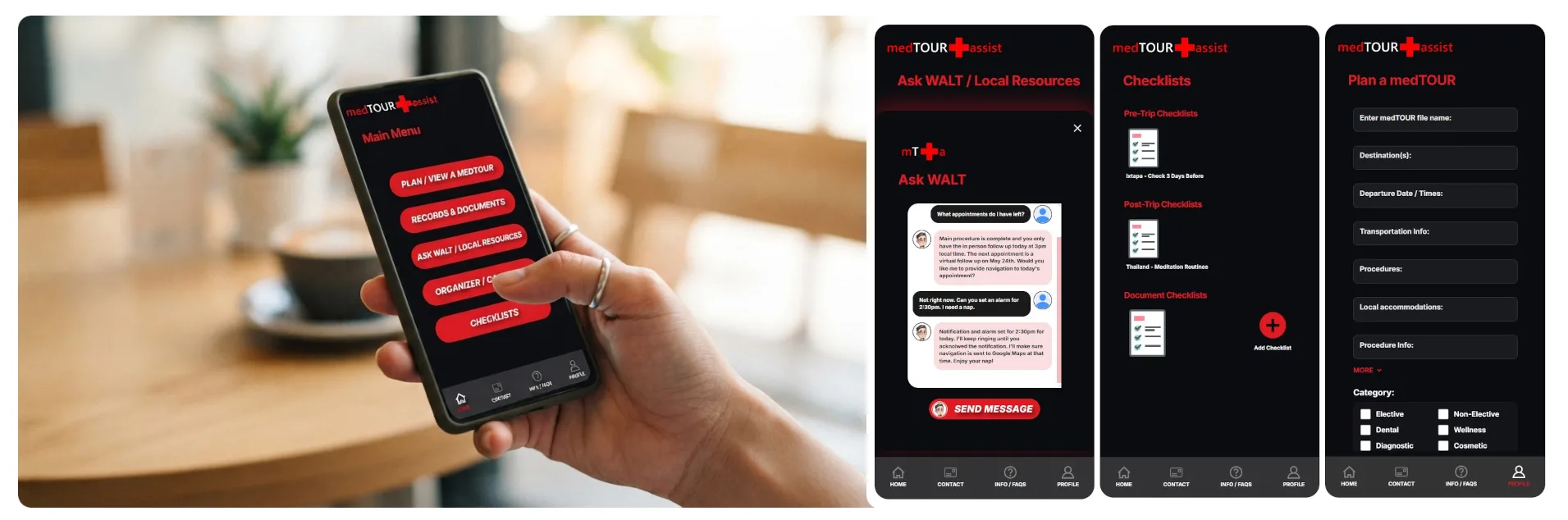
When building an app that connects patients with clinical trials, certain features are non-negotiable. The best apps offer:
1. User-Friendly Interfaces
For both patients and doctors, the app must be easy to navigate with minimal learning curve.
2. Real-Time Notifications
Users are alerted about new trials, eligibility updates, or consent steps immediately.
3. Secure Data Storage
Apps comply with HIPAA and GDPR to ensure data privacy and patient trust.
4. Smart Filters
AI enables precise filtering of trials based on location, medical history, lab values, and more.
5. E-Signature for Consent
Digitized consent forms make onboarding seamless and compliant.
All these functionalities are implemented by software development companies working with AI specialists and healthcare consultants to ensure both technical and clinical accuracy.
Use Case: AI in Action in a Dallas Healthcare Network
Let’s consider an example. A cancer research center in Dallas partners with a mobile app development company to create a clinical trial app.
Here’s what it does:
- The patient downloads the app, logs in, and shares their health data securely.
- AI reviews the data and matches them with an available immunotherapy trial.
- The doctor receives an alert and reviews the suggested match.
- Consent is signed digitally.
- Patient begins participation—all within days, not weeks.
The entire process is automated, fast, and more inclusive. Without AI and mobile integration, this match might never have happened.
Benefits of AI-Powered Clinical Trial Matching
For Patients:
- Faster access to new treatments
- Personalized matches based on real medical history
- Greater transparency in the process
For Doctors:
- Saves time evaluating trial eligibility
- Reduces paperwork
- Improves patient engagement
For Pharmaceutical Companies:
- Shortens trial timelines
- Reduces dropout rates
- Improves data quality and reporting
For Developers & Health Systems:
- Opportunity to integrate with EHRs and hospital systems
- Build apps that create measurable health outcomes
Why Dallas Is a Hotspot for Healthtech App Development
Dallas has become one of the go-to cities for digital health innovation, thanks to a mix of:
- Leading medical research centers
- Affordable tech talent
- Startup incubators focused on healthcare
- Government grants for AI and telehealth tools
Mobile app developers in Dallas bring local insights and compliance knowledge to the table, making them ideal partners for building clinical trial tools that serve a wide and diverse population.
How Software Development Companies Power These Solutions
It’s not just about coding the app. Top software development companies take a comprehensive approach that includes:
- Product strategy and design
- AI and machine learning integration
- Cloud deployment and data storage
- HIPAA and GDPR compliance
- User training and post-launch support
These companies have cross-functional teams, including data scientists, healthcare consultants, and UI/UX experts who all work together to deliver apps that actually solve recruitment problems.
Challenges in Developing Clinical Trial Matching Apps
Despite the benefits, there are a few challenges developers and healthcare partners must navigate:
- Data Access: Getting clean, structured, and comprehensive data from multiple hospital systems.
- Privacy Concerns: Ensuring full patient consent and data protection.
- AI Bias: Making sure algorithms don’t unintentionally exclude minorities or underserved populations.
- EHR Integration: Syncing apps with existing hospital infrastructure isn’t always easy.
But experienced mobile app developers in Dallas know how to solve these issues through proper planning, testing, and collaboration with clinicians.
Pros and Cons of AI-Powered Clinical Trial Apps
Pros
- ✅ Matches patients faster than traditional systems
- ✅ Reduces cost and time for clinical trials
- ✅ Offers personalized and inclusive trial suggestions
- ✅ Improves clinical research outcomes
- ✅ Increases transparency and access to treatment options
Cons
- ❌ Requires continuous AI model updates
- ❌ Can face resistance from staff unfamiliar with technology
- ❌ Dependent on EHR data quality
- ❌ Initial development cost can be high
- ❌ Must be rigorously tested for bias and fairness
Frequently Asked Questions (FAQ Schema – plain text)
Q1. Are these apps secure for storing patient data?
Yes, apps developed by certified firms follow HIPAA, GDPR, and other regulations to ensure total privacy.
Q2. How much does it cost to build a clinical trial matching app?
Cost can range from $50,000 to $200,000 depending on features, integrations, and AI capabilities.
Q3. Can these apps integrate with hospital EHR systems?
Absolutely. Most apps built by software development companies in Dallas integrate with Epic, Cerner, and similar systems.
Q4. Is AI accurate in suggesting trials?
AI accuracy improves over time. With proper training data, current apps reach 80-90% matching accuracy.
Q5. Who owns the data in the app?
Ownership varies by project, but typically, healthcare providers own patient data, with developers offering secure hosting.
Entity Tags (for SEO/Schema – no code, just in-text)
- Type: AI Clinical Trial Matching App
- Developers: Mobile App Developers in Dallas
- Category: Medical / Clinical Research
- Platform: iOS and Android
- Compliance: HIPAA, GDPR
- Supported By: Software Development Companies
Final Thoughts: The Future Is AI, and Dallas Is Leading It
From small startups to hospital-backed tech labs, mobile app developers in Dallas are solving real-world healthcare problems with AI. Their clinical trial matching apps are just one example of how smart software can lead to better, faster, and more inclusive medical care.
By working with skilled software development companies, healthcare providers can accelerate research, reduce operational strain, and most importantly—improve lives.
If your organization is ready to step into the future of clinical research, there’s no better time than now—and no better place to start than Dallas.