Artificial Intelligence is now a major part of business. Artificial intelligence is applied to compose emails, forecast sales, screen applications, respond to customer inquiries and detect anomalies. As future managers, you need to have a good understanding of AI.
Luckily you won’t need to be a programmer. You will need to be informed, curious and responsible decision makers who know how useful AI can be, what it can’t do and how to lead people through the changes.
What is AI?
Firstly it is important to understand what AI actually is. Most AIs used in business use large sets of data to identify patterns and use this to predict outcomes, create content and streamline tasks. However, the AI will only be as good as the data it learns from and the instructions it has been given.
It can highlight customers that may leave but it can’t make a decision about how to treat them. Whilst it can summaries a report it can’t understand the political aspect of a tricky client relationship. Good managers will see AI as a source of information and not an answer. Humans are still needed to add judgement, context and responsibility.
How is AI already helping with management?
Knowing how AI can be used practically will help you understand where the real value comes from.
Predictive analytics – Through the analysis of historical data, seasonal patterns and market signals, it can support more precise budgeting and inventory decisions.
Chat bots – These can respond to routine customer questions around the clock, allowing staff to focus on handling more complex enquiries.
Predictive – Can help alert you to potential issues with equipment or stock.
Personalization and lead scoring – assists you in directing your efforts toward the most promising opportunities.
Automated reporting – can assist you in extracting insight from large data sets.
All in all, AI removes repetitive tasks and gives you valuable insight.
Data Quality
The quality of the data will really affect how good your AI is. If you have incomplete, old and biased data you will get poor results. Future managers should try to ask yourself some basic questions. Where has this data come from? Is it accurate and up to date? Does it cover all of our customers/situations?
If you get into a habit of questioning where the data has come from you will reduce the risk of making expensive mistakes. You will also be able to work well with data and tech experts as you can ask relevant questions.
Ethical Considerations
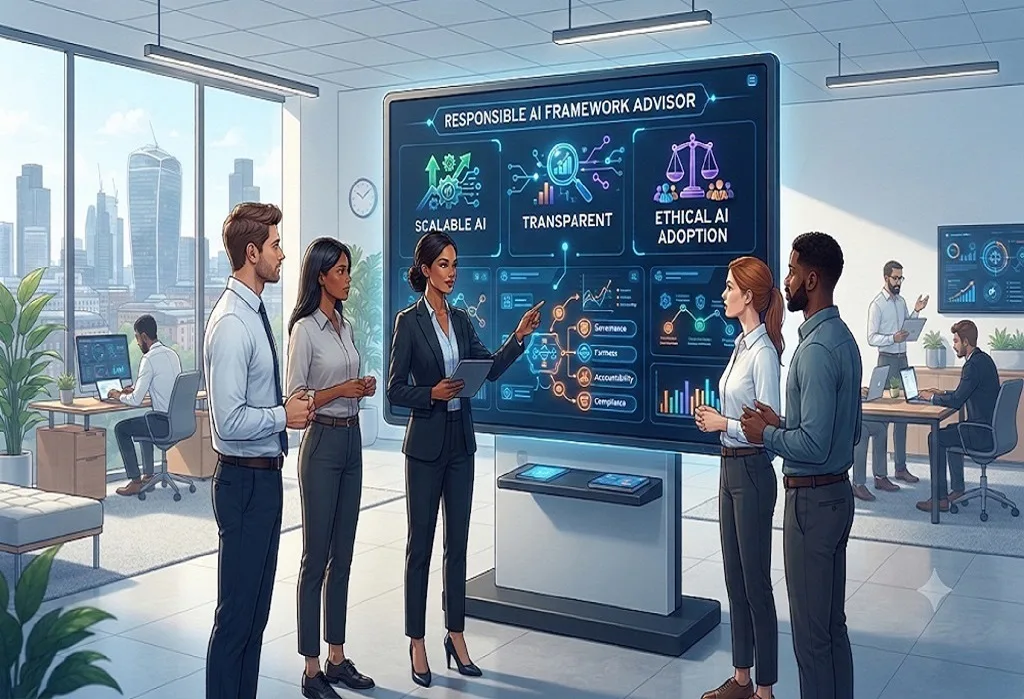
AI has ethical considerations. If the data it has been trained on is biased it may produce unfair outcomes such as in hiring, lending, pricing and performance. You must also be careful with customer and employee data.
Whilst you won’t need to know how to program algorithms you will need to ask yourself if the tool you are using is fair, transparent and suitable for the task. Openness with staff and customers will give them greater confidence when they use the AI. They will grasp how it operates and be assured that a person can review significant decisions. In the long term this will be an asset to your business. However, if you aren’t careful with using your technology it can impact your trust quickly.
Leading People Through Change
One of the most overlooked aspects of using AI is the human element. Whilst there can be excitement with new tools, there can also be anxiety. Employees may be worried about their jobs, feel overwhelmed with the new systems or be resistant to change.
Managers of tomorrow must possess outstanding abilities in both communication and leadership. You should clarify the reasons for adopting these tools, hear out any worries, offer training, and restructure roles so that employees can concentrate on work of greater value. Companies that approach AI as a learning process with everyone will generally get better results and higher morale.
Key Skills
As more repetitive tasks become automated, critical thinking, creativity, emotional intelligence, teamwork and flexibility become very important. These are all hard to replicate with machines. Basic data skills will help you. Understanding how to read charts, averages and trends and knowing when numbers don’t look right.
A growth mindset will also help. AI tools are rapidly changing meaning that in a few years your skills may need a refresh. If you are curious, safe to experiment and willing to share your knowledge then you will keep your team ahead.
Getting Ahead
Students and Graduates have an opportunity here. If you start developing your knowledge of AI, confidence with data and people skills now you will have a head start in the workplace.
Platforms such as Promba Skills can help. We focus on providing practical based learning for students, graduates and emerging professionals. Our focus is on improving communication, leadership and getting you career ready. We aim to bridge the gap between what you learn at university and what modern employers expect. With AI being a fast moving topic, practical based learning will give you confidence. By applying the ideas you will be able to see how they can work in realistic situations. If you have a good balance of technology knowledge and strong professional skills you will be in a great position to become the manager your business needs.
Conclusion
AI will not take the place of managers who think carefully, but managers who grasp AI could very well take the place of those who do not. The future is for leaders able to pair technology with sound judgment, pose the right questions to their data, act ethically, and guide people through change.
To become a leader in the years ahead, begin with the fundamentals. Stay curious, sharpen your interpersonal skills, and put them into practice. Companies will forever require individuals capable of making wise decisions with the help of powerful tools.