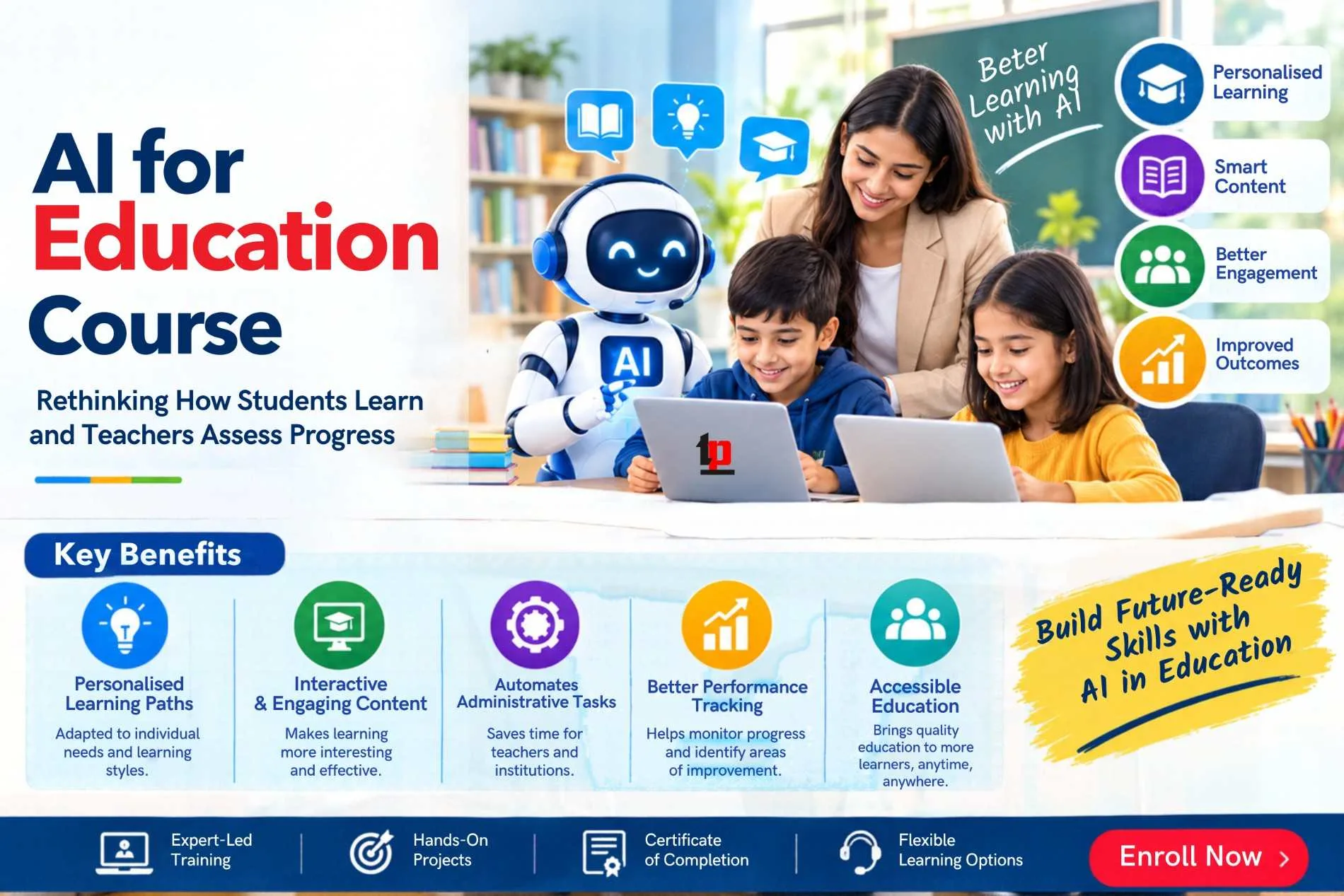
A classroom contains students with different interests, learning speeds and ways of understanding information. While one student may understand a concept through a diagram, another may need a practical example or a detailed explanation. Teachers try to support these differences while managing lessons, assignments and assessments. Artificial intelligence is introducing new ways to understand learning needs and organise educational activities. An AI for Education course can help learners explore how these technologies are being used and what they mean for the future of teaching.
Why Traditional Assessment Does Not Tell the Whole Story
Examinations and classroom tests are common ways to measure academic progress. They help teachers understand whether students have understood particular topics, but a single test cannot always explain why someone is struggling.
A student may understand a subject during classroom discussions but perform poorly under examination pressure. Another may receive good marks while having difficulty applying theoretical knowledge to practical situations.
Teachers therefore need different ways to observe progress. Class participation, assignments, project work and individual discussions can provide additional information about how students are learning. Technology may help organise some of this information, but educational judgement should remain with teachers.
How AI Can Help Identify Learning Gaps
Artificial intelligence can analyse educational information and identify patterns that may deserve attention. For example, a digital learning platform may notice that several students repeatedly make mistakes when answering questions about the same mathematical concept.
This information can help a teacher decide whether the topic needs another explanation or a different teaching approach.
Exploring AI for Education introduces learners to applications such as adaptive learning systems, automated feedback and educational data analysis. These tools can offer useful insights, but their recommendations should not be treated as complete evaluations of a student's ability. Learning is influenced by many factors that cannot always be measured through digital activity.
Making Classroom Feedback More Useful
Feedback is an important part of learning because it helps students understand what they have done well and where they need improvement. However, providing individual feedback to a large class can require considerable time.
AI-assisted educational tools may help teachers prepare initial feedback on written assignments, identify repeated errors or organise common questions. A teacher can review these suggestions and add explanations based on the student's actual work.
For instance, a writing tool may highlight repeated grammar problems in an assignment. The teacher can then explain the underlying rule instead of simply correcting individual sentences.
The purpose of such technology should be to support meaningful feedback rather than replace the relationship between teachers and students.
Supporting Teachers With Better Lesson Planning
Lesson planning involves selecting learning objectives, preparing teaching materials and deciding how to explain difficult subjects. Teachers may also need to adjust their plans when students require additional support.
AI tools can help generate draft examples, suggest discussion questions and organise educational resources around a particular topic. These suggestions can provide a starting point for lesson preparation.
A structured AI for Education training programme can help teachers and education professionals understand how to use these tools appropriately. It should cover content verification, responsible use, classroom applications and the limitations of AI-generated educational material.
Teachers must review generated information before using it because automated systems can produce inaccurate explanations or unsuitable examples.
The Role of Online Learning Platforms
Learning is no longer limited to physical classrooms. Schools, colleges and training institutions increasingly use digital platforms to share lessons, collect assignments and communicate with students.
AI-supported platforms can recommend learning materials based on a student's activity or previous performance. Some systems may also provide interactive practice questions and explanations when a learner gets an answer wrong.
An Online AI for Education course can introduce learners to these developments through digital lessons, demonstrations and practical activities. When selecting a programme, it is useful to examine whether it covers adaptive learning, educational content creation, assessment tools and data privacy.
Helping Students Develop Independent Learning Skills
One possible benefit of educational AI is that students can use interactive tools to explore subjects beyond classroom hours. They may ask for simpler explanations, request additional examples or practise questions on topics they find difficult.
However, there is a difference between using AI to understand a concept and depending on it to complete every academic task. Students need to develop their own reasoning, research and problem-solving abilities.
Educational institutions should provide clear guidance on acceptable AI use. Assignments should encourage students to explain their thinking, evaluate information and demonstrate what they have learned independently.
What Should Learners Look for in a Training Programme?
Education professionals come from different backgrounds. A schoolteacher may want to explore lesson-planning tools, while a college administrator may be more interested in academic data and digital learning management.
When comparing the Best AI for Education training, learners should examine the course syllabus, instructor experience, practical exercises and relevance to their work. It is also important to check whether the programme discusses student privacy, academic integrity and the limitations of automated assessment.
A useful programme should explain real educational situations instead of focusing only on the features of individual AI tools.
Understanding Certification and Practical Knowledge
A certificate can provide evidence that someone has completed a course or passed a particular assessment. Its value depends on the provider, the learning objectives and the assessment process.
An AI for Education course with certification may be useful for professionals who want formal documentation of their training. Before enrolling, they should check who issues the certificate, what subjects are included and whether learners must complete practical assignments or examinations.
Practical knowledge remains essential. Education professionals should be able to evaluate AI-generated material, recognise errors and decide whether a tool is appropriate for a particular learning activity.
Responsible Use of AI in Education
Educational information can include student performance, personal details and classroom records. Institutions must handle this information carefully and follow applicable privacy requirements.
Teachers should also consider fairness when using automated assessment tools. A system trained on limited examples may not evaluate every student response accurately. Important educational decisions should involve qualified human review and opportunities for students to ask questions or challenge mistakes.
Conclusion
Artificial intelligence is creating new possibilities for classroom assessment, lesson preparation and independent learning. Its value depends on how thoughtfully teachers and institutions use these technologies. An AI for Education course can help learners understand these applications while developing the judgement needed to use them responsibly. The goal should be to make education more supportive and effective without losing the human guidance that helps students grow.