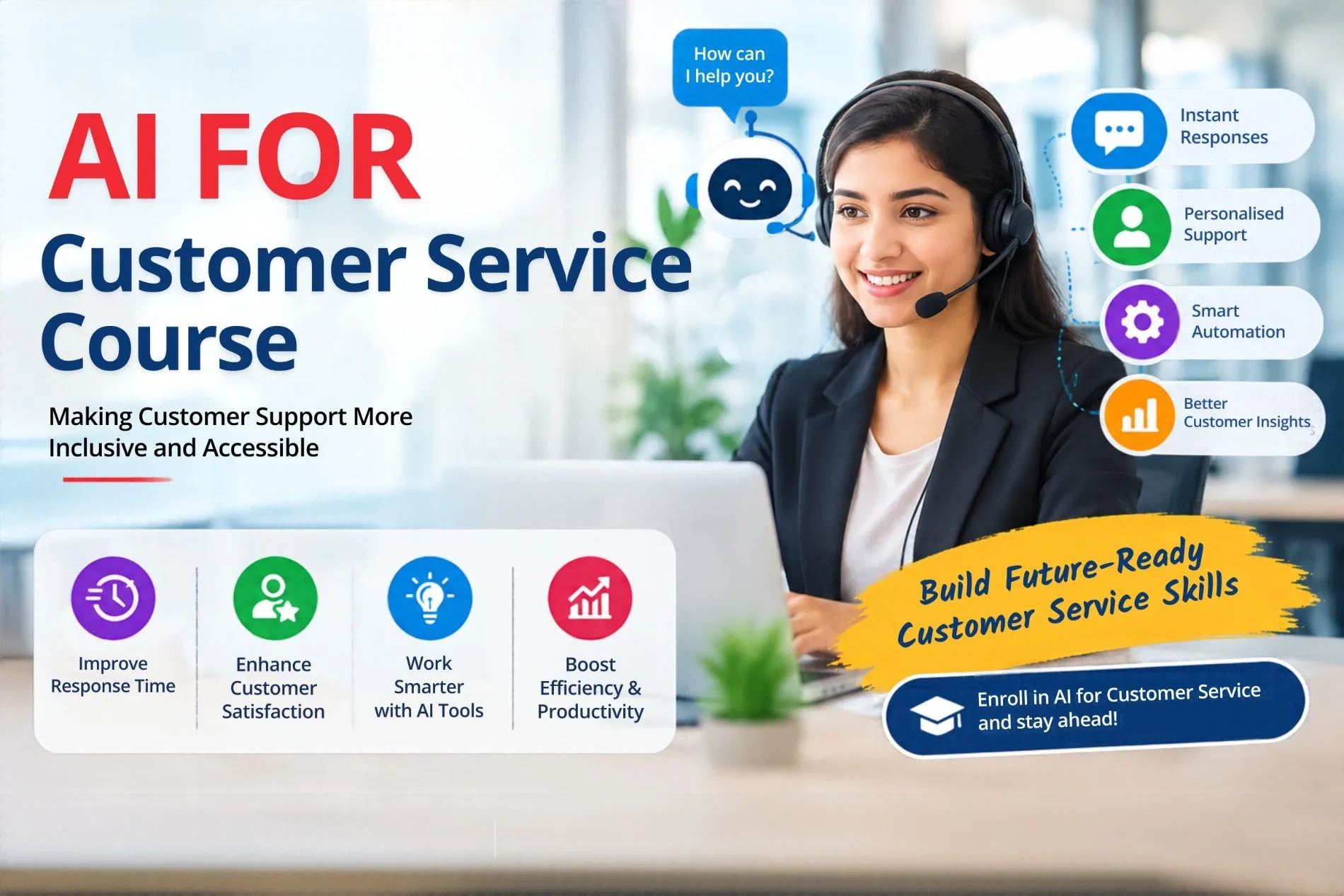
Businesses today serve customers from different countries, language backgrounds and age groups. A person may prefer speaking in their native language, while another may need written instructions that are simple and easy to understand. Meeting these different communication needs can be challenging for customer support teams. Artificial intelligence is creating new possibilities for making service interactions more accessible. An AI for Customer Service course can help learners understand how these technologies support communication and improve the customer experience.
Why Inclusive Customer Support Matters
Good customer service should be understandable and accessible to different types of customers. Language differences, unfamiliar technical terms and complicated instructions can make even simple enquiries difficult to resolve.
For example, an international customer purchasing a product may not understand the technical language used in its instruction manual. Similarly, someone who is unfamiliar with a company's online platform may need additional guidance to complete a basic task.
Businesses can improve these experiences by using clear communication, accessible information and suitable support channels. Technology can assist with these efforts, but companies must also understand the actual needs of the people they serve.
Supporting Customers Across Different Languages
Language is one of the common barriers in customer communication. Businesses operating internationally may receive enquiries in several languages, making it difficult for a single support team to handle every conversation.
AI-powered translation tools can help convert written messages from one language into another. Some systems can also assist with summarising conversations so that representatives can understand the main issue more quickly.
Learning about AI for Customer Service introduces learners to language-processing applications, automated translation and conversational tools. However, translations should be reviewed carefully, especially when conversations involve financial matters, legal information, technical instructions or sensitive complaints. Small language errors can sometimes change the meaning of an important message.
Making Digital Support Easier to Use
Not every customer feels comfortable navigating a complicated website or mobile application. Some may struggle to locate account settings, understand product instructions or complete an online form.
AI-assisted virtual guides can help users find relevant information by responding to questions in conversational language. For example, a customer trying to update a delivery address may receive step-by-step guidance instead of searching through several help pages.
A practical AI for Customer Service training programme can help learners understand how conversational systems are designed, how information is organised and how automated guidance should be tested. The quality of the experience depends on accurate information, simple instructions and an option to contact a human representative when necessary.
Improving Accessibility for Different Customer Needs
Accessibility means designing services that people with different abilities and requirements can use effectively. Customer support teams may need to provide alternatives to audio instructions, simplify written content or make important information easier to locate.
AI technologies can assist with speech-to-text conversion, text summarisation and automated captions. These features may help customers who prefer reading rather than listening or who need written records of spoken information.
Businesses should not assume that one technology works equally well for everyone. Accessibility features need to be tested with different users, devices and communication preferences. Human feedback remains valuable when evaluating whether a service is genuinely easy to use.
Learning Through Flexible Online Education
People working in retail, travel, banking, hospitality and technology may encounter customers with different communication requirements. Understanding AI applications can help them explore ways to make customer interactions more convenient.
An Online AI for Customer Service course can provide flexible access to lessons, demonstrations and practical assignments. Learners can explore language translation, chatbot design, conversational interfaces and accessibility-related applications without necessarily attending a physical classroom.
Before choosing a programme, it is useful to check whether the syllabus includes practical examples and explains the limitations of automated communication. Learners should also review the technical requirements and whether introductory lessons are available for beginners.
Choosing a Course That Matches Your Goals
The right training programme depends on what a learner wants to understand. Someone interested in international customer support may focus on language tools, while a professional working with digital platforms may be more interested in conversational interfaces and accessible website assistance.
When comparing the Best AI for Customer Service course, learners should examine the syllabus, instructor experience, practical projects and assessment methods. It is also helpful to check whether the course discusses privacy, communication accuracy and situations where automated systems should not be used.
A balanced programme should explain how technology supports customer service while recognising that empathy, patience and clear communication remain important human skills.
Understanding Certification and Practical Experience
A course certificate can provide evidence that a learner has completed a particular programme or assessment. Its value depends on the organisation issuing it, the curriculum and the standards used to evaluate learners.
An AI for Customer Service course with certification may be useful for individuals who want formal documentation of their training. Before enrolling, learners should confirm whether the certificate requires an examination, project or other assessment. They should also understand what the credential actually represents.
Practical experience matters alongside certification. Learners should practise reviewing translated messages, improving unclear responses and identifying situations where automated assistance may create confusion.
Balancing Automation With Human Communication
AI can make certain customer service activities faster, but not every conversation should be automated. A customer dealing with a complicated complaint may need patience, reassurance and an individual explanation.
Businesses should provide clear ways to transfer conversations to trained employees. They should also review automated responses regularly, protect customer information and ensure that translated or generated content does not introduce misleading details.
Technology works best when it helps employees serve people more effectively rather than creating additional barriers.
Conclusion
Inclusive customer support requires clear communication, accessible information and an understanding of different customer needs. Artificial intelligence can support these goals through translation, conversational assistance and accessibility features, provided these tools are implemented carefully. An AI for Customer Service course can help learners understand these applications and explore how technology can contribute to more accessible and effective customer interactions.