
The Clean Energy Push and an Overlooked Risk
The global transition to renewable energy is accelerating at an unprecedented pace, with wind power playing a central role in meeting sustainability targets. As installations expand rapidly across regions, manufacturers are under increasing pressure to deliver at speed while optimizing costs. However, this race to scale brings with it a critical and often underestimated challenge maintaining consistent manufacturing quality.
Wind turbines are highly engineered assets designed to operate reliably for over two decades. Even minor defects introduced during manufacturing can evolve into major performance issues over time. As production complexity increases, traditional quality control methods are struggling to keep pace, exposing a growing gap between scale and reliability.
A Wake-Up Call for the Industry
Recent developments in the wind sector have highlighted the consequences of undetected manufacturing defects.
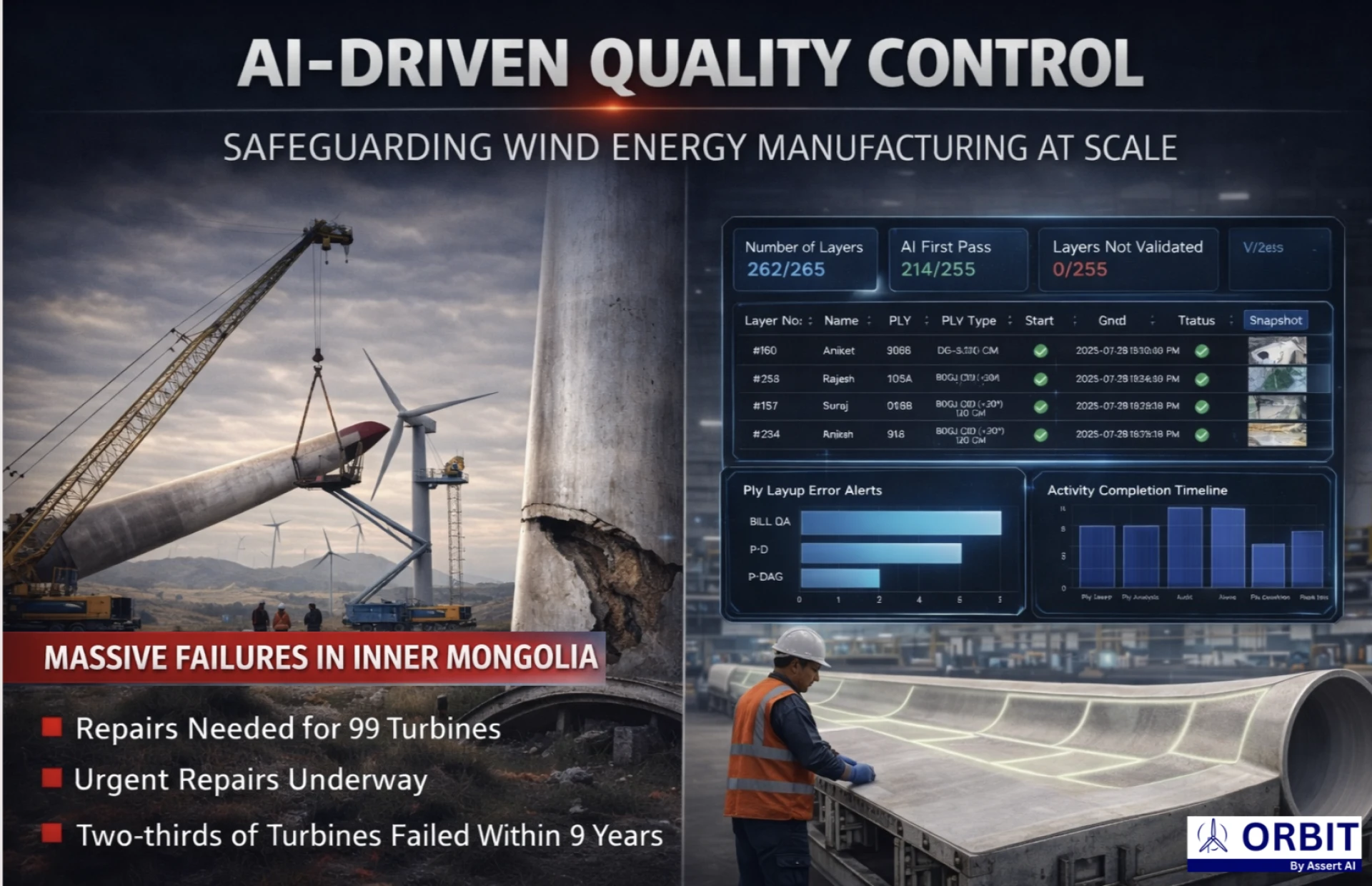
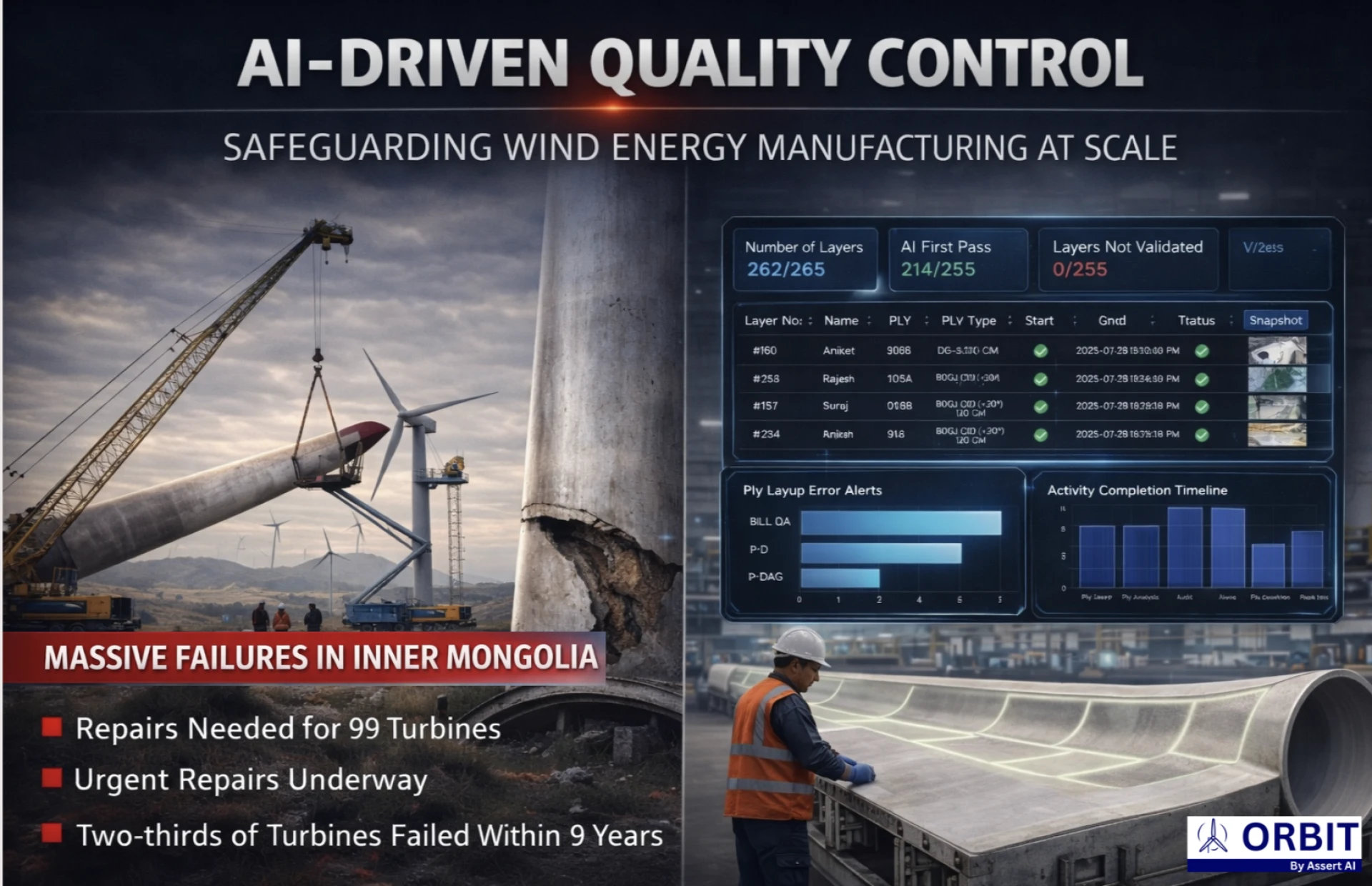
Industry Snapshot: A large wind farm project in Inner Mongolia reported that nearly two-thirds of its turbines required blade repairs within just nine years of operation, well before their expected lifecycle.
Within weeks of this, another incident in Bavaria involving a Senvion turbine saw a blade break off despite recent maintenance, raising further concerns about latent defects that escape both manufacturing checks and routine inspections.
These are not isolated events. When such failures occur across geographies and turbine vintages, they point to deeper systemic gaps in how blade quality is assured.
When defects go unnoticed during production, they often surface later as expensive field problems, forcing operators into reactive maintenance cycles. The result is unplanned downtime, increased operational costs, and disruptions in energy generation. More importantly, it demonstrates that conventional inspection approaches are no longer sufficient for today’s manufacturing scale.
Why Wind Turbine Blade Quality Is So Challenging
Wind turbine blades are among the most complex structures in modern manufacturing, often exceeding 100 meters in length and composed of multiple layers of composite materials. These structures must endure continuous mechanical stress, environmental exposure, and long operational lifespans.
This complexity introduces several quality risks, including variability in materials, inconsistencies in curing and bonding processes, and limitations of manual inspection methods. Traditional quality checks, which rely heavily on human inspection and periodic sampling, are not always effective in detecting subtle or internal defects across such large surfaces. In many cases, issues remain undetected until after installation, when repairs become significantly more expensive and operationally disruptive.
Another major challenge is the lack of integrated data across the production lifecycle. Without seamless traceability linking materials, processes, and inspection results, identifying the root cause of defects becomes difficult, delaying corrective actions and impacting overall quality assurance.
The True Cost of Missed Defects
When manufacturing defects escape early detection, the financial and operational consequences can be substantial. Operations and maintenance already account for a significant portion of a wind farm’s lifecycle costs, and early failures only increase this burden.
Unexpected repairs, blade replacements, and the need for specialized equipment such as cranes can drive up costs rapidly. Additionally, downtime leads to lost energy production, directly affecting revenue. Safety risks for maintenance teams and potential legal or insurance disputes further compound the impact. In large wind farms, even a limited number of defective components can escalate into multi-million-dollar challenges, highlighting the importance of proactive quality management.
How AI is Redefining Quality Management
AI is transforming quality management by shifting the focus from reactive inspection to proactive, continuous monitoring. Instead of relying on manual checks at specific stages, AI-powered systems integrate computer vision, machine learning, and data analytics to oversee the entire manufacturing process in real time.
Real-time defect detection enables manufacturers to identify anomalies as they occur on the production line, allowing immediate corrective action before issues progress further. At the same time, predictive quality monitoring leverages historical and live data to uncover patterns that signal potential defects, helping teams intervene before problems materialize.
Another critical advancement is digital traceability, where AI systems create a connected record of the entire manufacturing lifecycle. This ensures that every inspection result is linked with material data, process parameters, and production conditions, making it easier to trace defects back to their source. Additionally, automated process monitoring ensures that deviations during production are identified instantly, reducing dependence on manual inspection and preventing defects from embedding into the final product.
Industry Shift Toward Intelligent Manufacturing
As wind turbines become larger and more complex, manufacturers are increasingly adopting AI-driven technologies to strengthen quality control. The industry is moving toward intelligent manufacturing systems that combine automated inspection, advanced analytics, and digital monitoring to improve reliability and efficiency.
This shift reflects a broader understanding that quality cannot be ensured through end-stage inspection alone. Instead, it must be embedded throughout the manufacturing process, with continuous visibility and data-driven decision-making playing a central role.
The Future of Quality in Renewable Energy
The next phase of growth in renewable energy will depend not only on scaling capacity but also on ensuring long-term reliability. As manufacturing complexity continues to rise, AI-driven quality management systems will become essential for maintaining consistency and performance.
By enabling early defect detection, improving process visibility, and strengthening traceability, AI is helping manufacturers move toward a more proactive and resilient approach to quality. This transition is critical for reducing costs, minimizing risks, and ensuring that renewable infrastructure delivers on its long-term promise.
Final Thoughts
As the renewable energy sector continues to expand, the importance of manufacturing excellence cannot be overstated. Ensuring quality at scale will be a defining factor in the success of future wind energy projects.
If you’re looking to bring real-time visibility, predictive insights, and digital traceability into your manufacturing processes, now is the time to adopt AI-driven solutions.
Assert AI is enabling manufacturers to transform quality management through advanced computer vision and intelligent monitoring platforms like ORBIT helping detect issues early, ensure process compliance, and build a strong foundation for reliable, future-ready manufacturing.
Connect with Assert AI to strength
en your quality strategy and build reliability at scale.