Someone visits an animal shelter website at 10:30 at night.
They've found a dog they like.
Then the questions start.
Is he good with kids? Can I foster him first? How does the adoption process work? Is there an application fee?
The shelter team isn't online.
So the visitor closes the website and tells themselves they'll come back tomorrow.
Sometimes they do.
Sometimes they don't.
The information may already be somewhere on the website. The problem is that the visitor needs an answer, not another page to search.
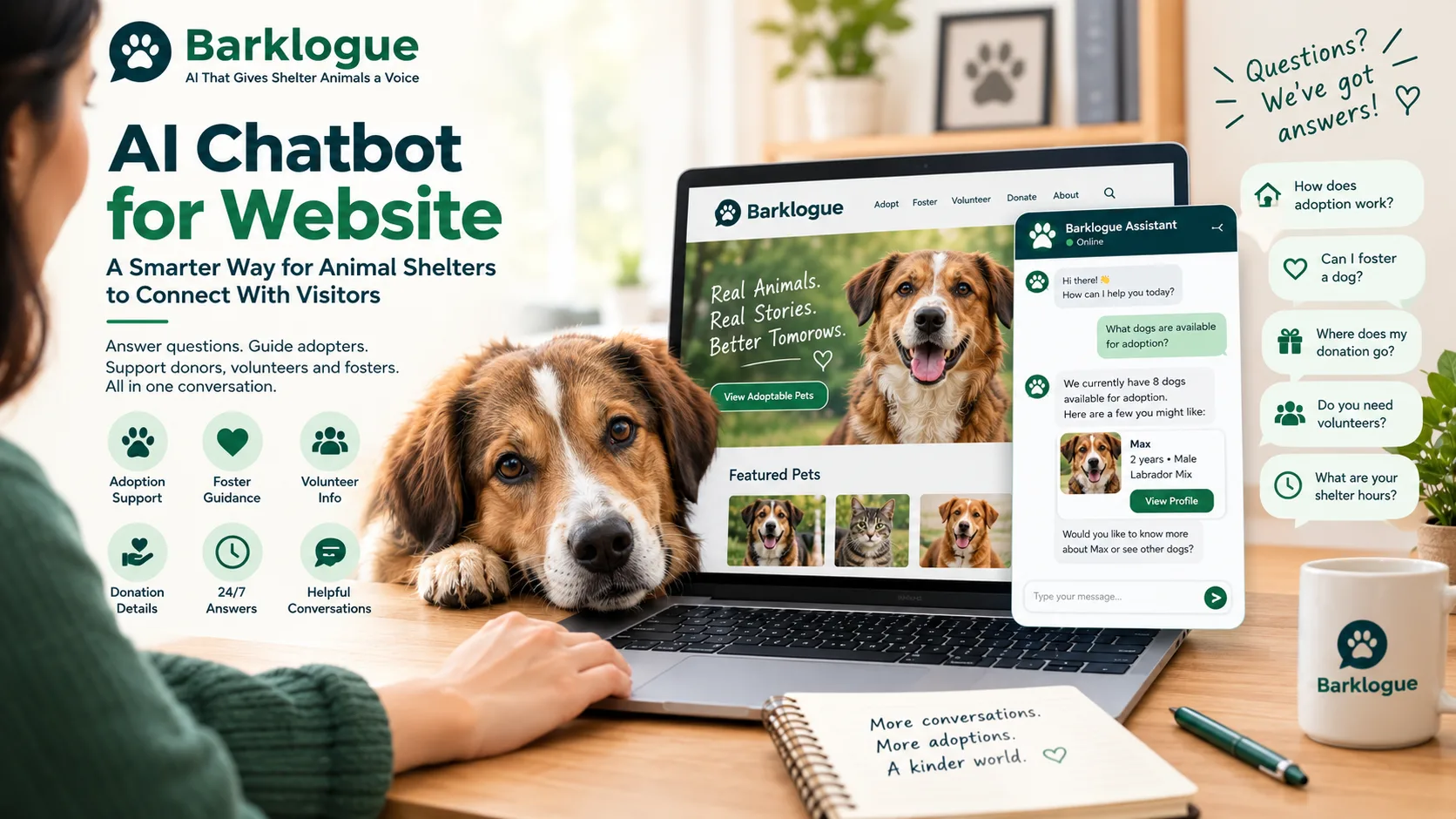
That's where an AI chatbot for website can make a real difference.
What Is an AI Chatbot for a Website?
An AI chatbot for a website is a conversation tool that lets visitors ask questions directly instead of searching through pages and menus.
Think of it as a helpful guide sitting inside your website.
A visitor can type:
"What dogs are available for adoption?"
Or:
"How do I become a foster?"
Or:
"What do I need to bring when I visit the shelter?"
The chatbot can respond using the information available to it.
For an animal shelter, that means the website can become more than a collection of adoption profiles, donation pages, and FAQs.
It can actually help people find their way around.
Why Animal Shelters Need More Than a Static Website
Most shelter websites already contain a lot of useful information.
Adoption requirements.
Animal profiles.
Shelter hours.
Donation options.
Volunteer information.
Foster applications.
But having information and helping someone find it are two different things.
A potential adopter may not know which page contains the answer they're looking for.
A donor may have a simple question before giving.
A volunteer may want to know whether they need previous experience.
And shelter staff often end up answering these same questions again and again.
That's time they could spend caring for animals or helping people through more complicated situations.
An AI chatbot can handle many of those routine conversations while keeping the human team involved when a question needs a person.
How an AI Chatbot for Website Can Help With Pet Adoption
This is where things get interesting.
Imagine someone looking at a dog's profile.
The profile says:
Bruno
Male, 10 years old
German Shepherd mix
Good with adults
That's useful.
But it doesn't tell the whole story.
Now imagine the visitor can ask:
"Would Bruno be a good fit for someone who lives alone and works from home?"
A chatbot can help the visitor understand the information available in Bruno's profile and guide them toward the next step.
The difference is small on paper.
But for someone trying to decide whether to contact a shelter, it can matter.
From a Profile to a Conversation
Before:
Bruno, male, 10 years old, German Shepherd mix. Large breed. Good with adults.
After:
Bruno is a 10-year-old German Shepherd mix who may be a good match for someone looking for a calmer companion. His profile notes that he does well with adults. If you'd like to learn more about Bruno or meet him, here's how to contact the shelter.
The second version doesn't replace the facts.
It helps a visitor understand them.
And that's the real opportunity with an AI chatbot for a website.
An AI Chatbot Can Help More Than Adopters
Adoption is only one part of the conversation.
A shelter website also has people looking to foster, volunteer, donate, or simply learn more about the organization.
A visitor might ask:
"How can I foster a dog?"
The chatbot can explain the basic process and point them toward the foster application.
Someone else might ask:
"Where does my donation go?"
The chatbot can provide the information the shelter has made available.
A potential volunteer might ask:
"Do I need previous animal-care experience?"
Again, they can get a quick answer without waiting for an email response.
The website becomes easier to use for everyone.
Your Shelter Staff Shouldn't Have to Answer the Same Question 50 Times
Shelter teams already have enough on their plates.
They're caring for animals, coordinating adoptions, talking with families, managing volunteers, working with fosters, handling donations, and dealing with situations that can't wait.
Answering the same basic question for the 50th time isn't where their time is most valuable.
An AI chatbot can take care of routine questions.
Staff can step in when the situation is personal, complicated, or requires judgment.
That's an important distinction.
The goal isn't to replace the people who care for the animals.
It's to give those people more time to do the work only they can do.
What Makes a Good AI Chatbot for Website Visitors?
Not every chatbot is a good fit for an animal shelter.
If you're looking at one for your website, ask a few simple questions.
Does it use your actual shelter information?
The chatbot should work from reliable information about your organization, services, and animals.
Can visitors ask questions naturally?
People don't always type perfect search queries.
They ask questions the way they would ask another person.
"Can I adopt a cat if I already have a dog?"
That's very different from searching for the words "cat adoption dog household."
Does it work on mobile?
A large number of visitors will discover animals from their phones.
The conversation needs to work just as well there.
Does it know when to involve a human?
This one matters.
If the chatbot doesn't have enough information, it shouldn't guess.
It should direct the visitor to a shelter team member.
If You're Thinking, "What If the AI Gives the Wrong Answer?"
That's a valid concern.
The answer isn't to let AI answer everything.
The answer is to give the chatbot reliable information and clear boundaries.
An AI chatbot shouldn't invent a medical history.
It shouldn't make unsupported claims about an animal's behavior.
It shouldn't make decisions that belong to shelter professionals.
And when a question requires human judgment, the conversation should move to a person.
Good AI doesn't mean pretending the technology knows everything.
Sometimes the best answer is:
"I'm not sure. A member of the shelter team can help you with that."
From a Website That Displays Information to a Website That Helps
Here's the difference.
BeforeAfterVisitor searches through pagesVisitor asks a questionVisitor reads a basic profileVisitor can ask about the animalStaff answers repeated questionsAI handles routine questionsVisitor may leave without an answerVisitor gets a clear next stepWebsite displays informationWebsite helps visitors use it
That's what makes an AI chatbot for website visitors interesting.
It's not just another feature sitting in the corner of the screen.
It's another way for the shelter to communicate.
What I Learned Building BarkLogue
One thing became clear to me while building BarkLogue.
The technology isn't the most important part.
The information is.
Shelter staff already know their animals.
They know the dog who takes a little while to trust someone.
They know the cat who hides when visitors arrive but sleeps beside them at night.
They know which animal loves long walks and which one would rather curl up on the couch.
Those details matter.
The challenge is getting those details in front of the right person at the right moment.
That's one reason I built BarkLogue.
The idea isn't to replace shelter staff or turn adoption into a transaction.
It's to help shelter animals tell richer stories and help visitors have more useful conversations.
An AI chatbot can be part of that.
How to Choose an AI Chatbot for Your Website
Before adding one to your shelter website, ask:
- Where does the chatbot get its information?
- Can it answer questions about individual animals?
- Can staff update the information?
- Can it help with adoption questions?
- Can it support foster and volunteer questions?
- Can it provide basic donor information?
- What happens when it doesn't know an answer?
- Can visitors reach a human when they need one?
- Does it work well on phones?
The answers will tell you much more than a long list of chatbot features.
Start With One Animal
Here's something you can do today.
Pick one animal profile on your website.
Read it like you're a potential adopter seeing it for the first time.
Then ask yourself:
"What would I still want to know before contacting this shelter?"
Write down five questions.
Those questions can show you exactly where your website could do a better job of helping visitors.
Because sometimes the information isn't missing.
It's just waiting to be explained.
That's the opportunity an AI chatbot for website visitors can create.
Frequently Asked Questions
What is an AI chatbot for a website?
An AI chatbot for a website lets visitors ask questions through a conversation instead of searching through multiple pages. It can provide answers based on the information available to it and guide visitors toward the right next step.
Can an AI chatbot help animal shelters?
Yes. It can help with routine questions about adoption, fostering, volunteering, donations, shelter hours, available animals, and other information the shelter chooses to provide.
Can an AI chatbot answer questions about specific pets?
It can, when reliable information about the animal is available. The quality of the answer depends on the information provided to the chatbot and how that information is maintained.
Does an AI chatbot replace shelter staff?
No. A chatbot can handle routine questions, but shelter staff remain important for personal conversations, complex cases, medical concerns, behavior questions, and decisions that require human judgment.
Can an AI chatbot help people find adoptable pets?
It can help visitors explore available animals and understand their profiles. It can also guide visitors toward adoption information and the appropriate contact or application process.
Can an AI chatbot help with donations?
Yes. A shelter can use a chatbot to answer basic donation questions, explain available giving options, and direct visitors to the appropriate donation page or campaign information.
The Website Should Do More Than Display the Story
Every shelter has stories worth telling.
The dog who finally trusted someone.
The cat who waited for months.
The foster family who made room for one more.
The donor who quietly kept showing up.
Your website should help people find those stories.
That's why BarkLogue exists.
And when an AI chatbot is built around the real information, real animals, and real mission of a shelter, the website can become more than a place people visit.
It can become a place where conversations begin.
Learn more about BarkLogue's AI chatbot for animal rescue shelters.