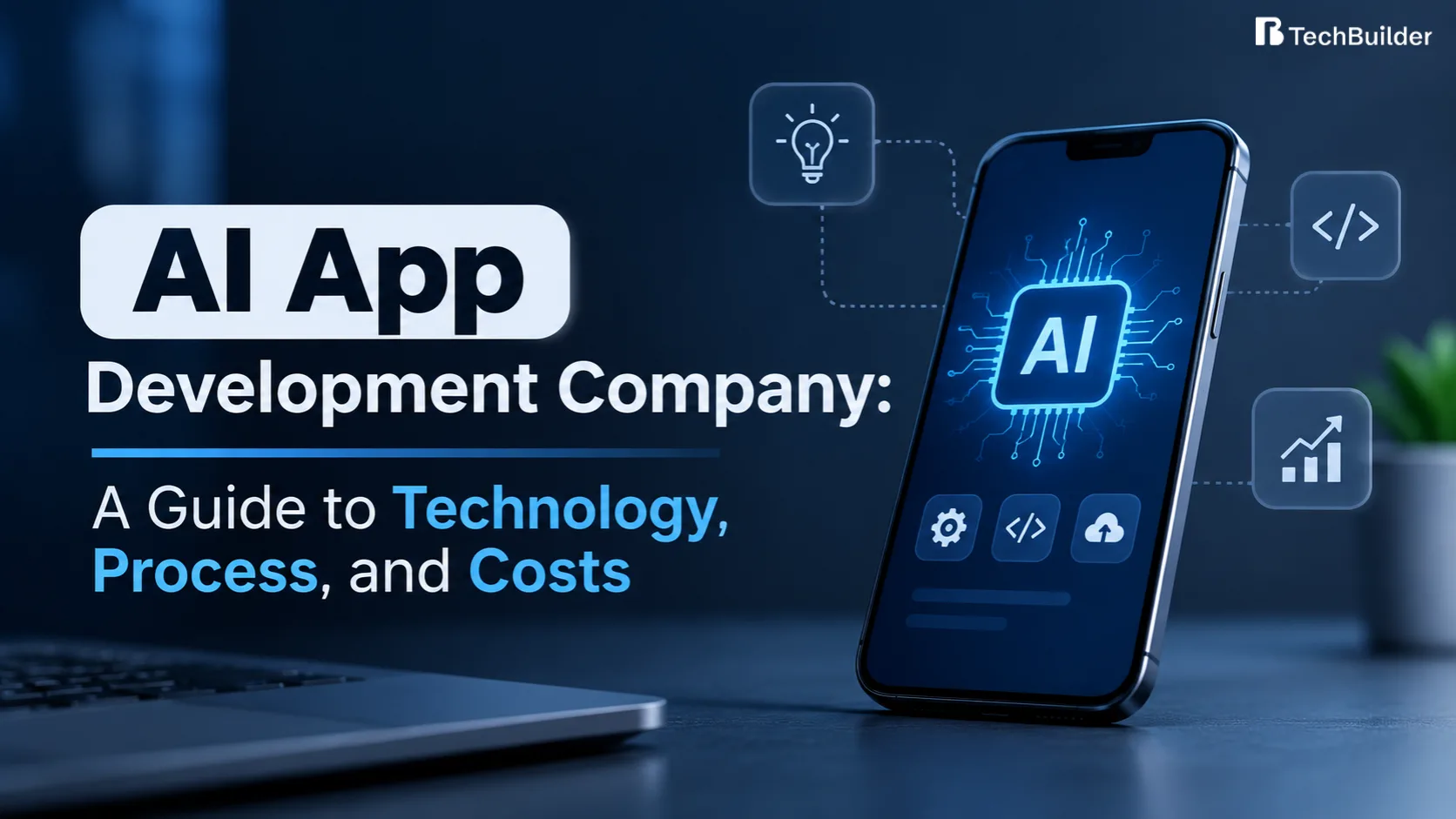
Most businesses don’t struggle with the idea of adding AI. They struggle with where to begin. Should it be a chatbot, a forecasting tool, or something that writes content? Before any code is written, the smartest move is to understand what’s possible, how the work unfolds, and what shapes the budget.
What Can AI Actually Do for an App?
Think of AI as a set of skills you can add to a product, each solving a different problem:
- Chatbots and virtual assistants that answer customers around the clock
- Predictive models that forecast demand, spot risks, and guide planning
- Recommendation engines that show users what they’re likely to want
- Generative AI that drafts text, images, or code
- AI agents that handle multi-step tasks with little human involvement
You rarely need all of them. Behind the scenes, teams usually work with frameworks such as TensorFlow, PyTorch, and LangChain, along with models from providers like OpenAI and Hugging Face, depending on the project.
How Does the Process Usually Work?

- Discovery: Your goals are defined, and the right use cases are chosen.
- Data and model design: Data is collected and cleaned, and the right model is selected. This step is often underestimated, because a model is only as good as the data it learns from.
- Development and integration: The solution is built, trained, tested, and connected to systems like your CRM or ERP.
- Deployment and support: The app goes live, and monitoring, retraining, and updates keep it accurate.
For most projects, this journey takes around 8 to 16 weeks, although complex data needs can stretch it.
What Drives the Price Tag?
Costs rarely come down to one number. The main drivers are data quality and volume, the complexity of the model, how many systems it must connect to, and security requirements such as GDPR or ISO compliance. Starting with one focused use case, proving its value, and expanding later is usually kinder to the budget than building everything at once.
When comparing partners, look for clear explanations, honest timelines, and a plan for life after launch. A team like TechBuilder, for instance, covers strategy, development, and ongoing model upkeep, which is the kind of full-cycle support worth asking about.
Choosing the right AI App Development Company comes down to trust and clarity. Ask how they handle your data, how they measure results, and what happens once the app goes live. If the answers are specific and straightforward, you’re likely talking to the right people.