
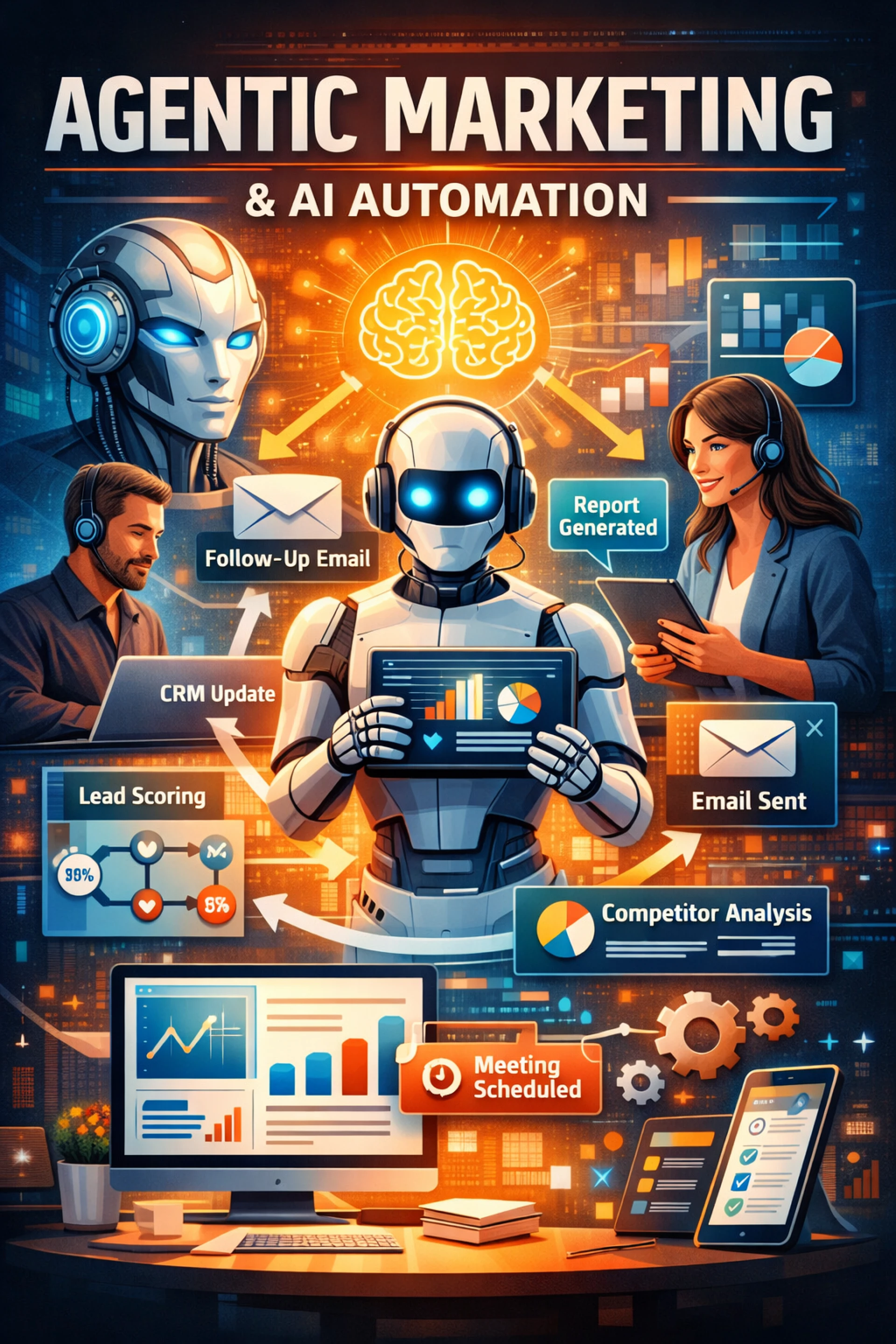
Marketing today isn’t short on ideas—it’s short on time. Agencies and in-house teams spend hours every week on repetitive tasks like lead follow-ups, performance reporting, content checks, and internal coordination. None of this work is creative, but all of it is necessary.
That’s why agentic marketing is quickly becoming one of the most valuable shifts in modern marketing strategy.
Instead of using AI only for writing copy or generating ideas, marketers are now building AI agents that can make decisions and take action on their behalf. These agents don’t just assist—they execute. And thanks to low-code tools, you don’t need deep technical skills to build them.
This guide breaks down what AI agents are, how they work in marketing, and how you can use low-code platforms to build them for your clients.
What Are AI Agents in Marketing?
An AI agent is a system designed to work toward a specific goal. It can evaluate information, decide what to do next, and use connected tools to complete tasks automatically.
In marketing terms, that means an AI agent can:
- Review incoming leads
- Decide which ones matter most
- Update the CRM
- Send follow-up emails
- Notify the right team members
- Create summaries or reports
Traditional automation follows strict rules. AI agents, on the other hand, can adapt. They understand context, handle variation, and respond differently depending on the situation. That’s the key difference—and the reason agentic marketing feels like a real upgrade rather than just another tool.
Recommended for reading: How Artificial Intelligence is Transforming Digital Marketing
Why AI Agents Matter for Agencies and Clients
For agencies, growth usually means one of two things: hiring more people or finding ways to work smarter. AI agents for marketing make the second option far more realistic.
Here’s why they’re so effective:
- They reduce manual work without sacrificing quality
- They improve response times for leads and customer inquiries
- They bring consistency across multiple client accounts
- They help agencies scale without increasing overhead
From the client’s perspective, the value is simple. Things happen faster. Fewer leads fall through the cracks. Reports are clearer. Follow-ups are timely. The work feels organized and intentional.
Low-Code Tools That Make AI Agents Easy to Build
You don’t need to write custom software to build AI agents. Several low-code AI automation tools are designed specifically for business workflows.
Zapier is great for quick, reliable automations across popular apps. It’s ideal if you want speed and simplicity.
Make (Make.com) gives you more visual control and flexibility. It’s useful for more complex workflows that require branching logic and multiple steps.
n8n works well if you want deeper customization or prefer self-hosted solutions. It’s powerful and well-suited for advanced agency setups.
All three allow AI agents to connect with real marketing tools like CRMs, analytics platforms, email systems, and project management software.
Recommended for reading: From Voice Search to Generative AI – The Future Of SEO And Conversational Search
How to Build an AI Marketing Agent That Actually Delivers Results
The biggest mistake people make is trying to build an agent that does too much. The best agents are focused.
Step 1: Choose One Clear Goal
Start with a specific outcome, such as improving lead response time or automating weekly reporting. Clear goals lead to better results.
Step 2: Define the Agent’s Responsibilities
Decide what information the agent receives, what decisions it can make, and what actions it’s allowed to take. This keeps behavior predictable and useful.
Step 3: Connect Real Tools
An AI agent becomes valuable when it can update systems, send messages, and move data where it needs to go. This is where low-code tools shine.
Step 4: Add Safeguards
Set limits. Require human approval for sensitive actions. Track what the agent does and why. Good guardrails protect both your agency and your clients.
Step 5: Turn It Into a Service
Instead of selling “automation,” sell a managed AI agent solution. Include setup, monitoring, ongoing improvements, and reporting. This creates long-term value and recurring revenue.
Example: A Lead Qualification AI Agent
Imagine a simple agent built for lead management.
When a form is submitted, the agent reviews the data, enriches the lead, scores intent, routes high-priority leads to sales, adds others to a nurture sequence, and creates a daily summary for the client.
One agent like this can save hours every week and dramatically improve conversion rates.
Final Thoughts
Agentic marketing isn’t about replacing people. It’s about freeing marketers from repetitive work so they can focus on strategy, creativity, and growth.
If you start small, stay focused, and build agents around real business outcomes, AI agents can become one of the most valuable services you offer your clients.
If you’d like, tell me your client’s industry and the most time-consuming task you want to eliminate—I can help you design a ready-to-build AI agent workflow tailored exactly to that need.