Sea kayaking in Wisconsin offers some of the most unique and breathtaking experiences for paddlers of all levels. For advanced enthusiasts, exploring the pristine waters of Lake Michigan and Green Bay presents an opportunity to challenge skills, navigate rugged coastlines, and immerse oneself in nature like never before. This guide provides essential tips and techniques for advanced sea kayaking Wisconsin adventures, helping paddlers safely tackle more demanding waters while enhancing their overall skill set.
Handling Rough Waters and Currents
One of the primary challenges of advanced sea kayaking Wisconsin is navigating rough waters and varying currents. Unlike calm bays or sheltered inlets, the open waters of Lake Michigan can produce significant waves, wind-driven chop, and strong currents that require careful attention and practiced techniques. Advanced paddlers should focus on several key strategies:
- Reading the Water: Understanding the behavior of waves and currents is essential. Look for signs of wind direction, wave patterns, and areas where currents converge or accelerate. This allows you to anticipate challenges before entering the water.
- Bracing Techniques: Strong bracing skills are crucial when waves threaten to tip your kayak. Practicing high and low braces can prevent capsizing and provide confidence in turbulent waters.
- Efficient Paddling: Maintaining a steady, strong stroke helps control your kayak in rough conditions. Learning to adjust stroke length and power depending on wave height and direction is a skill that advanced paddlers should continually refine.
- Safety Gear and Communication: Always use a properly fitted life jacket, and consider carrying a paddle leash, bilge pump, and a whistle. In group settings, establishing clear hand signals and maintaining visual contact ensures safety while navigating challenging waters.
By mastering these techniques, paddlers can confidently explore the more dynamic waters of Wisconsin, making their sea kayaking experience both exhilarating and safe.
Exploring Remote Caves and Hidden Coastlines
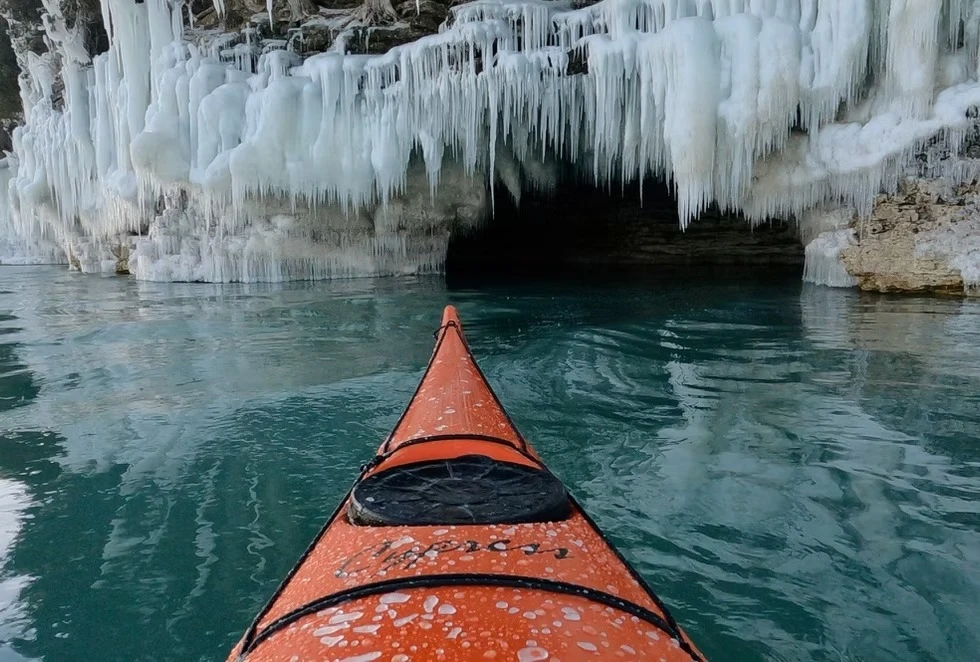
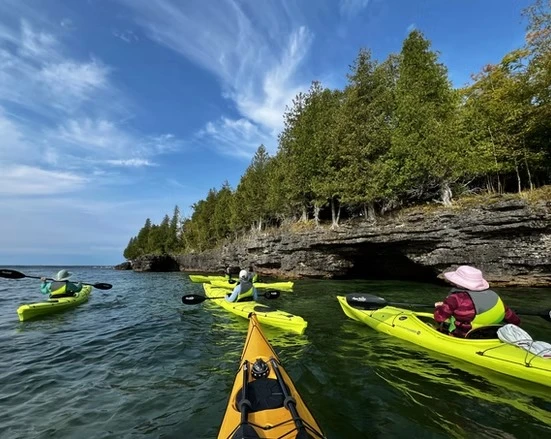
Wisconsin’s coastline is dotted with fascinating caves, secluded beaches, and unique geological formations, making it a paradise for adventurous kayakers. Advanced paddlers can venture beyond the common routes to discover these hidden gems while refining navigation and maneuvering skills.
- Cave Navigation: Many of Door County’s sea caves require precise control to enter safely. Paddlers should approach caves slowly, observe tidal changes, and be aware of potential hazards such as sharp rocks or low ceilings.
- Tidal Awareness: While tides in the Great Lakes are not as pronounced as in the ocean, water levels can still affect access to certain caves and inlets. Advanced paddlers must consider seasonal water variations to plan their explorations safely.
- Using Landmarks for Orientation: Unlike open water paddling where GPS might be essential, exploring hidden coastlines often requires visual navigation. Identifying prominent rock formations, tree lines, and shoreline features can help maintain orientation during extended tours.
- Leave No Trace: As advanced paddlers, it’s vital to respect the natural environment. Avoid disturbing wildlife and pack out all trash to preserve these pristine areas for future kayakers.
By exploring remote areas, paddlers not only challenge their skills but also gain a deeper appreciation for the natural beauty and geological diversity of Wisconsin’s waters.
Skill-Building Courses for Experienced Paddlers
Even experienced paddlers can benefit from advanced instruction. Kayak Guide Justin offers specialized skill-building courses designed for those who want to elevate their sea kayaking Wisconsin techniques. These courses cover essential aspects such as:
- Advanced Maneuvering: Learn complex strokes, efficient turning methods, and quick recovery techniques to navigate tight spots, surf zones, and tricky currents.
- Rescue Skills: Practicing self-rescue, assisted rescues, and re-entry techniques ensures safety during unexpected capsizes, which is particularly important in challenging conditions.
- Environmental Awareness: Courses often include ecological and geological education, helping paddlers understand the local flora, fauna, and rock formations they encounter.
- Customized Instruction: Small-group sessions allow instructors to provide personalized feedback, identify areas for improvement, and introduce new challenges suitable to each paddler’s skill level.
- Endurance and Conditioning: Advanced courses emphasize stamina, strength, and efficiency on the water, helping paddlers tackle longer excursions with greater ease.
Investing in skill-building not only enhances safety but also increases enjoyment, allowing paddlers to confidently explore Wisconsin’s diverse waterways and make the most of their sea kayaking adventures.
Conclusion
Advanced sea kayaking Wisconsin offers a unique combination of adventure, challenge, and natural beauty. By mastering techniques for handling rough waters, exploring remote caves, and participating in advanced skill-building courses, experienced paddlers can elevate their abilities while safely enjoying the pristine waters of Lake Michigan and Green Bay. Whether navigating powerful currents, discovering hidden coastlines, or refining maneuvering skills under the guidance of certified instructors, advanced kayakers will find endless opportunities to grow, connect with nature, and experience the full thrill of sea kayaking Wisconsin. With preparation, knowledge, and respect for the environment, every advanced paddler can turn their kayaking trips into unforgettable journeys along Wisconsin’s stunning shores.