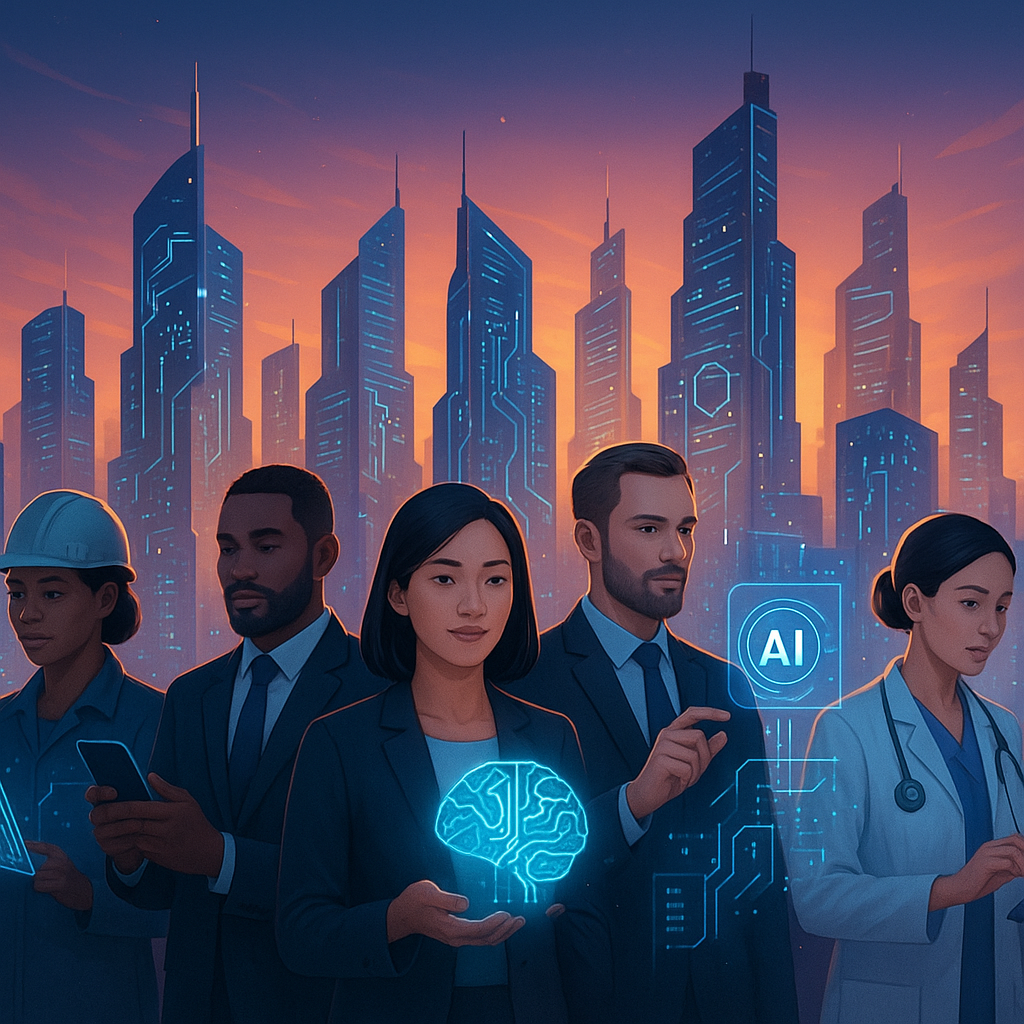

Artificial intelligence is transforming the way businesses operate, compete, and serve their customers. From automating repetitive tasks to improving decision-making, AI-powered solutions help organizations increase productivity, reduce operational costs, and discover new growth opportunities. As technology continues to evolve, companies are investing in advanced AI development services to streamline workflows, enhance customer experiences, and build scalable business models.
Modern AI solutions go beyond basic automation. They can analyze large volumes of data, identify patterns, understand customer needs, and support complex business processes. AI agents, machine learning systems, natural language processing tools, and predictive analytics are helping businesses work more efficiently while adapting to changing market demands.
For organizations seeking sustainable growth, adopting the right AI technologies can create a competitive advantage. A well-planned AI strategy enables businesses to improve existing operations, respond to challenges faster, and develop innovative products and services that meet evolving customer expectations.
Understanding Advanced AI Development Services
Advanced AI development services involve designing, building, implementing, and maintaining intelligent software solutions tailored to specific business requirements. These services combine technologies such as machine learning, deep learning, generative AI, computer vision, and natural language processing to solve practical business challenges.
Unlike traditional software that follows predefined instructions, AI-powered applications can use data to recognize patterns, generate insights, and improve selected tasks over time. Depending on their design and permissions, some AI systems can also interact with business applications and perform multistep workflows with limited human intervention.
Businesses can use AI development to automate customer support, personalize marketing campaigns, analyze financial information, optimize supply chains, and improve internal communication. The objective is not simply to introduce new technology but to make everyday operations faster, more accurate, and more productive.
Customized AI development also allows companies to build solutions that align with their existing infrastructure, industry regulations, and long-term business goals.
How AI Agents Support Smarter Business Operations
AI agents are becoming an important part of business automation because they can interpret information, respond to instructions, and perform tasks using connected tools. Depending on their capabilities, they can help employees manage workflows, retrieve information, process requests, and coordinate activities across different systems.
For example, an AI-powered customer service agent can answer common questions, retrieve relevant information, and direct complicated issues to human representatives. Similarly, a sales agent can help qualify leads, organize customer information, and prepare follow-up communications.
Companies exploring the best AI agent development services can benefit from solutions designed around their specific operational challenges rather than relying on generic automation tools. Custom-built agents can be configured to work with customer relationship management platforms, enterprise resource planning systems, knowledge bases, and other business applications.
However, effective implementation requires appropriate access controls, reliable data, testing, and human oversight. These safeguards help ensure that automated actions remain accurate, secure, and aligned with organizational policies.
Key Benefits of AI Development for Business Growth
1. Improved Operational Efficiency
AI-powered applications can automate repetitive activities such as data entry, document classification, appointment scheduling, and report preparation. This reduces manual effort and allows employees to focus on strategic responsibilities that require creativity, judgment, and personal interaction.
Automation can also help organizations process larger workloads without increasing staffing requirements at the same rate. As a result, businesses can improve productivity while making better use of their existing resources.
2. Better Data-Driven Decision-Making
Businesses generate valuable information through customer interactions, sales transactions, marketing campaigns, and daily operations. AI analytics tools can process this information to identify trends, detect unusual activity, and generate useful forecasts.
Managers can use these insights to evaluate product performance, understand customer preferences, optimize inventory, and identify potential risks. Although AI-generated recommendations require validation, they can provide a stronger foundation for informed decision-making.
3. Enhanced Customer Experience
Customers increasingly expect quick responses, personalized recommendations, and convenient digital experiences. AI-powered chatbots, recommendation engines, and virtual assistants help businesses meet these expectations across multiple channels.
For example, an AI assistant can provide round-the-clock responses to frequently asked questions, while recommendation systems can suggest relevant products based on customer behavior. When integrated thoughtfully, these tools improve service availability and reduce waiting times without eliminating the need for human support.
4. Reduced Operational Costs
AI can help control costs by reducing repetitive work, identifying inefficiencies, and improving resource allocation. Predictive maintenance systems, for instance, can analyze equipment data to identify potential problems before they cause expensive disruptions.
Similarly, intelligent document processing can reduce the time employees spend reviewing and organizing large collections of records. Businesses should measure these improvements against implementation, maintenance, integration, and training expenses to determine the actual return on investment.
5. Greater Scalability and Flexibility
As organizations expand, their operational requirements become more complex. AI solutions can support increasing volumes of customer requests, transactions, and business data when supported by appropriate infrastructure.
Cloud-based AI platforms and modular applications also allow businesses to expand selected capabilities without rebuilding their entire technology environment. This flexibility helps organizations adapt to new markets, changing customer expectations, and emerging opportunities.
Industries Benefiting from Advanced AI Solutions
AI development services are creating opportunities across multiple industries.
- Healthcare: AI can assist with administrative workflows, appointment management, medical documentation, and analysis of healthcare information under appropriate professional supervision.
- Retail and eCommerce: Intelligent recommendation engines, inventory forecasting, and automated customer support can improve shopping experiences and operational planning.
- Finance: AI systems can support fraud detection, transaction monitoring, document analysis, and risk assessment, subject to regulatory and compliance requirements.
- Manufacturing: Predictive maintenance, quality inspection, and production forecasting can help reduce downtime and improve efficiency.
- Education: Personalized learning platforms and AI assistants can support administrative tasks, provide learning resources, and adapt educational content to different needs.
- Real estate: AI applications can help organize property information, respond to inquiries, analyze market trends, and streamline lead management.
The most effective solutions address specific industry challenges rather than introducing AI simply because the technology is available.
Steps to Implement an Effective AI Development Strategy
Successful AI adoption begins with a clear understanding of business objectives. Companies should identify processes where automation or intelligent analysis can deliver measurable improvements. Examples include reducing customer response times, accelerating document processing, or improving sales forecasting accuracy.
Next, organizations should evaluate their available data, existing software, security requirements, and integration needs. Reliable data is essential because incomplete or inconsistent information can reduce the quality of AI-generated results.
Selecting an experienced development partner can also simplify implementation. Businesses seeking the best AI agent development services should assess technical expertise, industry experience, integration capabilities, data protection practices, and post-launch support.
Starting with a small pilot project is often a practical approach. It allows teams to test functionality, gather feedback, identify limitations, and measure results before expanding the solution across the organization.
Finally, businesses should establish performance indicators such as time saved, error reduction, customer satisfaction, operating costs, and revenue impact. Continuous monitoring and regular updates help ensure that the solution remains useful as business requirements change.
Challenges and Considerations in AI Development
Despite its advantages, AI adoption requires careful planning. Data privacy, cybersecurity, system integration, inaccurate outputs, and employee readiness are important considerations. Organizations must determine which tasks are suitable for automation and which require human approval.
Businesses should also establish clear governance policies, restrict AI systems to necessary permissions, and monitor their performance. Sensitive decisions involving finances, employment, healthcare, or legal matters may require additional safeguards and professional review.
Transparent communication and employee training are equally important. When teams understand how AI supports their work, they are more likely to adopt new tools effectively and contribute to ongoing improvements.
Conclusion
Advanced AI development services are helping businesses build smarter operations, improve customer experiences, and make more informed decisions. From intelligent agents and predictive analytics to workflow automation and personalized digital experiences, AI offers practical opportunities for organizations seeking sustainable growth.
The key to success is choosing solutions that address genuine business needs, integrating them securely, and measuring their impact over time. Companies that combine suitable AI technologies with reliable data, skilled teams, and responsible oversight can improve efficiency while creating new opportunities for innovation.
Investing in the best AI agent development services can be a valuable step toward building adaptable, productive, and future-ready business operations. With a clear strategy and a focus on measurable outcomes, organizations can use AI to strengthen their competitive position and support long-term growth.