Hypertension—commonly known as high blood pressure—has quietly become one of India’s biggest public health threats. Often called a “silent killer,” it affects over 220 million Indians and is a leading cause of heart attacks, strokes, and heart failure.
What makes hypertension so dangerous is that most people don’t realize they have it until significant damage has already occurred. For many, the damage leads to long-term cardiac complications, reduced quality of life, and even premature death.
While medications help manage blood pressure, they often fall short in reversing its impact on the heart. That’s where a non-invasive, outpatient-based therapy known as EECP (Enhanced External Counterpulsation) is gaining attention. More patients are turning to EECP treatment in India as a safe, effective option to counter the heart-related complications caused by high blood pressure.
Let’s explore how EECP can support hypertensive heart disease patients and why it may become a key tool in managing India’s cardiovascular crisis.
The Burden of Hypertension in India
- 1 in 3 Indian adults now lives with elevated blood pressure
- Many cases remain undiagnosed or poorly managed
- Uncontrolled hypertension leads to left ventricular hypertrophy, arterial stiffness, and coronary artery disease
- High blood pressure is a major cause of heart failure with preserved ejection fraction (HFpEF)
- Rural and semi-urban populations face delayed diagnosis and limited treatment options
India’s growing hypertension problem is fueling a parallel rise in cardiovascular deaths—a challenge that requires both prevention and effective long-term therapy.
What is EECP Therapy and How Does It Work?
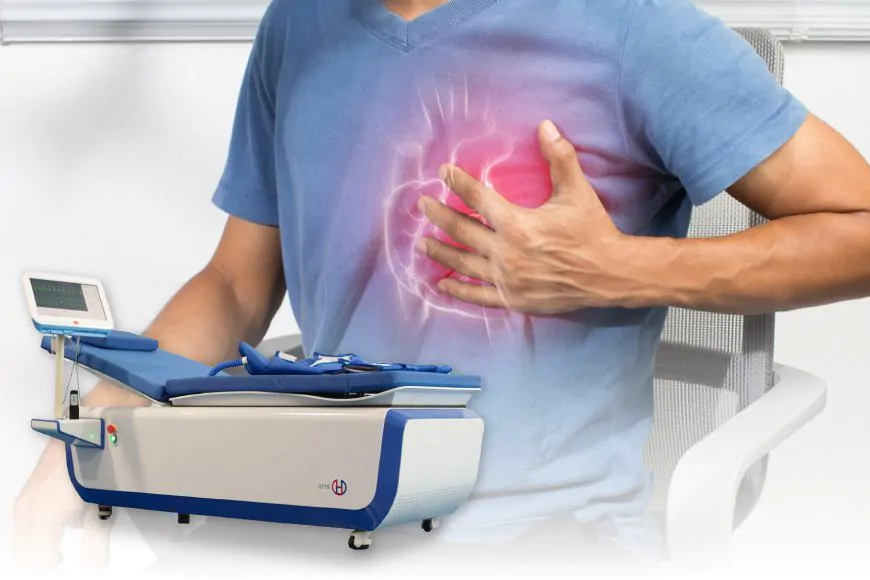
Enhanced External Counterpulsation (EECP) is a non-invasive therapy that improves blood circulation to the heart. The process involves:
- Inflatable cuffs wrapped around the patient’s legs and thighs
- These cuffs inflate in sync with the heartbeat’s relaxation phase (diastole)
- This pushes more blood toward the heart, improving oxygen supply
- It also reduces the heart’s workload during contraction (systole)
EECP is typically administered over 35–40 sessions (1 hour each), done as an outpatient procedure.
Why EECP is Ideal for Hypertensive Heart Disease
- Improves Blood Flow Without Straining the Heart
- Hypertension causes the heart to work harder. EECP reduces this workload by improving oxygen delivery to heart tissue—without any surgery or stress.
- Promotes Collateral Circulation
- It encourages the development of new blood vessels (natural bypasses), which is helpful for those with coronary artery narrowing caused by years of high blood pressure.
- Reduces Angina and Breathlessness
- Many hypertensive patients experience chest pain or fatigue. EECP reduces these symptoms, improving exercise tolerance and daily life.
- Safe for High-Risk Patients
- EECP is especially valuable for patients who are not suitable for bypass surgery or angioplasty due to age or other conditions.
The Link Between Hypertension and Cardiac Damage
Persistent high blood pressure puts enormous pressure on the heart and arteries. Over time, this leads to:
- Thickening of the heart walls (especially the left ventricle)
- Reduced flexibility of arteries, making it harder for blood to circulate
- Increased risk of coronary artery disease, where arteries get blocked
- Development of heart failure or arrhythmias like atrial fibrillation
- Higher likelihood of silent heart attacks, especially in diabetics
EECP addresses this damage by improving vascular function and coronary perfusion, making it an ideal therapy for chronic hypertensive heart disease.
Benefits of EECP for Hypertension-Related Cardiac Conditions
1. Helps Stabilize Blood Pressure Naturally
While EECP is not a replacement for anti-hypertensive drugs, it complements them by:
- Improving endothelial function (health of blood vessel lining)
- Promoting nitric oxide production for better vessel dilation
- Enhancing circulation to the kidneys, which helps regulate fluid and pressure levels
Some patients even report a reduction in BP medications after a complete EECP course.
2. Supports Recovery in Hypertensive Heart Failure
Heart failure in hypertensive patients is often difficult to manage. EECP:
- Improves ejection fraction and diastolic function
- Reduces pulmonary congestion and edema
- Enhances energy levels, mobility, and oxygen use
It offers a safe outpatient rehab for patients with both preserved and reduced ejection fraction heart failure.
3. Reduces Dependence on Invasive Procedures
For hypertensive patients who develop blockages, the usual route is angioplasty or bypass. But not everyone is eligible. EECP provides:
- A non-surgical option to relieve symptoms
- Prevention of further ischemic damage
- Reduced risk of hospitalization and complications
This is especially helpful for elderly or multi-disease patients in India’s Tier 2 and Tier 3 cities.
4. Enhances Mental Well-Being and Reduces Stress
Hypertension is tightly linked to stress and anxiety, both of which negatively affect heart health. EECP has been shown to:
- Improve mood
- Reduce heart rate variability linked to stress
- Promote better sleep and recovery
Patients report a sense of mental relaxation and emotional stability—often missing in conventional treatments.
EECP in India: Growing Reach and Accessibility
As more hospitals and clinics adopt EECP, access is improving:
- Cities like Chennai, Mumbai, Delhi, Coimbatore, Ahmedabad, and Hyderabad already have multiple EECP centers
- Some government hospitals and cardiology departments have started offering EECP under wellness and heart failure programs
- EECP therapy is now available in many Tier 2 cities, helping reach hypertensive patients in semi-urban India
This widespread reach makes EECP a realistic, scalable intervention for India’s hypertension epidemic.
Combining EECP with Lifestyle and Medication
EECP is most effective when paired with other pillars of heart health:
- Medication Compliance
- Continue BP-lowering drugs unless advised otherwise
- Salt and Diet Control
- Reduce processed foods, fried items, and sodium-heavy snacks
- Yoga and Exercise
- Light movement, breathing exercises, and walking support circulation
- Stress Management
- Meditation, social support, and positive routines help reduce emotional triggers
When EECP is part of a larger lifestyle change, its benefits multiply over time.