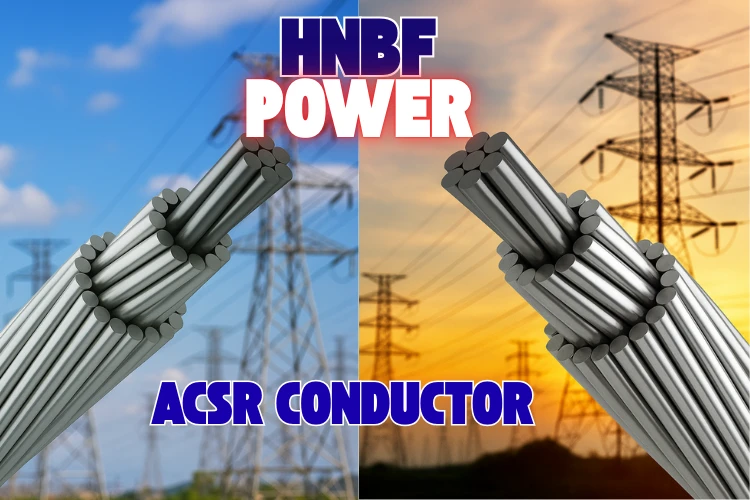
An ACSR conductor (Aluminum Conductor Steel Reinforced) is one of the most widely used overhead line conductors for power transmission and distribution networks around the world. Designed to combine high electrical conductivity with superior mechanical strength, ACSR remains the preferred choice for utilities, EPC contractors, and grid developers working on medium- to extra-high-voltage overhead transmission projects.
As a global manufacturer of overhead conductors and power cables, HNBF Power supplies ACSR conductors engineered for demanding transmission environments, long spans, and high mechanical loading conditions across utility and infrastructure projects.
This guide explains how ACSR conductors are built, where they are used, and what engineers and procurement teams should evaluate before selecting a supplier.
What Is an ACSR Conductor?
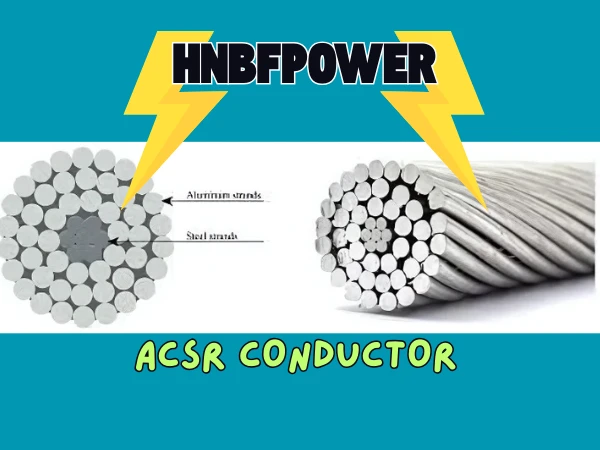
An ACSR conductor consists of two functional components:
- Outer layers of stranded aluminum wires
- A central core made of galvanized steel wires
This hybrid structure allows the conductor to deliver:
- Excellent current-carrying capacity through aluminum
- High tensile strength and reduced sag through the steel core
The steel reinforcement enables longer span lengths, higher installation tension, and better resistance to wind and ice loading making ACSR ideal for long-distance overhead transmission lines.
Construction Structure of ACSR Conductors
Aluminum Strands – Electrical Performance
The outer aluminum layers provide:
- Low electrical resistance
- Good thermal conductivity
- Lightweight construction for easier installation
These stranded aluminum wires are carefully laid around the steel core to achieve uniform stress distribution and stable electrical performance.
Steel Core – Mechanical Reinforcement
The galvanized steel core is responsible for:
- High tensile strength
- Reduced conductor elongation
- Improved line stability over long spans
This design allows ACSR conductors to maintain mechanical integrity under heavy environmental loads while supporting reliable power delivery.
Key Technical Advantages of ACSR Conductor
High Strength-to-Weight Ratio
Compared with all-aluminum conductors, ACSR offers a significantly higher strength-to-weight ratio. This enables utilities to:
- Increase span lengths between towers
- Reduce the number of transmission structures
- Optimize total project cost
Stable Sag Performance
The steel reinforcement minimizes thermal and mechanical elongation. This improves sag control under high operating temperatures and heavy current loading.
Proven Performance in Harsh Environments
ACSR conductors perform reliably in:
- High-wind corridors
- Ice-prone regions
- Mountainous and long-crossing routes
- Coastal and industrial transmission zones
With proper material selection and galvanization, corrosion resistance and service life can be further enhanced.
Typical Applications of ACSR Conductor
ACSR is widely deployed in:
- High-voltage and extra-high-voltage overhead transmission lines
- Regional and interconnection grid projects
- Utility distribution backbones
- Long river-crossing and valley-crossing spans
For power utilities and EPC contractors, ACSR remains a practical and cost-effective solution for large-scale grid infrastructure.
Technical Specifications and Standards
When specifying an ACSR conductor, engineers should verify compliance with international and utility standards, such as:
- ASTM specifications for ACSR conductors
- IEC standards for overhead line conductors
- Utility-specific mechanical and electrical requirements
Typical technical parameters include:
- Conductor size and stranding configuration
- Aluminum and steel wire diameter
- Overall conductor diameter
- Rated tensile strength
- DC resistance at standard temperature
- Short-circuit current capability
- Thermal operating limits
At HNBF Power, ACSR conductors are manufactured under strict quality control processes and can be supplied according to customized utility and EPC project specifications.
How to Select the Right ACSR Conductor for Your Project
Electrical Load and Ampacity
The required current-carrying capacity determines the aluminum cross-sectional area and conductor size. Proper ampacity calculation must consider:
- Ambient temperature
- Wind speed
- Solar radiation
- Maximum allowable conductor temperature
Mechanical Load and Span Length
Span length, tower configuration, and environmental loading directly influence the selection of:
- Steel core percentage
- Rated tensile strength
- Sag-tension characteristics
Environmental Conditions
For coastal, desert, or polluted industrial environments, conductor design should address:
- Corrosion resistance
- Protective galvanization thickness
- Long-term mechanical durability
Compatibility with Existing Lines
In reconductoring projects, the new ACSR conductor must match existing hardware, fittings, and tower clearances to minimize retrofitting costs.
Why Choose HNBF Power for ACSR Conductor Supply
HNBF Power is a professional manufacturer of overhead conductors and power cable solutions, including AAC, AAAC, ACSR, ABC cable, LV power cables, and concentric cables.
For ACSR conductor projects, HNBF Power offers:
- Flexible conductor design for utility and EPC requirements
- Full range of standard and customized stranding constructions
- Stable production capacity for large-volume grid projects
- Consistent quality control from raw material to final inspection
- Technical support for conductor selection and engineering coordination
Our ACSR conductors are developed to support modern transmission networks that demand reliability, mechanical safety, and long-term operational performance.
Frequently Asked Questions (FAQs)
1. What is the main difference between ACSR and AAAC conductors?
ACSR conductors use a steel core for mechanical reinforcement, while AAAC conductors use all-aluminum alloy strands. ACSR provides higher tensile strength and is better suited for long spans and heavy loading conditions.
2. Is ACSR conductor suitable for high-voltage transmission lines?
Yes. ACSR is widely used in high-voltage and extra-high-voltage overhead transmission lines due to its strong mechanical performance and stable electrical characteristics.
3. How long is the service life of an ACSR conductor?
With proper design, installation, and environmental protection, ACSR conductors can operate reliably for several decades in utility transmission networks.
4. Can ACSR conductors be customized for special projects?
Yes. HNBF Power can customize stranding structure, steel core ratio, and technical parameters to meet specific project and utility specifications.
Power Your Grid Projects with HNBF Power
If you are planning a new overhead transmission line, grid reinforcement project, or reconductoring program, selecting the right ACSR conductor is critical for long-term performance and safety.
Contact HNBF Power today to discuss your project requirements and receive customized ACSR conductor solutions engineered for your transmission and distribution network.