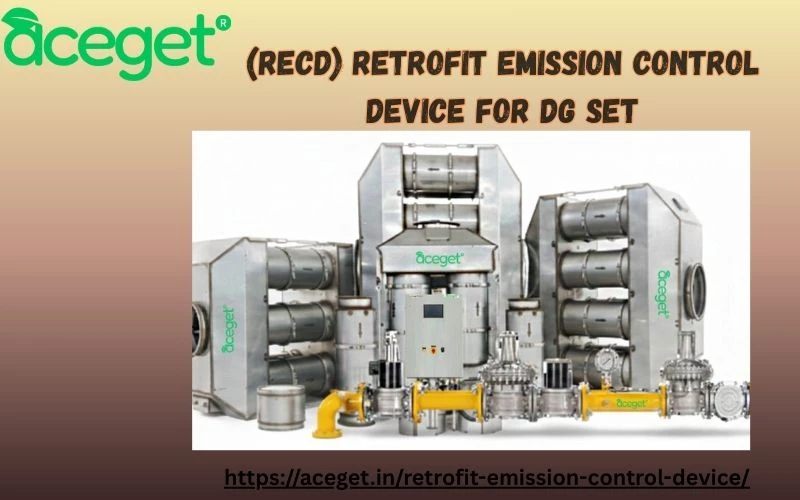
Retrofit Emission Control device for DG set With the shift towards a sustainable future, various industries are progressively embracing technologies to lessen emissions and enhance air quality. One notable innovation is the Retrofit Emission Control Device (RECD) manufacturing for Diesel Generators in India, an essential remedy for reducing particulate matter (PM) emissions from diesel gensets. Aceget has launched a groundbreaking filter-less technology that improves environmental sustainability while ensuring operational efficiency.
Functioning Principle of the Retrofit Emission Control Device
The Retrofit Emission Control Device utilizes Electrostatic Precipitation (ESP) technology, rendering it an extremely effective approach for reducing particulate matter. The operational concept encompasses:
Post-Muffler Installation: The RECD is added following the diesel generator muffler without changing the current configuration.
Electrostatic Charge Utilization: Exhaust emissions flow through an electrical discharge generated by a high-voltage DC field.
Particulate Matter Collection: PM gains an electric charge and is drawn to the electrode with the opposite charge.
Aggregation and Elimination: The gathered particles create bigger formations, which are subsequently removed using a proprietary system for eco-friendly disposal.
Main Reason Why RECD are Important
Retrofitting Emission Control Devices (RECD) is crucial for diminishing harmful emissions like particulate matter PM nitrogen oxides NOx and carbon monoxide CO from diesel generators by up to 90%. They promote compliance with strict environmental regulations improve air quality in industrial areas, and support corporate sustainability without requiring the replacement of existing equipment.
Notable Decrease in Pollution
Retrofit emission control devices (RECD) minimize pollution by capturing and converting harmful exhaust emissions such as soot carbon monoxide hydrocarbons and nitrogen oxides into less harmful materials like water nitrogen and carbon dioxide using a mix of filtration catalytic oxidation and chemical reactions.
Compliance with Regulations
CPCB and NGT guidelines for diesel generators focus on reducing air and noise pollution by establishing emission standards, mandating Retrofit Emission Control Devices (RECD) or dual-fuel conversions, implementing strict acoustic enclosure and stack height requirements, and restricting operations on low air quality days as outlined by GRAP, particularly in NCR.
Affordable Option
Enhancing diesel generators with emission control systems is a cost-effective way to meet stricter regulations, resulting in significant reductions in pollutants like PM and NOx for a fraction of the cost of new equipment with expenses ranging from thousands to tens of thousands of dollars for each ton of pollutants removed, based on the technology employed and the specific pollutant.
Attribute of Retrofit Emission Control Device (RECD)
Retrofit Emission Control Devices (RECD) for DG (diesel generators) are specialized systems approved by the CPCB, aimed at minimizing particulate matter PM, CO, and HC emissions by as much as 99%. Main characteristics comprise highly efficient multi-stage filtration, passive self-cleaning technology, and plug-and-play design with no need for engine modification.
Enhanced Efficiency & Emission Decrease
RECD (Retrofit Emission Control Device) significantly reduces pollutants including particulate matter (PM) nitrogen oxides (NOx) hydrocarbons (HC) and carbon monoxide (CO) from diesel generators by filtering or converting them in the exhaust system achieving high efficiency and ensuring compliance with regulations like those established by India's CPCB.
Minimal energy usage
RECD are designed for minimal to insignificant power consumption, relying on the generator's battery for the control panel and sensors, requiring only a small amount of power for the display. The regeneration process generally occurs passively and depends on fuel meaning it doesn’t require additional fuel for regeneration and the absence of fuel-based regeneration indicates no extra fuel is used enabling the system to self-clean.
Minimal or Negligible Back Pressure
The Retrifit Emission Control Device for diesel generators is a system that significantly reduces particulate matter and different pollutants, featuring designs that minimize back pressure on the engine, making them suitable for low-load operation and protecting engine health. These sophisticated or filter-less systems utilize electrostatic precipitation catalytic converters or oxidation to remove pollutants in compliance with standards like CPCB regulation and generally provide low maintenance, no active regeneration, often integrating lot diagnostics.
Minimal Upkeep & Self-Cleaning
RECD self-cleaning technology relates to the automated rejuvenation process in advanced exhaust filters that capture contaminants from diesel generators. This technology uses a ceramic filter to trap particulate matter and employs catalysts to convert harmful gases like CO and hydrocarbons into less toxic compounds, while a self cleaning system regularly burns off the collected soot to prevent blockages and maintain efficiency.
Conclusion
In India's evolving energy landscape, Diesel Generator sets will continue to be the foundation of reliability for grid operations and backup support. However, environmental performance must not be viewed as a minor factor any longer. Incorporating Retrofit Emission Control Devices (RECDs) enables existing DG sets to operate within emission regulations, improve fuel efficiency, and achieve national sustainability goals. Through continuous improvements in catalyst design filtration materials and heat recovery systems RECDs are reshaping the function of DGs in the energy landscape ensuring that reliability aligns with accountability.