Simi Valley is one of the most livable communities in the greater Los Angeles region — spacious neighborhoods, strong community character, and access to the Santa Monica and Simi Hills open spaces. But its inland valley geography also means hot summers, dry Santa Ana winds, and a cooling season that stretches from late April well into October. For the homeowners who make Simi Valley home, AC tune-up and maintenance in Simi Valley, California is one of the most cost-effective decisions you can make for your property — and one of the most commonly neglected.
Simi Valley's Climate Demands More from Your AC
The geography that makes Simi Valley pleasant in spring and fall makes it genuinely demanding on air conditioning systems during summer. The valley sits northeast of the Santa Monica Mountains, shielded from Pacific marine cooling influence by multiple ridgelines. During heat events — which regularly push temperatures above 95°F and occasionally past 105°F — there is no coastal relief. Systems run continuously, day after day, until the heat breaks.
The Santa Ana winds compound this challenge in a unique way. These dry, high-velocity wind events move enormous quantities of fine particulate matter and deposit it on every exposed surface — including the fins of outdoor condenser coils. A condenser clogged with debris after a Santa Ana event cannot efficiently reject heat into the surrounding air. Refrigerant returns to the compressor too warm, head pressure rises, and the compressor works under stress conditions that shorten its life measurably.
Homeowners in Simi Valley should visually inspect their outdoor condenser unit after significant wind events and rinse the fins with a garden hose if debris is visible. This simple habit, combined with professional annual service, meaningfully extends condenser and compressor life.
What a Comprehensive AC Tune-Up Includes
A real AC tune-up is a systematic inspection and service of every component that affects performance and reliability. Here is what thorough seasonal service covers:
Evaporator and Condenser Coil Cleaning — Both coils accumulate deposits that reduce heat transfer efficiency. The evaporator coil (inside the air handler) removes heat from indoor air; the condenser coil (in the outdoor unit) rejects that heat outside. Dirty coils on either end reduce system capacity and force the compressor to run longer and hotter.
Refrigerant Pressure and Charge Verification — A properly functioning system doesn't consume refrigerant. Low refrigerant means a leak. A technician should verify charge using superheat and subcooling measurements — not just a quick pressure glance — and trace any leak before recharging.
Capacitor Testing and Replacement — Capacitors provide the starting energy surge for compressor and fan motors. They degrade with heat exposure and operating hours. Simi Valley's long cooling season accelerates this degradation. A weak capacitor causes hard starts that damage the compressor motor windings. Testing capacitance values (not just visual inspection) catches weakening capacitors before they fail.
Contactor Inspection — The contactor connects line voltage to the compressor and outdoor fan. Contact points pit and corrode over thousands of cycles. A pitted contactor arcs during operation, generating heat and damaging the motor terminals it connects. Visual inspection and voltage drop measurement reveal contactor condition.
Condensate Drain Flush — A clogged condensate drain backs water up into the drain pan, potentially overflowing into the air handler cabinet or ceiling below an attic-mounted unit. Algae treatment and a drain flush during every service prevents this reliably.
Blower Wheel Cleaning — A dirty blower wheel loses aerodynamic efficiency and creates imbalance. Annual cleaning keeps airflow at rated volume.
Electrical Connection Inspection — Thermal expansion and contraction loosen wire connections over years of operation. Loose connections generate resistance, heat, and eventually failures. A physical check of all accessible connections takes minutes and catches developing problems.
For Simi Valley homeowners who want professional care locked in before summer arrives, the AC services at Cooling by Design cover every one of these components with written documentation of findings and transparent pricing before any work begins.
Energy Savings Are Real — Here's the Math
The Department of Energy's research consistently shows that a poorly maintained AC system uses 15 to 25 percent more electricity than a well-maintained one. For a typical Simi Valley home with a 3-ton system running 8 hours per day from May through October, a 20 percent efficiency penalty adds roughly 500 to 600 kWh to your annual cooling cost — translating to $110 to $132 at current SCE rates, on top of elevated failure risk.
A professional tune-up costs $85 to $150. The annual energy savings alone often recovers that cost within a single cooling season.
Ductwork and Attic Heat: The Hidden Efficiency Thief
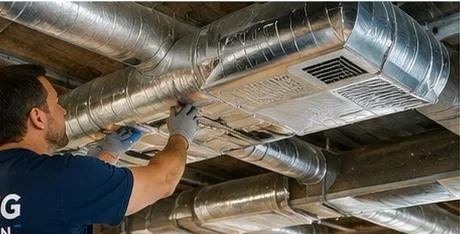
Many Simi Valley homes have ductwork routed through unconditioned attic spaces. In summer, Simi Valley attics can reach 130°F to 150°F. Supply ducts running through these spaces without adequate insulation absorb heat from the surrounding air — partially reheating the cool air your system just produced before it reaches your living room.
The EPA estimates that typical homes lose 20 to 30 percent of conditioned air through duct leaks. Combined with inadequate insulation, the losses in older Simi Valley homes can exceed this. Duct sealing and insulation upgrades to R-8 on attic runs are among the highest-return improvements available.
The ductwork and ventilation services at Cooling by Design include complete duct system evaluation, leak sealing at connections and transitions, and attic duct insulation upgrades — work that pays dividends on every monthly utility bill.
Warning Signs Your Simi Valley AC Needs Attention Now
Don't wait for a complete failure. These symptoms indicate a system that needs professional inspection promptly:
- Ice on refrigerant lines or the indoor coil — Shut the system off immediately. Ice indicates inadequate heat absorption from low refrigerant or restricted airflow. Continued operation risks compressor damage.
- Weak or uneven airflow from supply registers despite a clean filter
- Short-cycling — the system starts, runs briefly, shuts off, and repeats — a sign of electrical or refrigerant problems
- A spike in your electricity bill without a change in usage patterns
- Unusual sounds — clicking at startup, rattling during operation, grinding from motors
- Musty odors when the system runs — indicating mold on the evaporator coil or in ductwork
Any of these warrants a professional diagnostic visit, not just a filter change.
Building Your Annual AC Maintenance Schedule
April: Spring cooling tune-up — coil cleaning, refrigerant verification, capacitor and contactor testing, condensate drain flush, blower inspection, filter replacement.
May–June: Post-Santa Ana condenser check. Rinse fins if needed. Check filter monthly.
July–August: Monthly filter checks. Monitor utility bills. Listen for unusual sounds. Call for a diagnostic if anything seems off.
September–October: Fall heating inspection — furnace, heat exchanger, igniter, burners, gas pressure, flue. Replace filter. Test CO detectors.
November–February: Monthly filter checks. Keep condenser clear of leaves and debris.
Two professional visits per year, combined with consistent homeowner attention, is the maintenance standard that protects Simi Valley AC systems through their full expected 15 to 20 year lifespan.